Best Shoppable Video Platforms for Enterprise Ecommerce: What Actually Moves Revenue in 2026


Shoppable video platforms are not all built for the same buyer. A Shopify merchant with a tight catalog and a social-first strategy has different requirements than a Fortune 500 brand managing tens of thousands of SKUs across owned channels and a retail distribution network. The tools that serve one well often do not serve the other at all.
This comparison is written for enterprise ecommerce teams evaluating platforms at scale: brands where catalog size, integration depth, and content production economics are the real constraints.
What Shoppable Video Actually Is
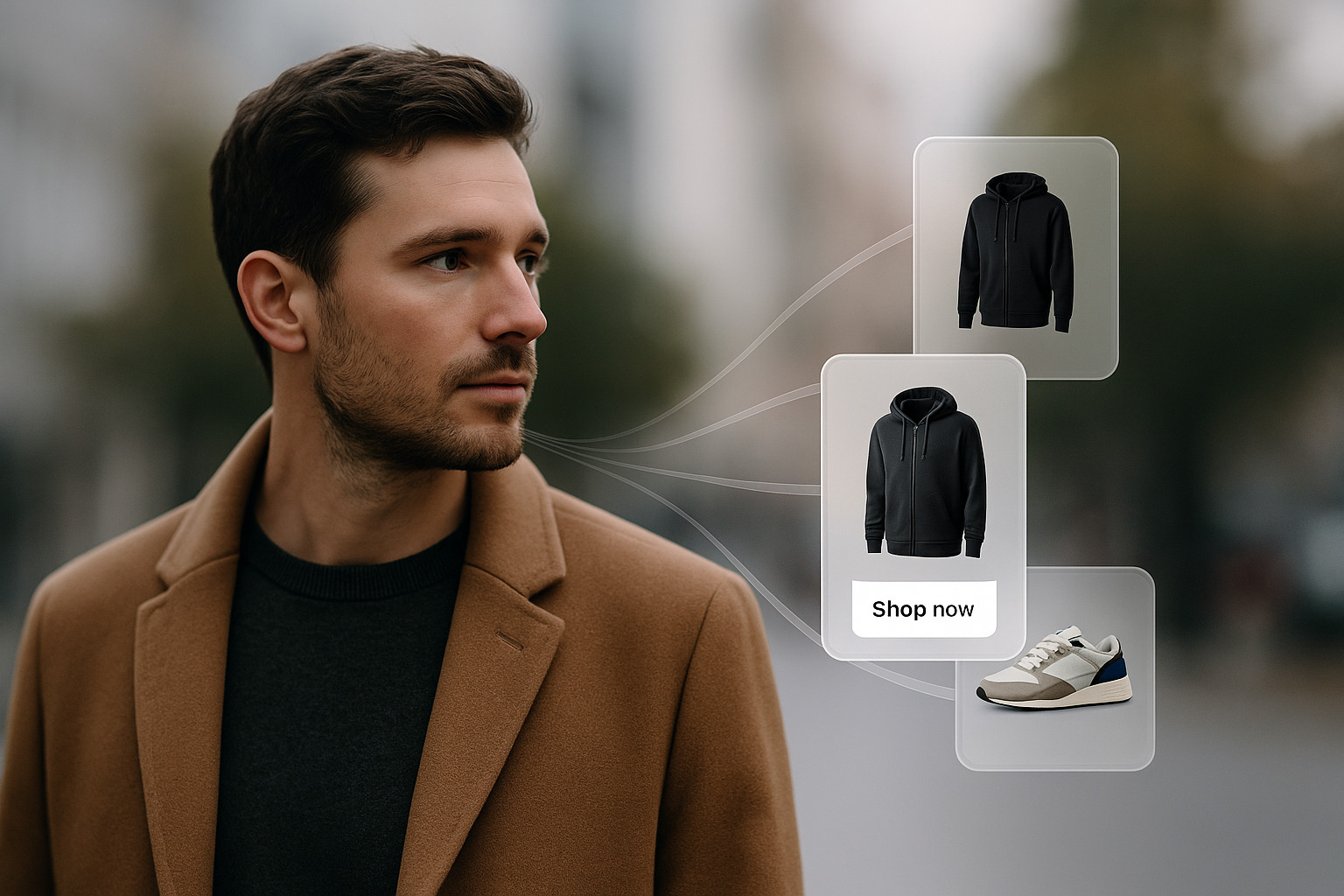
A shoppable video is a video format with embedded product links that allow viewers to explore products and complete a purchase without leaving the video experience. It is distinct from standard product video, which drives awareness but requires the shopper to navigate elsewhere to buy.
The format exists across several surfaces: product detail pages, collection pages, homepages, and social platforms. Enterprise platforms differ most significantly in which of those surfaces they cover, how deeply they integrate with commerce infrastructure, and whether they close the loop from content creation through to deployment and optimization.
What to Look for in a Shoppable Video Platform
These five criteria structure the comparison that follows. Every platform below is evaluated against them.
1. Catalog scalability Can the platform deploy video across thousands of SKUs without manual work per product? For enterprise brands, this determines whether the platform is operationally viable or a point solution for hero products only.
2. Content creation capabilities Does the platform help create video, or does it only host and deploy it? AI-generated content (AIGC) that builds video from a product feed is the difference between a catalog covered at scale and one covered manually.
3. Analytics depth Does the platform surface video-attributed revenue at the product-page level, not just views and engagement? Enterprise teams need to connect video performance to conversion and GMV, not vanity metrics.
4. Site speed impact Does the embed preserve Core Web Vitals scores? On mobile-first enterprise sites, a video implementation that degrades LCP or INP scores will hurt organic rankings and user experience simultaneously.
5. Integration flexibility Does the platform work with Shopify, Salesforce Commerce Cloud, SAP, headless architectures, and custom builds? Enterprise stacks are rarely Shopify-only.
Platform Comparison
Firework
Firework is built for enterprise brands and retailers that need video commerce to operate as infrastructure, not a campaign add-on. The platform covers three interconnected capabilities: shoppable video deployment and AI-hosted Digital Showroom.
Catalog scalability: Firework's AIGC engine generates video directly from a product feed, using signal mining to identify which products have content gaps and what shopper objections are driving abandonment. Video is generated to address specific objections, not as generic product clips, and deployed directly to live pages without manual upload. This makes full-catalog coverage operationally viable for brands with thousands of SKUs.
Content creation: AIGC is native to the platform. Signal mining, creation, deployment, and iteration run in a closed loop within one platform. Brands do not need a separate AI video tool and a separate deployment layer.
Analytics: Revenue attribution at the product-page level. Brands track video-attributed GMV, conversion rate lift on video-enabled PDPs versus control pages, and engagement signals that feed back into content iteration.
Site speed: Firework's embed uses lazy loading, CDN-hosted streaming, and a native web component player that is 25% faster than YouTube's embed. File sizes are 40% smaller than standard H.264 through AI transcoding. Zero measurable Core Web Vitals impact at enterprise scale.
Integration flexibility: Supports Shopify, Salesforce Commerce Cloud, SAP, BigCommerce, headless architectures, and custom builds. API-first design for brands with complex tech stacks.
Best for: $100M+ brands and retailers that need catalog-scale video coverage, integrated AIGC, and enterprise commerce platform support.
Tolstoy
Tolstoy is a widely used shoppable video platform with strong Shopify integration and a broad feature set covering interactive video, stories, quizzes, and AI-powered personalization.
Catalog scalability: AI Studio supports catalog-scale image and video generation. Works well for Shopify-native catalogs.
Content creation: AI Studio handles image and video generation from catalog data. Strongest for Shopify-native workflows.
Analytics: Solid on engagement metrics. Revenue attribution is less granular than enterprise-focused platforms.
Site speed: Generally performant. Impression-based billing can create unexpected cost spikes at high-traffic volumes.
Integration flexibility: Strong Shopify support. More limited on Salesforce Commerce Cloud or SAP.
Videowise
Videowise is a Shopify-native platform covering shoppable video carousels, stories, live shopping, and social proof video.
Catalog scalability: Handles large Shopify catalogs well. Less suited to headless or multi-platform enterprise builds.
Content creation: No native AI video generation. Brands bring their own content.
Analytics: Strong Shopify-native analytics tied directly to Shopify order data.
Integration flexibility: Limited support for non-Shopify enterprise platforms.
Bambuser
Bambuser is an enterprise live shopping platform focused primarily on live commerce events rather than always-on shoppable video.
Catalog scalability: Live event focus limits always-on catalog coverage. Not built for automated per-SKU video deployment.
Content creation: No AI video generation. Live events require a host and production resources.
Analytics: Strong for live event performance. Limited for always-on PDP video attribution.
Integration flexibility: Supports multiple enterprise platforms including Salesforce Commerce Cloud and custom builds.
eStreamly
eStreamly covers both live shopping and shoppable video.
Catalog scalability: AI generation from catalog data available. Works across multiple platforms.
Content creation: Offers UGC content workflows.
Integration flexibility: Broader platform support than Shopify-only tools.
CommentSold
Live selling platform built for independent retailers and small brands, with social live selling across Facebook, Instagram, and TikTok.
Vidjet
Lightweight shoppable video tool focused on video popups, stories, and carousels.
The Hidden Cost of Point Solutions
Most enterprise ecommerce teams do not evaluate shoppable video platforms in isolation. They evaluate them alongside an existing stack that may already include a video hosting tool, a UGC platform, an analytics solution, and separate live shopping software.
The operational cost of stitching those tools together compounds over time. Each integration requires maintenance. Data does not flow cleanly between systems. Performance attribution becomes difficult when video hosting, engagement tracking, and conversion data live in separate platforms.
A platform that covers content creation, on-site deployment, live streaming, AI shopping, and analytics in a single system eliminates that overhead. The per-tool cost comparison often favors point solutions on paper. The total cost of ownership, including integration maintenance, manual workflows, and fragmented data, often does not.
What to Expect on ROI
Shoppable video performance varies significantly by category, placement, and implementation quality.
Product pages with relevant video convert at meaningfully higher rates than those without, typically in the range of 3x to 5x improvement among engaged visitors. Time on page increases substantially. Return rates drop in categories where video resolves fit, functionality, or quality questions that drive post-purchase disappointment.
For enterprise teams, the more relevant metric is GMV attribution at the product-page level. Brands running Firework's platform across large retail deployments have attributed significant monthly GMV directly to video-enabled product pages. A leading home goods retailer and a major consumer electronics brand both saw measurable revenue lift within the first quarter of deployment. The brands seeing the strongest results combine AIGC-driven catalog coverage with performance data that feeds back into content iteration, rather than treating video as a one-time production project.
A Five-Question Evaluation Checklist
1. Can it cover your full catalog, not just hero products? If the answer requires manual production per SKU, the economics break at enterprise scale. Look for AIGC capabilities that generate from a product feed automatically.
2. Does it deploy directly to product pages, or does it produce a file? File output means the team owns deployment, placement, and optimization. That operational cost compounds as catalog coverage grows.
3. Can you attribute revenue to specific videos on specific pages? Engagement metrics without revenue attribution are not sufficient for enterprise investment decisions. Confirm the platform surfaces GMV and conversion data at the product-page level.
4. Does the embed preserve your Core Web Vitals scores? Ask for field data from an enterprise deployment, not lab data. LCP and INP impact on mobile are the metrics that matter.
5. Does it integrate with your full commerce stack? Confirm compatibility with your ecommerce platform, CMS, and analytics tools before evaluating features. Integration gaps discovered post-contract are expensive to resolve.
Looking Ahead
Firework's video commerce platform covers shoppable video, AI Digital Showroom, and AIGC in one enterprise deployment. See how it works.
FAQ’s
What is the best shoppable video platform for enterprise ecommerce?For enterprise brands that need catalog-scale video coverage, integrated AI video generation, and support across complex commerce stacks, Firework is the most complete platform available. It is the only solution in this category that combines AIGC and always-on Digital Showroom in a single deployment, without stitching together separate tools for each capability.
What is the difference between shoppable video and live shopping? Shoppable video is pre-recorded or AI-generated video with embedded product links, available on demand at any time. Live shopping is a real-time broadcast format where viewers interact and purchase during an active stream. Most enterprise platforms cover both, though depth on each varies significantly.
Does shoppable video work on platforms other than Shopify? The strongest enterprise platforms do. Firework supports Salesforce Commerce Cloud, SAP, BigCommerce, headless architectures, and custom builds. Videowise and Tolstoy are primarily Shopify-optimized. For enterprise brands on non-Shopify stacks, platform compatibility is a critical evaluation criterion.
How do I measure shoppable video ROI? The most reliable method is a controlled A/B test: video-enabled PDPs versus matched control pages, measured on conversion rate, add-to-cart rate, time on page, and revenue per visitor. Platforms that surface GMV attribution at the individual video and product-page level make this measurement straightforward. Platforms that report only views and engagement require additional analytics work to connect video to revenue.
Can AI-generated video meet enterprise brand quality standards? For most enterprise categories, yes, provided the platform is configured with brand guidelines, product context, and quality parameters. Enterprise brands across beauty, apparel, electronics, and home goods are deploying AI-generated content on high-traffic product pages. The most reliable way to evaluate this is to generate a sample batch from your actual catalog before committing.
Unlock Exclusive Insights
By submitting this form, you agree to Firework's privacy policy and consent to receive personalized marketing communications. You can unsubscribe at any time.












.png)