Grocery Industry Trends: How Shopper Behavior Is Changing in 2026


Grocery shopping has evolved from a routine errand into a dynamic, omnichannel experience. More than 90% of shoppers now move between online and in-store grocery journeys, and digital grocery sales continue to grow as convenience, speed, and personalization become expectations rather than differentiators.
But growth alone isn’t the story.
Grocery brands and retailers are facing a more complex challenge: helping shoppers move from intent to purchase in an environment that is increasingly fragmented, competitive, and influenced by both content and media.
Today’s grocery shopper is not just searching for products. They are looking for relevance, guidance, and confidence in what to buy and why.
At the same time, several forces are reshaping grocery behavior:
- Value remains critical, but expectations around experience are rising
- Discovery is becoming more digital and less list-driven
- Retail media is changing how products are surfaced and prioritized
- Content and AI are redefining how shoppers evaluate products
These shifts are transforming the role of the digital shelf from a place of information to a place of influence.
Current Consumer Grocery Trends
1. Grocery Shopping Is Fully Omnichannel
The modern grocery journey rarely happens in a single channel. A shopper might begin by adding items to a list in an app, browse additional products in-store, and complete their purchase through delivery or pickup. What used to be a linear process is now fluid.
This shift is subtle but significant. Shoppers no longer distinguish between online and offline experiences, and they expect continuity across both. The same product, the same information, and the same level of clarity should exist regardless of where they engage.
For brands and retailers, this means consistency is no longer optional. The product experience must travel with the shopper, not stay confined to a single channel.
2. Value Still Drives Decisions, But Value Has Expanded
Price sensitivity continues to influence grocery behavior, particularly as households remain mindful of spending. But value is no longer defined solely by cost.
Today’s shoppers are weighing convenience, product quality, ingredients, health benefits, and how easily a product fits into their routine. This is one reason private label continues to gain traction, as shoppers balance affordability with perceived quality.
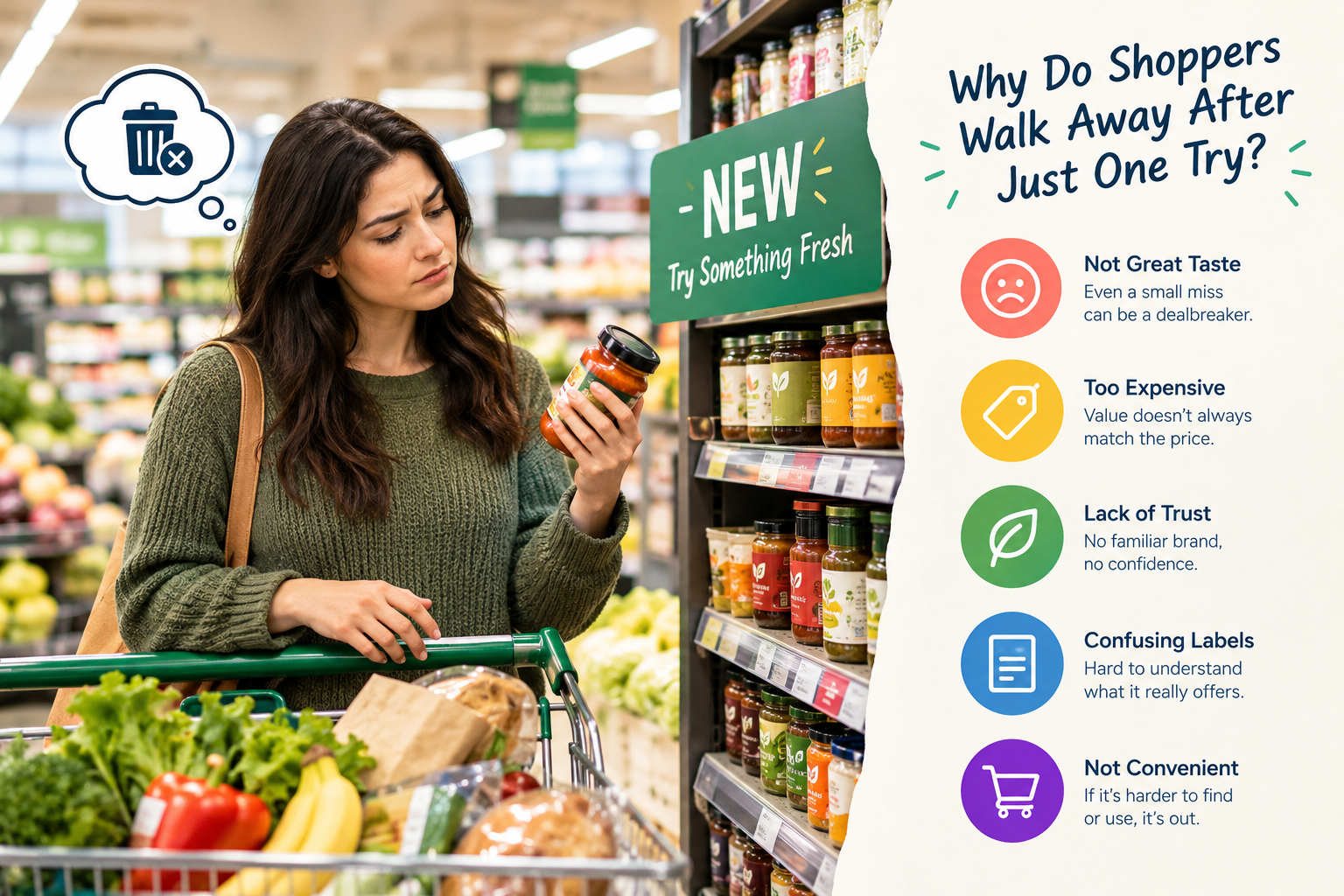
At the same time, this shift raises the bar for branded products. When shoppers are deciding between options, the difference is often not price alone, but how clearly the product communicates its value.
3. Discovery Is Becoming More Influenced and Less Predictable
Grocery shopping has traditionally been driven by habit and lists. That is changing.
Digital environments are introducing new moments of influence, where shoppers are exposed to products through search results, recommendations, and sponsored placements. What begins as a routine purchase can quickly turn into discovery.
This creates a more dynamic shopping behavior. Shoppers still come with intent, but they are increasingly open to adding, swapping, or upgrading products based on what they encounter during the journey.
As a result, visibility alone is no longer enough. What matters is how products are presented the moment they are discovered.
Industry Trends Impacting the Grocery Market
1. Retail Media Is Reshaping Digital Merchandising
One of the most significant shifts in grocery is the rise of retail media.
What began as a way for retailers to monetize digital traffic has quickly become a core part of how products are surfaced and prioritized. Sponsored search results, promoted placements, and in-store digital screens are now influencing what shoppers see first and what they ultimately add to cart. This changes the dynamics of the digital shelf.
Visibility is no longer purely organic. It is influenced by media investment, targeting, and relevance. For brands, this creates both opportunity and pressure. The opportunity is to reach shoppers at high-intent moments. The pressure is that visibility must now be earned and paid for. But retail media only gets a product so far.
It can drive the click, but it does not guarantee the conversion. That still depends on what happens after the shopper lands on the product page.
2. The Product Page Is Becoming the Moment of Decision
In grocery, the product page has historically been treated as a functional space. It showed the product, listed key details, and allowed shoppers to add to cart.
That is no longer enough.
As discovery becomes more influenced and retail media drives more traffic to individual products, the product page has become the point where decisions are made or lost.
Shoppers are looking for quick answers:
- Is this right for me?
- Does it meet my dietary or lifestyle needs?
- How do I use this?
If those answers are not immediately clear, the shopper moves on.
This is where grocery experiences are starting to evolve. Instead of static pages, leading retailers and brands are building more dynamic environments that help shoppers understand products faster and with more confidence.
3. Content Is Shifting From Informational to Actionable
Grocery is not just about products. It is about outcomes.
Shoppers are not buying ingredients in isolation. They are buying meals, routines, and solutions to everyday needs. That is why content is becoming more important.
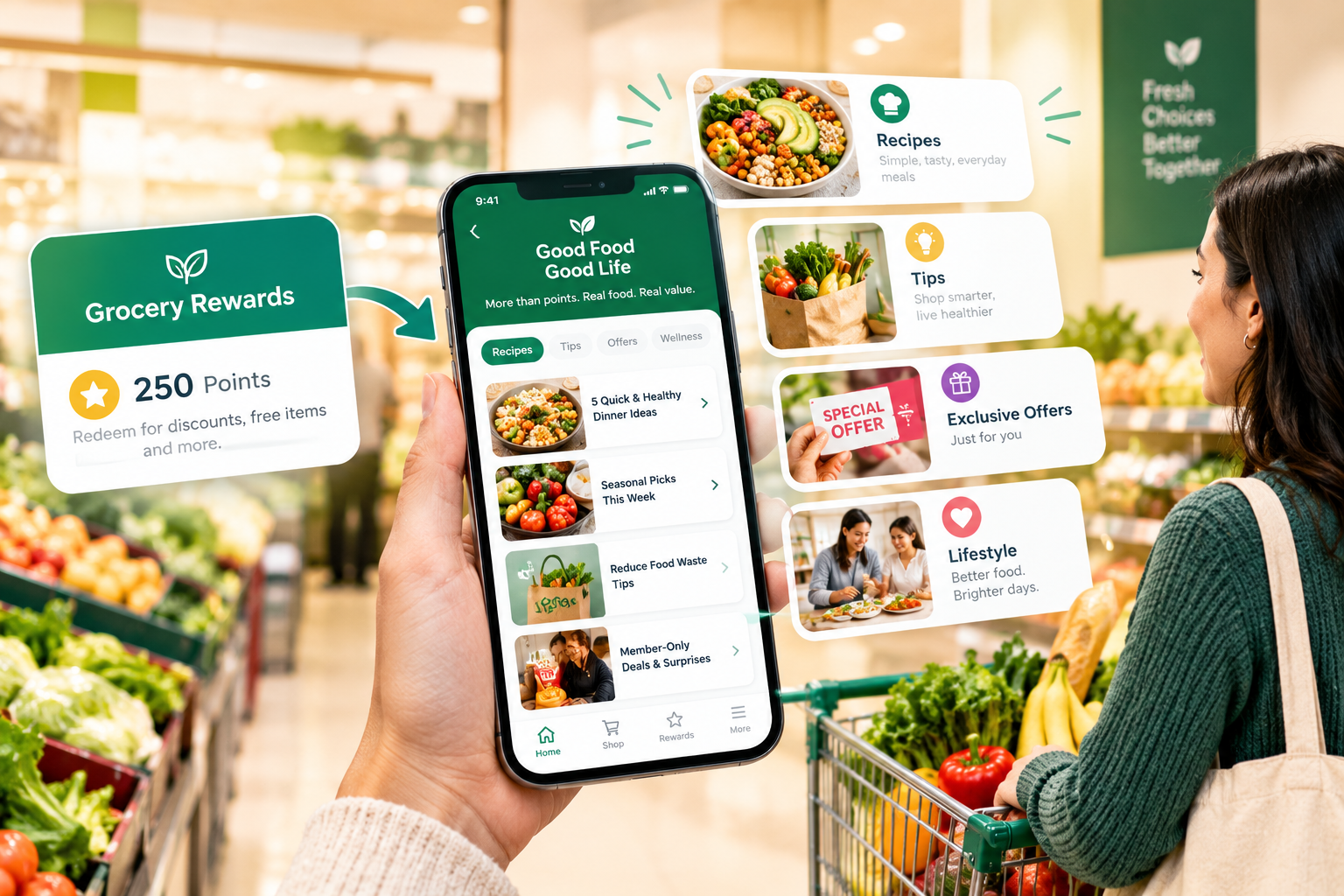
Recipes, preparation ideas, and usage guidance help translate products into something more tangible. They answer the question shoppers are really asking: “What can I do with this?”
This type of content does more than educate. It drives action.
It encourages cross-sell, increases basket size, and makes it easier for shoppers to move from consideration to purchase.
4. AI and Video Are Transforming How Shoppers Make Decisions
One of the biggest shifts in grocery ecommerce is how products are being explained and evaluated.
Shoppers no longer want to search through static descriptions or navigate multiple pages to find answers. They expect clarity in the moment.
This is where AI-powered experiences are beginning to play a more central role.
Instead of relying on fixed FAQs or generic descriptions, shoppers can now ask questions and receive real-time, contextual responses. Whether it is about ingredients, dietary restrictions, or product usage, AI makes it easier to get immediate, relevant answers without leaving the page.
At the same time, video is becoming a critical layer in the grocery experience.
Products that might otherwise feel interchangeable can be differentiated through demonstration. A simple ingredient becomes more compelling when it is shown as part of a recipe. A product becomes easier to understand when it is seen in context.
Historically, the challenge with video has been scale. Creating content for every product, variation, and campaign is resource-intensive.
AI-generated video is beginning to change that. By enabling brands to create and adapt content across their catalog more efficiently, it becomes possible to deliver more consistent, visual, and engaging product experiences. This closes the gap between how shoppers discover products through content and how they evaluate them on the digital shelf.
Together, AI-powered guidance and scalable video are reshaping the role of the product page.
Instead of acting as a static endpoint, it becomes an interactive experience where shoppers can understand, evaluate, and decide in one place.
Challenges and Opportunities in Grocery
Grocery is entering a phase where shopper expectations are rising faster than most experiences are evolving. Shoppers expect speed, relevance, and clarity, but many digital grocery environments still feel transactional and generic. This creates friction at the exact moment where conversion should happen.
At the same time, brands face increasing competition from private labels, growing pressure from retail media, and the need to stand out in more crowded digital environments.
For retailers, the opportunity is significant. Retail media opens new revenue streams, and digital experiences offer more control over merchandising than physical shelves ever could.
But success depends on balance.
Monetization cannot come at the expense of usability. The more helpful and intuitive the experience is for shoppers, the more effective it becomes for both commerce and media.
Strategic Recommendations for Grocery Brands and Retailers
To keep pace with these changes, brands and retailers need to rethink how they approach the digital shelf.
The first priority is to build for how shoppers actually behave, not how channels are structured. Grocery journeys are fluid, and experiences need to reflect that.
The second is to focus on clarity. Products need to communicate value quickly, especially in a category where decisions are frequent and often habitual.
The third is to treat content and media as connected. Retail media may drive discovery, but content drives conversion. The two must work together.
Finally, the most effective grocery experiences will be those that reduce effort for the shopper. The easier it is to understand a product, see how it fits into a routine, and make a decision, the more likely that product is to end up in the basket.
Looking Ahead
The future of grocery is not defined by online versus in-store. It is defined by connected, assisted, and increasingly personalized shopping experiences.
As shopper behavior continues to evolve, the digital shelf is becoming one of the most important environments in grocery. It is where discovery happens, where influence is applied, and where decisions are made.
The brands and retailers that succeed will be the ones that understand a simple shift. And the faster that guidance is delivered, the faster they buy.
Want to create grocery experiences that drive discovery and increase basket size? Explore how leading brands are using video and AI to guide shoppers in real time.
FAQ
How is grocery shopper behavior changing in 2026?
Grocery shoppers are becoming more omnichannel, moving between online and in-store experiences depending on convenience. At the same time, behavior is shifting from purely list-based shopping to more discovery-driven journeys influenced by search, recommendations, and retail media.
Why is retail media important in grocery ecommerce?
Retail media is changing how products are discovered. Sponsored placements and in-app promotions influence what shoppers see first, especially in high-intent moments. However, while retail media drives visibility, conversion still depends on how well the product is presented once a shopper clicks.
What role does the product page play in grocery shopping?
The product page has become the point of decision. Shoppers rely on it to quickly understand ingredients, dietary fit, usage, and value. If that information isn’t clear, they are more likely to leave or choose another product.
How does AI improve the grocery shopping experience?
AI helps shoppers get answers instantly. Instead of searching through descriptions, shoppers can ask questions about ingredients, dietary needs, or product usage and receive contextual responses. This reduces friction and helps shoppers make faster, more confident decisions.
Why is video becoming more important in grocery ecommerce?
Video helps turn products into real-world use cases. It allows shoppers to see how ingredients are used in recipes, how products fit into meals, and how they can be incorporated into everyday routines. This makes products easier to understand and more compelling to purchase.
Unlock Exclusive Insights
By submitting this form, you agree to Firework's privacy policy and consent to receive personalized marketing communications. You can unsubscribe at any time.