7 Essential Use Cases of AI Shopping Assistants and Video Content in Fashion and Apparel
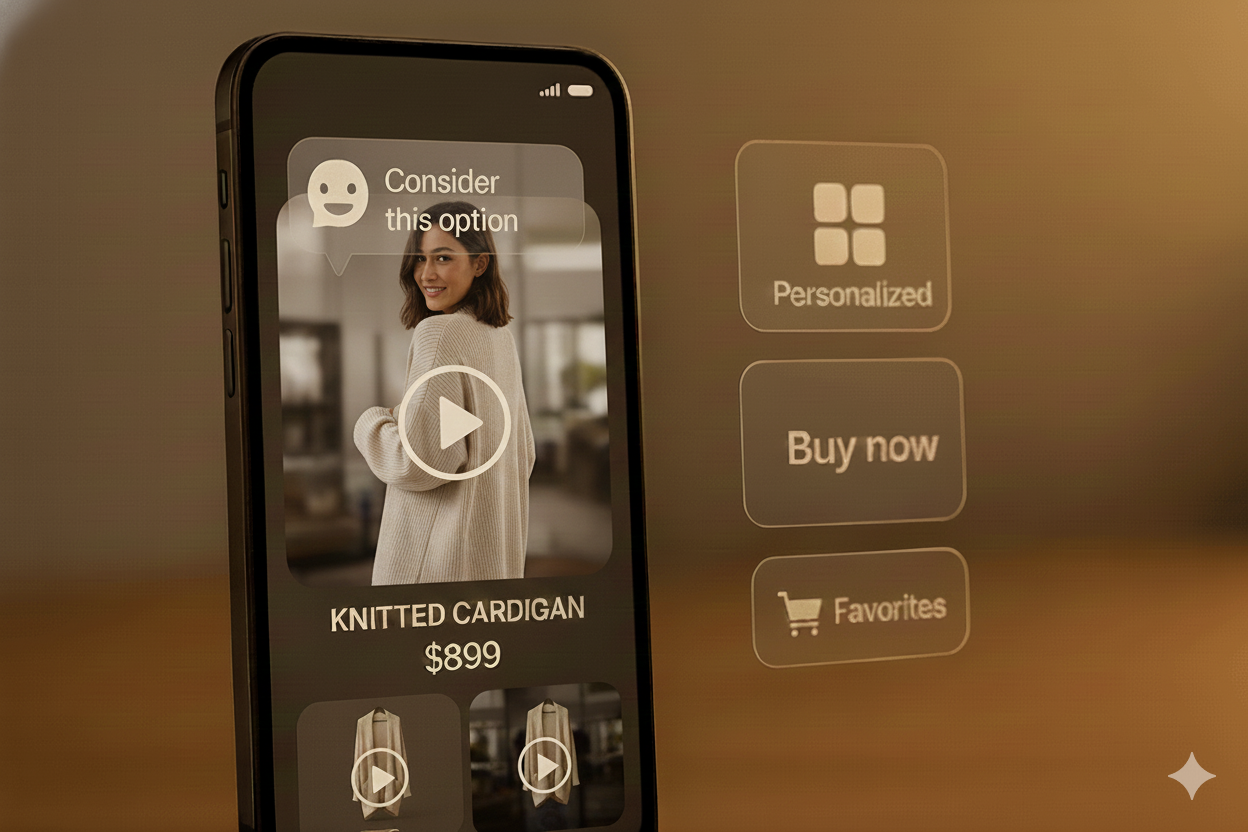

Fashion ecommerce is uniquely complex. Fit, fabric, styling, and personal taste all influence whether a shopper feels confident enough to buy. Historically, brands tried to solve this complexity by adding more photos, more copy, and more reviews.
As fashion ecommerce moves toward 2026, two capabilities are shaping how decisions get made on PDPs: AI shopping assistants and video content. They serve different roles, but when applied intentionally, they work together to reduce uncertainty and accelerate conversion.
Below are the seven most important use cases, with clear distinctions between when AI assistants matter, when video matters, and where AI-generated video fits naturally.
1. AI Shopping Assistants for Fit and Size Guidance
Fit remains the biggest conversion barrier in fashion. AI shopping assistants address this problem by interpreting data, not by showing visuals.
AI assistants help shoppers choose the right size by:
- analyzing past purchases and returns
- factoring in product-specific sizing behavior
- translating fit feedback into simple guidance
- answering direct questions like “Should I size up?”
This use case is best handled by AI assistants, not video alone. Shoppers want a clear recommendation, not more interpretation. When the assistant provides confident guidance, video can then support the decision visually.
2. Video Content for Fabric, Texture, and Movement
Where AI assistants explain, video shows.
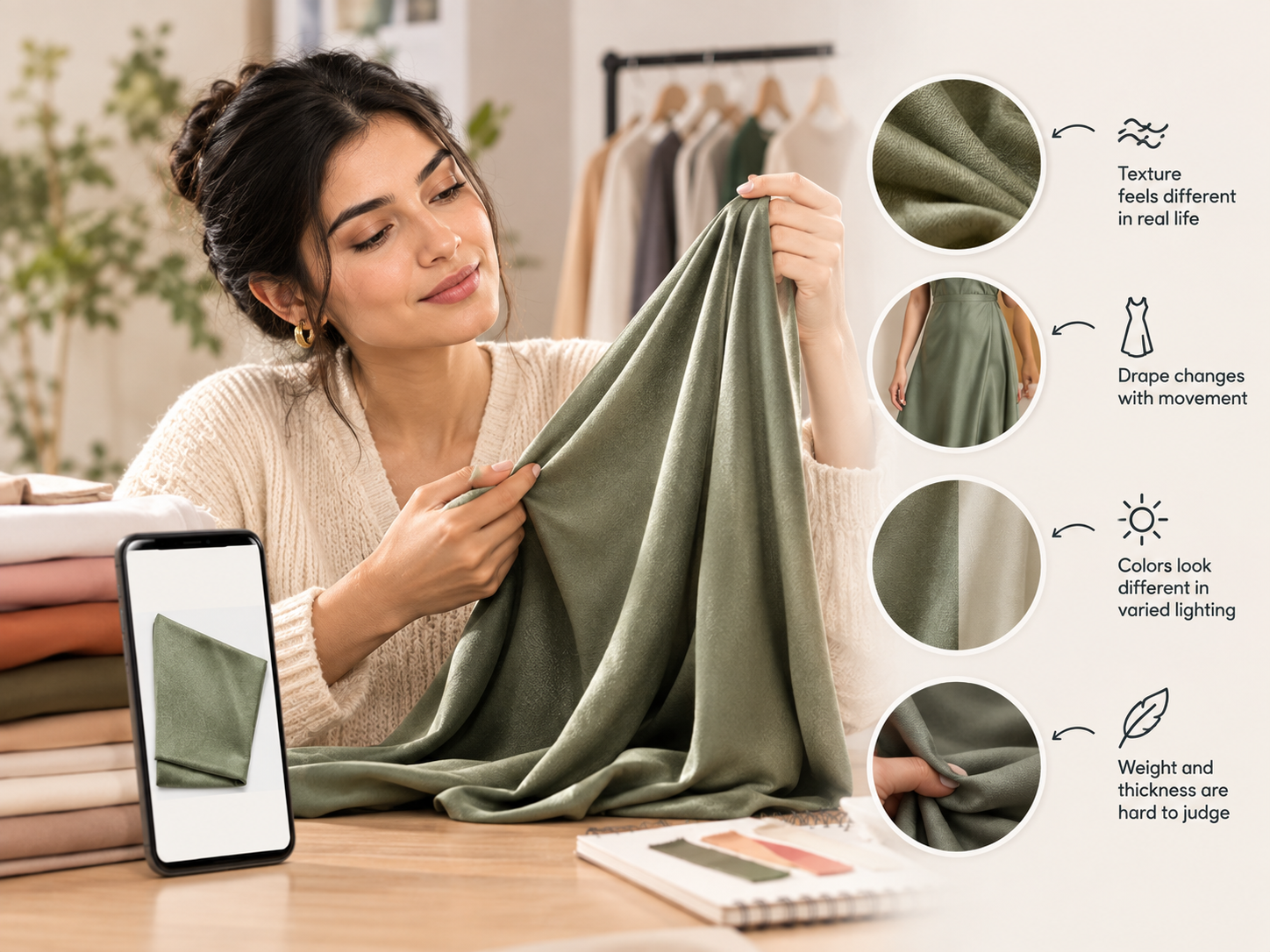
Static images struggle to communicate how fabric behaves in real life. Video content fills this gap by demonstrating:
- fabric thickness and drape
- transparency and lining
- movement while walking or sitting
- how materials react to light
This use case is video-first. Short product clips embedded directly on PDPs outperform text descriptions because they remove guesswork. AI can support this by determining when to surface these videos, but the conversion impact comes from seeing the product in motion.
3. AI Shopping Assistants for Product Comparison
Fashion catalogs often contain multiple similar items. Small differences in cut or fabric can stall decisions.
AI shopping assistants help by:
- comparing two or more products in plain language
- highlighting trade-offs based on shopper priorities
- recommending the best option for a specific use case
This is a logic-driven use case. AI assistants reduce cognitive load by synthesizing information, something video alone cannot do efficiently.
In some cases, AI-generated comparison videos can support this step, but the assistant leads the decision by narrowing choices first.
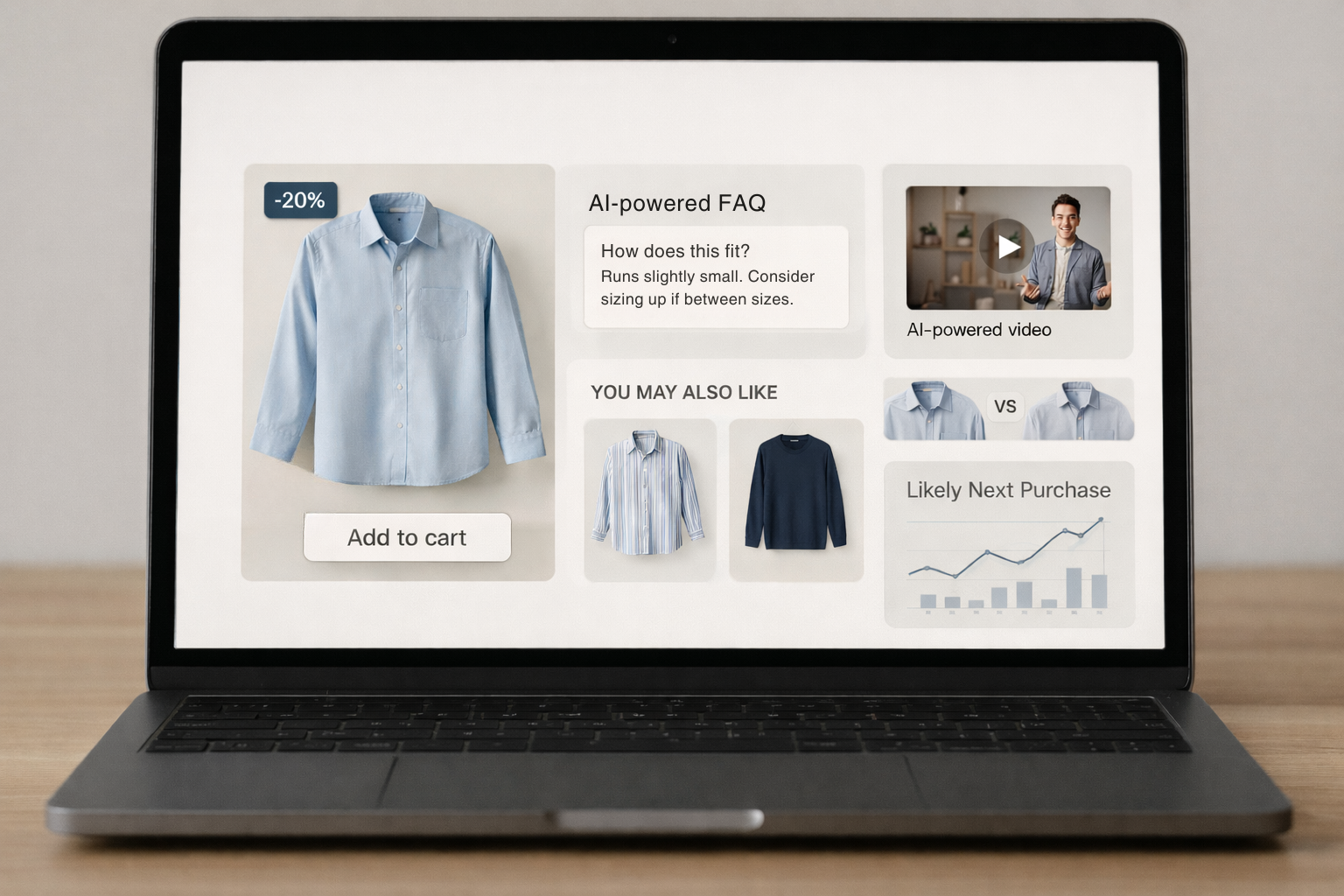
4. Video Content for Styling and Outfit Inspiration
Shoppers often hesitate because they can’t imagine how a piece fits into their wardrobe.
Video content addresses this by showing:
- how an item is styled for different occasions
- how it pairs with complementary products
- how it looks across seasons or settings
This is where inspirational video excels. AI’s role here is secondary. It selects which styling video to show based on browsing behavior or intent, but the persuasion comes from visual storytelling.
Some brands are beginning to experiment with AI-generated styling videos to scale this use case across larger catalogs, especially for core products.
5. AI Shopping Assistants for PDP Q&A and Education
Fashion shoppers ask predictable questions before buying:
- Is this sheer?
- Does it stretch?
- How long is it on someone under 5’5”?
AI shopping assistants handle this best by providing instant, contextual answers directly on PDPs. These assistants reduce bounce by preventing shoppers from leaving the page to search elsewhere.
When a question benefits from demonstration, AI can surface a short supporting video. The assistant leads with clarity, and video reinforces understanding.
6. Video Content for Expectation Setting and Returns Reduction
Returns are often caused by mismatched expectations, not product quality.
Video content helps set expectations by showing:
- realistic fit and proportions
- real-world wear scenarios
- what the product does and does not do
This is a video-dominant use case. AI assists by prioritizing which expectation-setting videos appear based on known return drivers or shopper hesitation signals.
AI-generated video is particularly useful here for scaling “what to know before buying” content across thousands of SKUs.
7. Scaling PDP Experiences with AI-Generated Video and AI Assistants
At enterprise scale, manually producing personalized PDP experiences is impossible. This is where AI assistants and AI-generated video converge.
AI assistants handle:
- intent detection
- content prioritization
- personalized guidance
AI-generated video supports:
- rapid creation of product demos
- scalable styling visuals
- localized or seasonal variations
Together, they allow brands to deliver video-led, guided PDP experiences across entire catalogs without exponential production costs.
Talk to a Firework expert to see how AI-powered video and intelligent shopping assistance can turn your fashion PDPs into high-intent conversion experiences.
FAQ
What is the difference between an AI shopping assistant and video content on PDPs?
AI shopping assistants guide decisions by answering questions, comparing options, and personalizing recommendations. Video content shows fit, fabric, movement, and styling. The highest-converting PDPs use both, each where it adds the most value.
Do AI shopping assistants replace customer reviews in fashion ecommerce?
No. Reviews remain important for social proof. AI assistants complement reviews by summarizing common themes, answering questions in real time, and reducing the effort required for shoppers to interpret feedback.
When does AI-generated video make sense for fashion brands?
AI-generated video is most useful when brands need to scale demonstrations, styling examples, or expectation-setting content across large catalogs. It works best when grounded in real product data and used to supplement, not replace, human-led creative.
Can video content really reduce fashion return rates?
Yes. Videos that clearly show fit, fabric behavior, and real-world wear help set accurate expectations, which directly reduces returns driven by sizing or material misunderstandings.
How do AI shopping assistants improve conversion without feeling intrusive?
The best implementations are contextual and subtle. AI assistants surface guidance only when shoppers hesitate, compare, or ask questions, making the experience feel helpful rather than disruptive.
Is this approach only relevant for large fashion brands?
Enterprise brands see the greatest operational benefit, but the principles apply at any scale. AI assistants and video content are especially impactful for brands with complex sizing, broad assortments, or high return rates.
Where should fashion teams start when implementing AI and video on PDPs?
Start with high-traffic or high-return PDPs. Introduce video for fit and fabric clarity, then layer in AI assistants to guide sizing, comparisons, and FAQs. Measure impact before scaling.
Unlock Exclusive Insights
By submitting this form, you agree to Firework's privacy policy and consent to receive personalized marketing communications. You can unsubscribe at any time.