Expiring Energy-Efficiency Tax Credits Are About to Change What Appliance Shoppers Buy
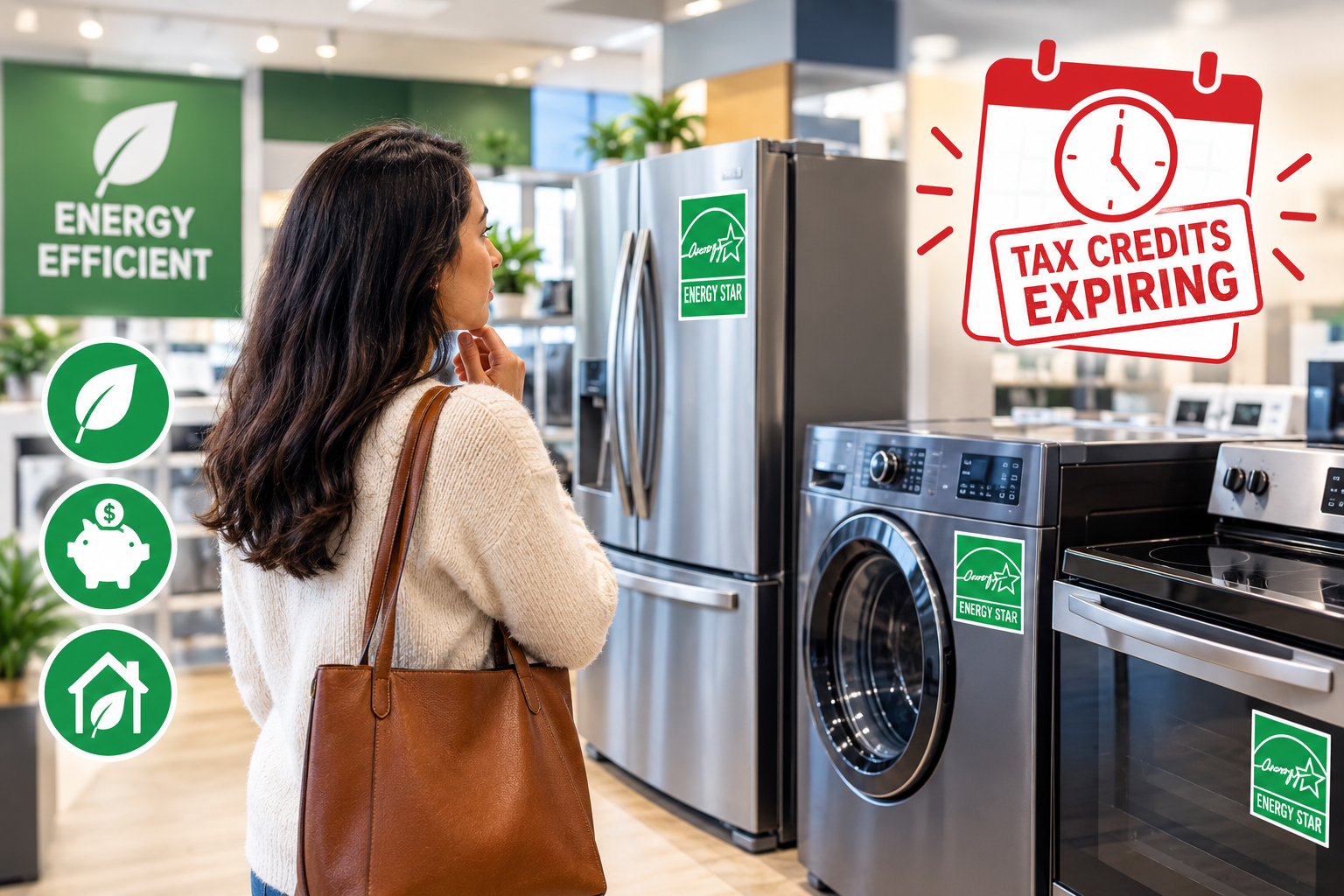

Federal tax credits that have supported purchases of energy-efficient air conditioning and refrigeration are expiring. Industry analysts expect this to put downward pressure on unit sales in the categories that relied on them most, right as brands head into their biggest selling quarter of the year.
For the past several years, some shoppers' decisions were partly driven by capturing a credit before it expired. Removing that incentive doesn't remove the shopper's underlying need to replace an aging unit, but it does remove a reason to act now rather than later.
A few things are true about this shift:
● Some replacement purchases were pulled forward by the incentive, and they won't repeat next year
● Shoppers who were counting on a credit may pause or downgrade their planned purchase
● Retailers can't offer a substitute for a government incentive, but they can offer clarity and reasons to act
● The brands managing this transition well are shifting the sales conversation from "the credit makes this worth it" to "here's why this is still worth it"
Current Appliance Shopper Trends
1. Some Shoppers Are Discovering the Credit Is Gone Mid-Decision
A shopper who started researching a purchase assuming a credit would apply may only learn it's expired partway through their decision. That can stall or derail a purchase that was otherwise close to happening.
2. Price Sensitivity Rises When an Incentive Disappears
Losing a credit changes the math on a purchase shoppers had already mentally accounted for, making them more sensitive to the remaining price than they were when the incentive was part of the calculation.
3. Financing and Trade-In Offers Are Filling Some of the Gap
As government incentives fade, shoppers are looking harder at retailer-offered financing and trade-in programs to soften the impact on their budget.
Industry Trends Impacting the Appliance Market
1. Retailers Face a Messaging Gap Right as Q4 Begins
Marketing built around a credit that's disappearing needs to be replaced before the holiday selling season ramps up, not adjusted reactively once shoppers start asking why the credit no longer applies.
2. Energy Savings Still Matter, Just Without the Upfront Credit
The efficiency benefits that justified the credit in the first place, lower utility bills over time, are still real. The case just has to be made without the incentive doing part of the persuasive work.
3. Video and AI-Generated Images Can Carry the Long-Term Value Case a Credit Used to Support
A shopper who lost a tax credit still wants a reason the purchase makes sense. AI-generated video makes it realistic to show real efficiency performance and long-term savings across a full product line, replacing what an expiring credit used to help communicate. For quicker updates, like refreshing comparison graphics or energy-rating callouts across an entire catalog the moment a credit changes, AI-generated images can carry that same message at a pace video production alone doesn't always allow.
Challenges and Opportunities in Home Appliances
The challenge is real: an incentive that shaped shopper behavior for years is disappearing right as Q4 selling begins.
The opportunity is that most competitors will be scrambling to adjust messaging reactively. Brands that get ahead of this transition now will have a clearer, more confident value case in market before competitors catch up.
Strategic Recommendations for Home Appliance Brands and Retailers
The first priority is updating marketing now to remove any assumption that a tax credit still applies, rather than letting shoppers discover it's gone on their own.
The second is rebuilding the value case around long-term efficiency savings, using video to make that case concrete rather than abstract.
The third is promoting financing and trade-in options more visibly, since they're one of the few remaining ways to soften the loss of a government incentive.
Looking Ahead
Incentive-driven purchase behavior tends to create a temporary lift followed by a real adjustment once the incentive disappears. Brands that rebuild their value case before that adjustment fully hits will hold onto more of Q4 than those still marketing as if the credit is still in play.
Want to make a value case that doesn't depend on a government incentive? See how leading appliance brands are using video and AI-generated images to show real, lasting value.
FAQ
Why are energy-efficiency tax credits for appliances expiring?
Federal tax credits supporting energy-efficient air conditioning and refrigeration purchases are winding down, a change industry analysts expect will reduce unit sales in categories that relied on the incentive to help justify the purchase.
How does losing a tax credit affect appliance shopping behavior?
Shoppers who factored a credit into their budget may become more price-sensitive or delay a purchase once that incentive disappears, since it changes the overall cost calculation they'd already made.
What can appliance retailers do to offset the loss of tax credits?
Retailers can promote financing and trade-in programs more visibly, and rebuild their value case around long-term efficiency savings rather than an upfront government incentive.
How can video and AI-generated images help appliance brands after a tax credit expires?
Video can demonstrate real efficiency performance and long-term savings, while AI-generated images make it realistic to refresh comparison graphics and energy-rating messaging quickly across a full catalog as policy changes take effect.
Unlock Exclusive Insights
By submitting this form, you agree to Firework's privacy policy and consent to receive personalized marketing communications. You can unsubscribe at any time.