
How Mobile-First Shoppers Make Decisions During the Holiday Season
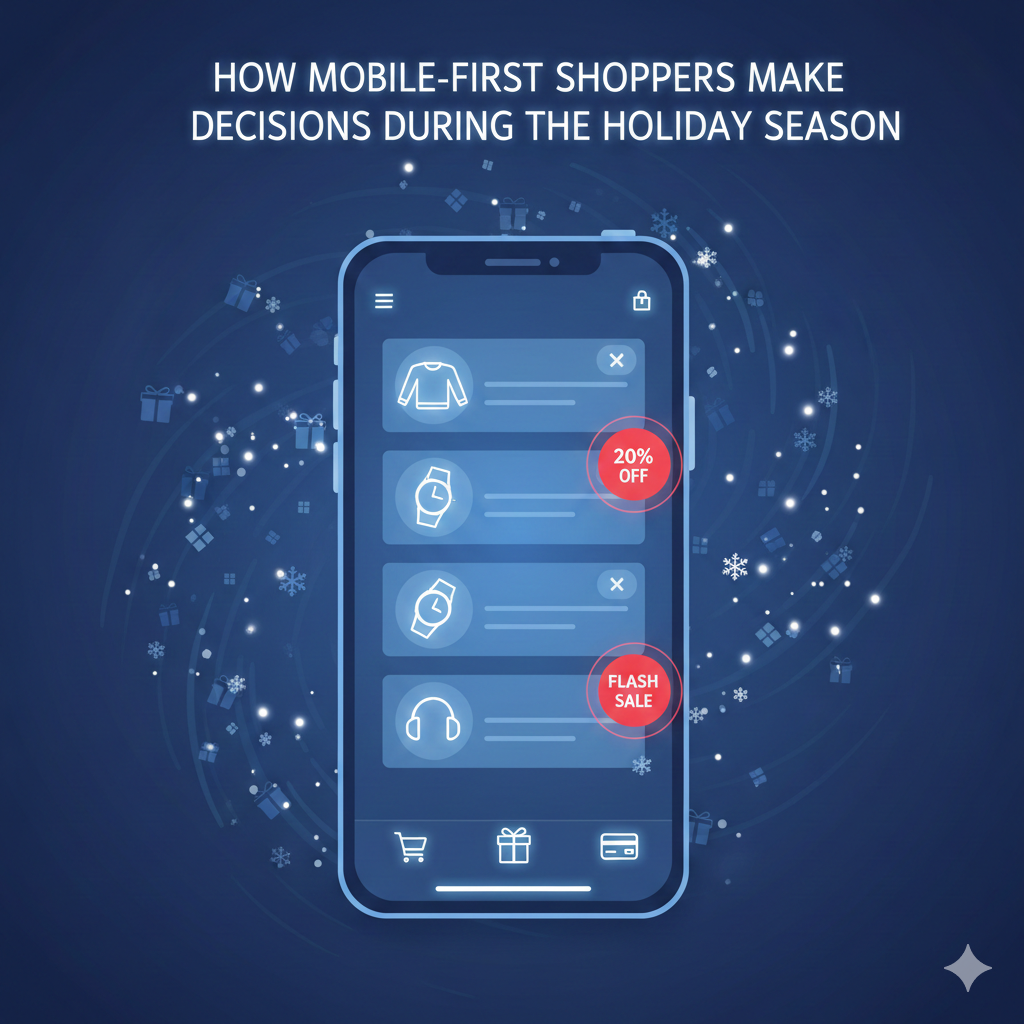

The holiday season has always been a high-stakes moment for retailers, but in recent years, the biggest shift hasn’t been in what people buy, it’s how they buy. Mobile has become the primary decision engine for holiday shopping. For many consumers, especially Gen Z and young families, the entire journey, from discovery to comparison to purchase, happens on a phone. And that shift fundamentally changes how retailers must think about content, navigation, and on-page clarity.
Mobile shoppers behave differently. They move faster, multitask more, and expect instant clarity. They’re often shopping late at night on the couch, in line at a store, or in small moments throughout the day. Decisions happen in seconds, not minutes. And in a season defined by urgency and time pressure, every friction point becomes a lost sale.
Mobile is the First Stop for Holiday Discovery
For most shoppers, the holiday search journey begins on mobile. They aren’t typing long keyword strings or navigating deep category menus, they’re using conversational queries, social discovery, and visual cues to jump-start inspiration. TikTok, Instagram Reels, and Google’s mobile search have become top-of-funnel engines that spark intent long before a shopper reaches a retailer’s site.
A “mobile-first” journey isn’t just about device usage; it’s about mindset. Shoppers expect the experience to match the speed of their scrolling patterns. They want bite-sized clarity, quick comparisons, and instant answers. When a PDP loads slowly, lacks detail, or is text heavy, the shopper simply moves on.
Mobile PDPs Must Communicate Value in Seconds
On desktop, shoppers may skim, scroll, and digest more content. On mobile, they scan. They want the answer to one critical question immediately: “Is this the right product for me?”
If the PDP doesn’t make that obvious, they abandon. Mobile shoppers are far more sensitive to unclear product photos, buried specifications, weak descriptions, and missing use-case context. This is especially true during the holidays, when shoppers are buying for others and uncertainty is higher.
The best-performing mobile PDPs prioritize:
- Clear, compelling visuals at the top
- Quick bullet insight or benefit statements
- Video demos that load instantly
- AI-powered FAQs that answer holiday-specific questions
- Real customer reviews in small, scannable blocks
Decision-Making Happens in Micro-Moments
Holiday mobile shoppers don’t sit down for 30 minutes to shop. Instead, they make progress in short bursts, while commuting, waiting at appointments, or relaxing at home. This “micro-moment” behavior means the retailer’s job is to reduce cognitive load and allow the shopper to make meaningful progress in seconds.
This is why mobile-first design is now a conversion strategy, not aesthetics. Shoppers don’t tolerate unnecessary steps, lengthy forms, or complicated comparisons. Each micro-moment must bring the shopper closer to a decision, not overwhelm them with options.
Personalization Drives Confidence When Choices Multiply
The holiday season is overwhelming by nature. Prices fluctuate, promotions stack, and new products emerge constantly. Mobile shoppers often feel decision fatigue before they even reach checkout.
This is where agentic commerce and AI-powered guidance play a transformative role. When a shopper lands on a PDP, an AI system can instantly surface:
- Alternatives that match their budget
- Bundles that make gifting easier
- Holiday promotions relevant to their behavior
- Comparisons to reduce uncertainty
In other words, personalization becomes decision support. It helps reduce the friction that mobile-only experiences traditionally create.
Mobile Shoppers Convert When Checkout Is Effortless
Even when shoppers commit, mobile checkout can break the experience. Tiny forms, unnecessary fields, account creation prompts, and unclear shipping timelines remain some of the top reasons holiday carts are abandoned.
Mobile-first shoppers expect:
- One-tap payment options
- Autofill and wallet support
- Clear delivery windows
- Transparent fees
- Loyalty or savings automatically applied
Every improvement in mobile checkout compresses the decision journey. Every delay or confusion lengthens it, often until the shopper gives up.During the holidays, when timing is tight and emotions run high, mobile friction directly impacts revenue.
Holiday Shopping Has Become Mobile-First and Retail Must Follow
The shift to mobile-first holiday shopping isn’t temporary; it’s structural. Search begins on mobile, social discovery influences intent, PDPs must be instantly informative, and checkout must be fast enough to match shopper urgency.
Retailers who treat mobile as secondary will continue losing holiday conversions to brands that design for the device shoppers actually use.Holiday decisions now happen on the smallest screen, and optimizing for that doesn’t just improve UX; it drives measurable revenue at the moment shoppers are most ready to buy.
Want to boost mobile conversion this holiday season? Talk to a Firework expert to learn how AI-powered video and mobile-first PDP experiences drive faster decisions and higher revenue.
FAQ
1. Why do mobile-first shoppers behave differently during the holidays?
Because mobile shopping is spontaneous, fast-paced, and highly convenience-driven. During the holidays, shoppers feel more pressure to find the right gift quickly, so they rely heavily on mobile tools, AI suggestions, and visuals to speed up decisions.
2. What content matters most on mobile PDPs during the holiday season?
Short videos, UGC, clear product images, interactive elements, and AI-powered FAQs. Shoppers want immediate clarity, anything that requires effort or scrolling risks abandonment.
3. Why is trust such a big factor in mobile holiday shopping?
Holiday purchases often involve unfamiliar categories or buying for someone else. Visual proof, reviews, and demos reduce uncertainty, helping shoppers feel confident about gifting decisions.
4. How can retailers reduce mobile cart abandonment during peak season?
Simplify checkout, offer digital wallets, show delivery timelines clearly, remove unnecessary fields, and ensure fees are transparent from the start.
5. Does AI actually influence mobile shopping behavior?
Yes. AI reduces decision fatigue by narrowing options, offering relevant suggestions, answering questions instantly, and personalizing the entire experience, key to converting overwhelmed holiday buyers.
Unlock Exclusive Insights
By submitting this form, you agree to Firework's privacy policy and consent to receive personalized marketing communications. You can unsubscribe at any time.











.png)


