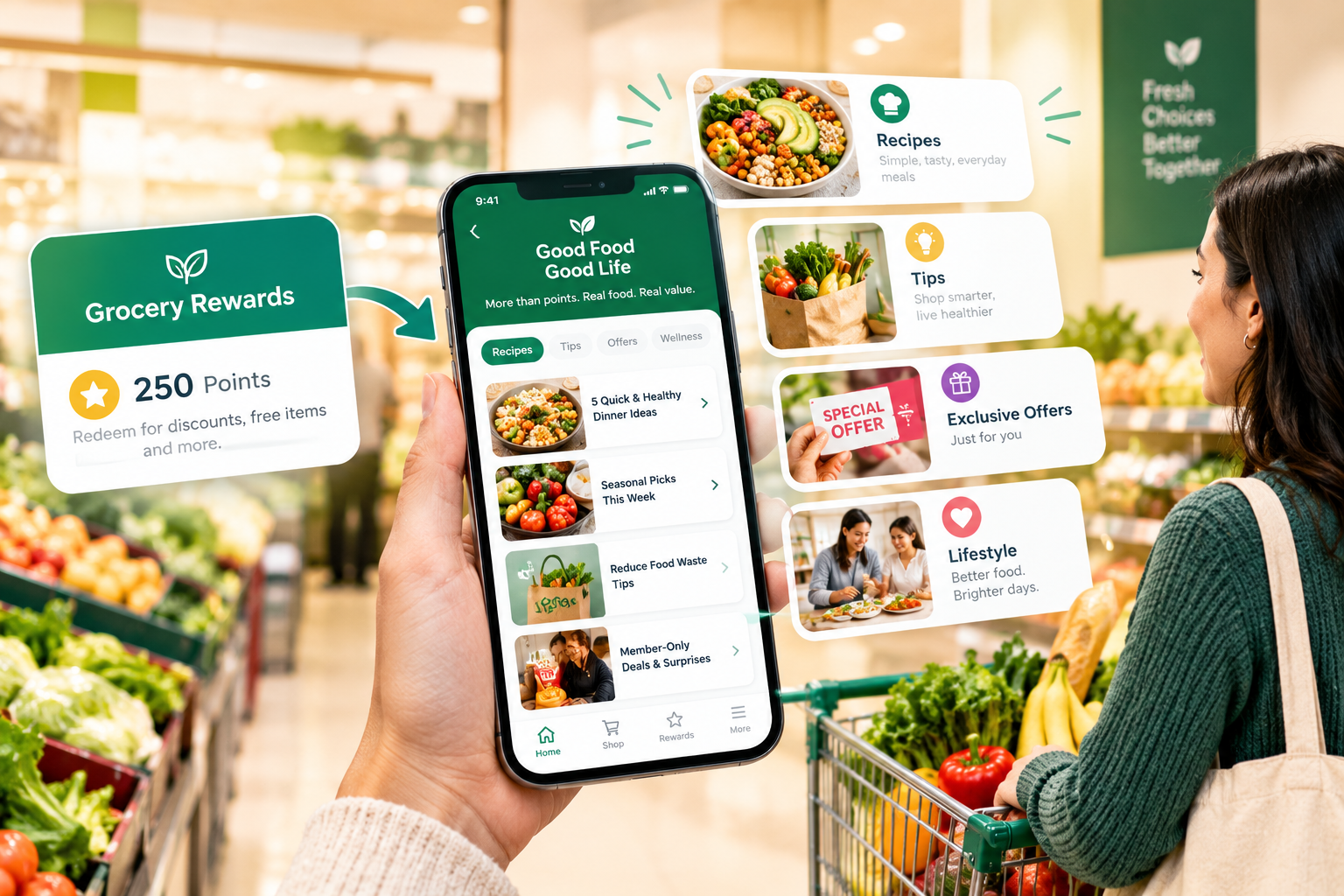
The Digital Shelf Is Grocery's New Front Door
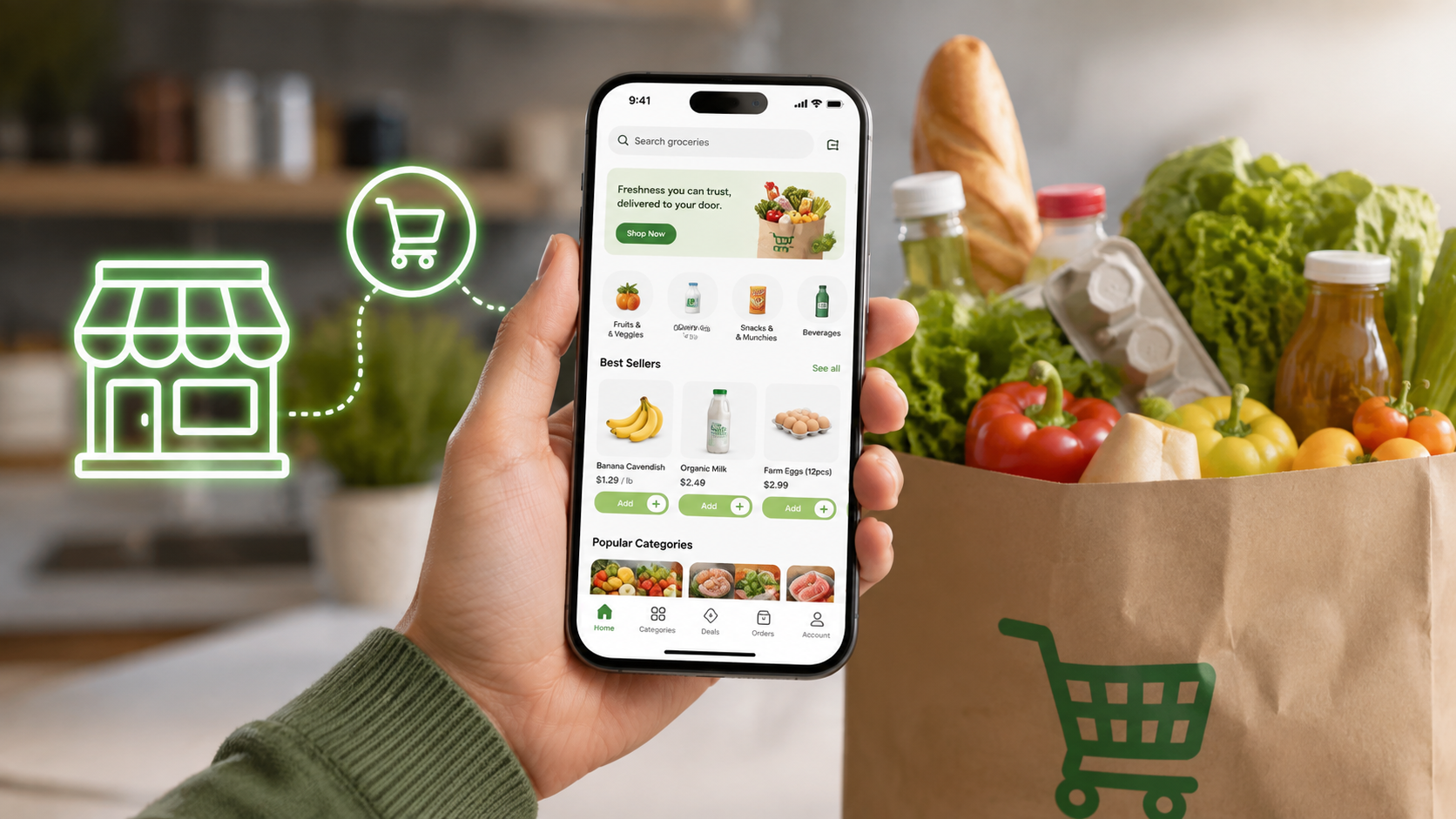

For most of grocery's history, the front door was literal. It was the automatic doors at the entrance, the cart corral, the first aisle a shopper walked down.
That's no longer where a grocery relationship begins.
More than 90% of grocery shoppers now move between online and in-store journeys, and for a growing share of them, the first real interaction with a product happens on a screen, not a shelf.
That changes what "first impression" means for a grocery brand.
A few shifts are behind this:
- Discovery increasingly starts with a search, a recommendation, or a sponsored placement
- The product page now has to do the job the physical shelf used to do
- Retail media is inserting new decision points earlier in the journey
- AI-assisted answers are replacing some of what a shopper used to figure out by reading a label in person
Current Grocery Trends
1. The Shelf Isn't the First Touchpoint Anymore
A shopper today might encounter a product through a sponsored search result, a recipe recommendation, or an AI-generated answer before they ever see it on a physical shelf.
That means the product's first impression is increasingly digital, whether the brand has planned for that or not.
2. Habit Is Giving Way to Discovery
Grocery shopping used to be driven by lists and routine. That's still true for a large share of trips, but the openness to discovery mid-journey has grown substantially as digital touchpoints multiply.
A shopper who came in for milk can now leave with three products they hadn't planned to buy, because something surfaced at the right moment.
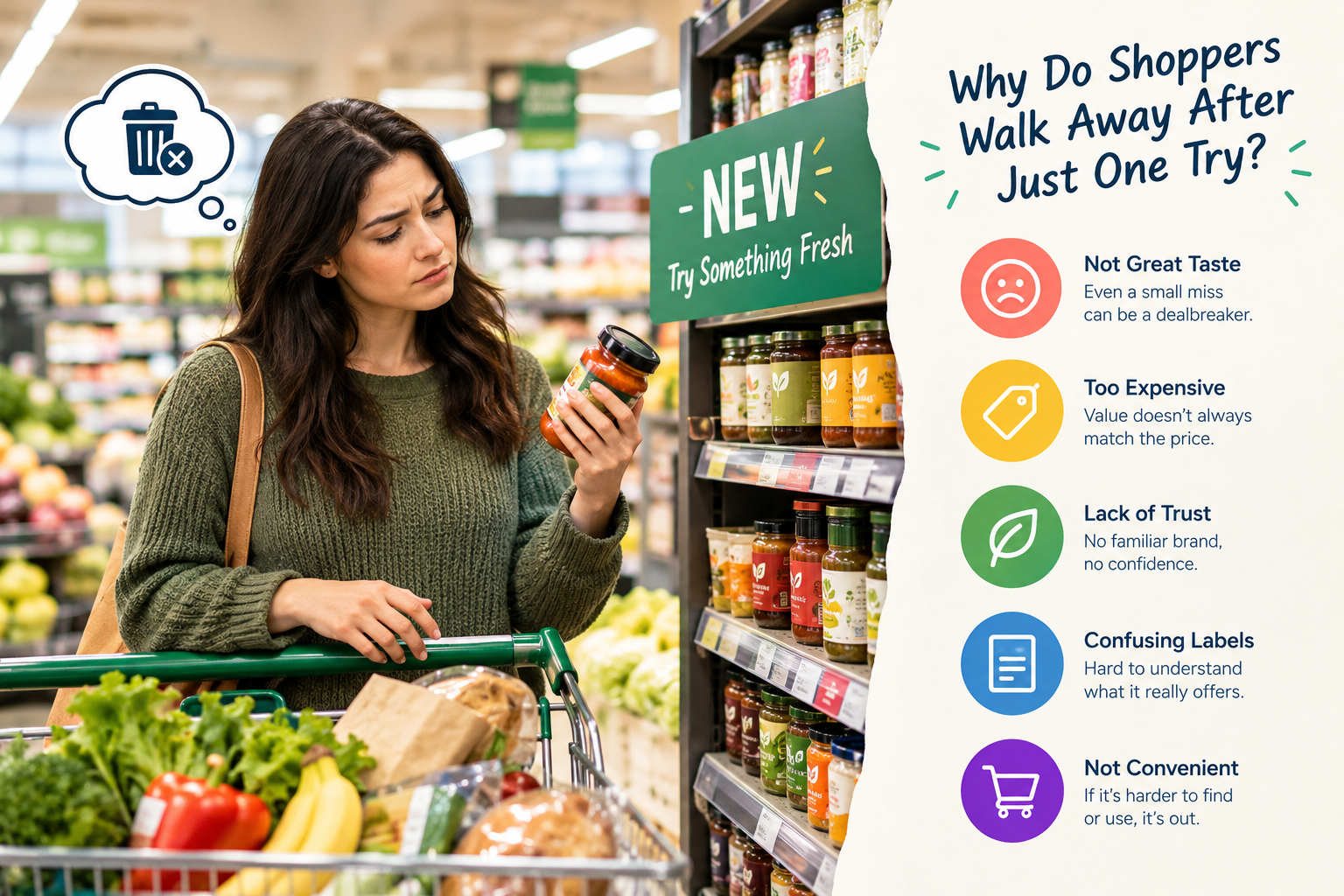
3. Trust Has to Be Earned Faster
In a physical store, a shopper can pick up a product, read the label, and make a judgment call in seconds. Online, that same judgment call depends entirely on what the brand chooses to show them.
If the digital experience doesn't answer the question a shopper would have answered by holding the product, that shopper moves on.
Industry Trends Impacting the Grocery Market
1. Retail Media Is Changing Who Gets Seen First
Retail media has become one of the primary ways grocery products get discovered, with sponsored placements now shaping what shoppers see before anything else.
That's an opportunity, but it's also a shift in responsibility. Winning the placement doesn't mean much if the product page it leads to doesn't close the sale.
2. The Product Page Has to Work Harder Than It Used To
A grocery product page used to be a formality: an image, a price, an add-to-cart button. That's not enough anymore.
Shoppers arriving from a search result or a sponsored placement expect the page to immediately answer the questions that matter to them: does this fit my dietary needs, how do I use it, is it worth the price.
3. Video Turns Ingredients Into Outcomes
Grocery shoppers aren't buying ingredients in isolation. They're buying meals, routines, and solutions to a need.
Shoppable video is one of the clearest ways to make that translation, showing a product as part of a recipe or routine instead of describing it in a bullet list. And because grocery catalogs are large and constantly rotating with seasonal items, AI-generated video is what makes it possible to produce that content at the pace the category actually moves.
Challenges and Opportunities in Grocery
The challenge is that most grocery digital experiences still function like a placeholder for the physical shelf rather than a real substitute for it.
The opportunity is that grocery retailers control more of that experience than they ever controlled the physical shelf. Digital merchandising decisions can be tested, personalized, and improved in ways a fixed aisle never could be.
Strategic Recommendations for Grocery Brands and Retailers
The first priority is treating the product page as the actual front door, not a formality after the real decision has already been made in-store.
The second is connecting retail media investment to product page quality. Media drives the click. Content and clarity drive the conversion.
The third is using video to do the job a shopper's own hands and eyes used to do in the aisle, showing use, fit, and outcome, not just listing specs.
Looking Ahead
Grocery's front door isn't going back to being a physical one. The digital shelf is where trust gets built now, and it rewards the brands that treat it that way.
The retailers who understand this early will spend less time competing for shelf space and more time building a front door shoppers actually want to walk through.
Want to turn your product pages into a real front door for shoppers? See how leading grocery brands are using video and AI to guide shoppers from discovery to cart.
FAQ
Why is the grocery product page more important than it used to be?
More grocery discovery now happens digitally, through search, recommendations, and retail media, before a shopper ever sees a product on a physical shelf. That makes the product page the first real impression for a growing share of shoppers.
How is retail media changing grocery discovery?
Retail media is increasingly determining which products shoppers see first, through sponsored placements and promoted search results. It drives visibility, but conversion still depends on the product page the shopper lands on.
Why does video matter for grocery products specifically?
Grocery purchases are often about outcomes, like meals and routines, not just ingredients. Video can show a product in that context in a way a static description can't, which helps shoppers move from consideration to purchase faster.
What should grocery retailers prioritize on their digital shelf?
Treating the product page as the primary point of trust-building, connecting media investment to page quality, and using video to answer the practical questions a shopper would otherwise resolve by handling the product in-store.
Unlock Exclusive Insights
By submitting this form, you agree to Firework's privacy policy and consent to receive personalized marketing communications. You can unsubscribe at any time.