What the Rise of GLP-1s Is Doing to Grocery Shopping Carts
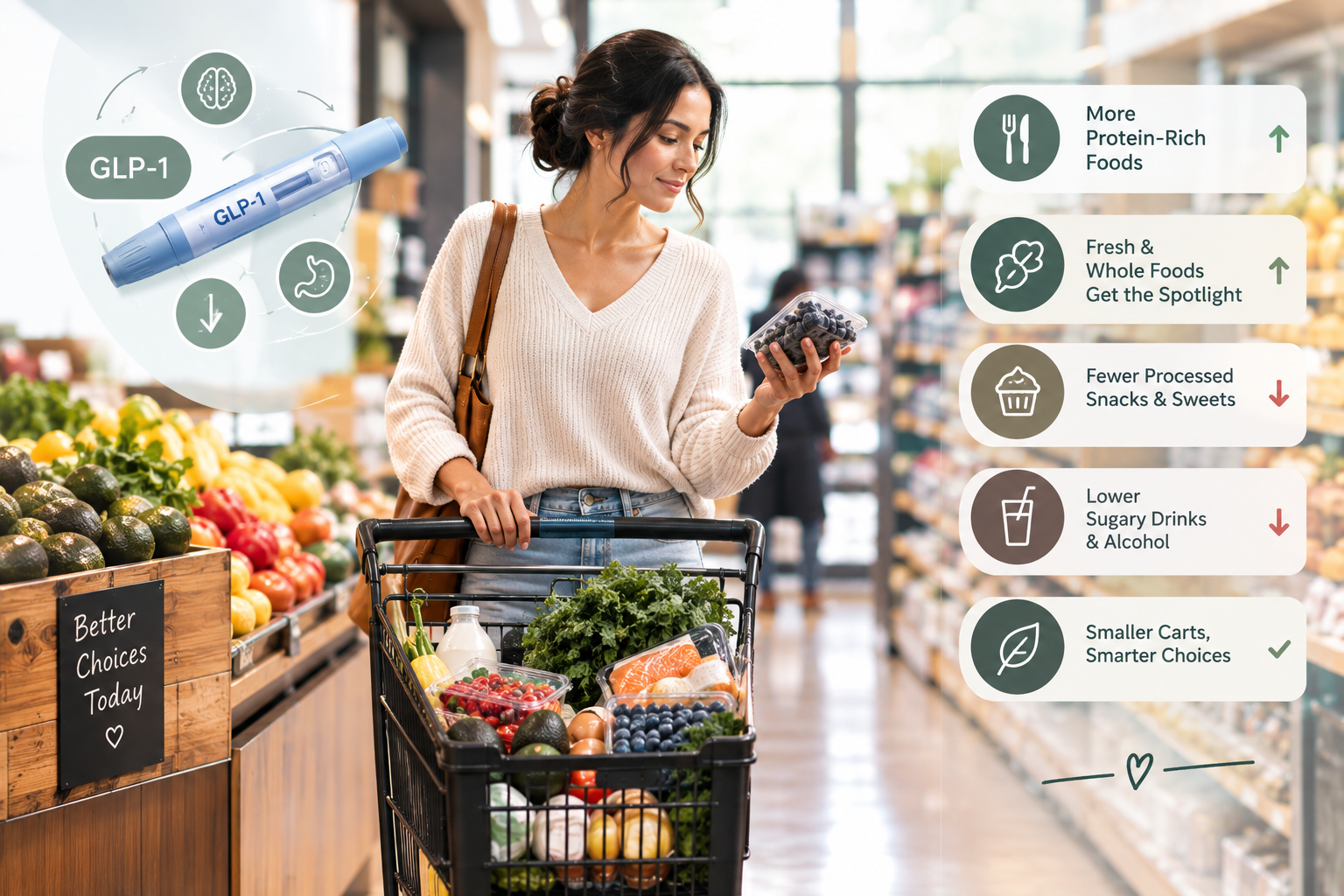

GLP-1 medication use is showing up clearly in grocery purchasing data. Households using these medications outspend non-users by roughly 25% on protein shakes and by smaller but meaningful margins on protein water, meat, beans, and grains.
Retailers are already responding. Some smaller grocers are reworking floor plans to highlight higher-protein items, and refrigerated units carrying protein drinks and yogurts are showing up in checkout areas that used to be reserved for impulse snacks.
A few things are converging here:
● A meaningful, growing share of shoppers are changing what and how much they eat
● Traditional snacking categories are facing new headwinds as a result
● High-protein, high-fiber, and clean label products are seeing a real demand lift
● Merchandising and content built around old consumption patterns increasingly misses where demand is actually shifting
Current Grocery Shopper Trends
1. Portion and Format Preferences Are Shifting
Shoppers managing appetite changes often look for smaller portions, more concentrated nutrition, or easier-to-digest formats, which changes what "convenient" actually means for this growing segment.
2. Protein Is Becoming a Cross-Category Priority
Protein content is increasingly a deciding factor well beyond the traditional meat and dairy aisles, showing up as a purchase driver in snacks, drinks, and prepared foods alike.
3. Traditional Snacking Categories Are Feeling Real Pressure
As appetite and eating patterns shift for a growing share of shoppers, categories built around traditional snacking occasions are seeing demand soften in ways that predate this trend but are being accelerated by it.
Industry Trends Impacting the Grocery Market
1. Merchandising Is Adjusting Faster Than Marketing Content Is
Retailers are physically rearranging shelves and checkout displays to reflect this shift faster than a lot of brand marketing content has caught up to the same reality.
2. Clean Label and High-Protein Claims Are Getting More Scrutiny
As demand for these attributes grows, so does shopper scrutiny of whether a product's claims actually hold up, making clear, specific communication more important than a label alone.
3. Video Can Show, Not Just Claim, a Product's Fit for This Shift
A package callout saying "high protein" is easy to state and easy to overlook. Shoppable video showing exactly how a product fits into a higher-protein routine, a shake as part of a real day's meals, for instance, does more to connect with this shift than a label claim alone. AI-generated video makes it realistic to produce that kind of routine-specific content across a full product line as this trend continues to grow.
Challenges and Opportunities in Grocery
The challenge is that this shift is reshaping demand patterns across multiple categories at once, snacks, protein, prepared foods, faster than many brands have adjusted their content and merchandising strategy.
The opportunity is that shoppers in this segment are actively looking for products that fit a changing routine. Brands that speak directly and credibly to that need have a real opening.
Strategic Recommendations for Grocery Brands and Retailers
The first priority is understanding how this shift is actually changing demand within a brand's specific categories, rather than assuming it only affects snacking.
The second is making protein and portion information clear and specific, since scrutiny of these claims is rising alongside demand for them.
The third is using video to show real fit within a changing routine, rather than relying on a package callout to do that work alone.
Looking Ahead
This shift in eating patterns isn't a short-term blip, and it's already showing up in real purchasing data. Grocery brands that adjust their content and merchandising to reflect it will be better positioned than those still marketing to a routine that a growing share of shoppers have already moved past.
Want your products to speak clearly to changing eating routines? See how leading grocery brands are using video to show real fit, not just make a label claim.
FAQ
How are GLP-1 medications affecting grocery shopping habits?
Households using GLP-1 medications are spending more on protein-focused products, including protein shakes, protein water, meat, and grains, while traditional snacking categories see softer demand.
Why are grocery retailers changing their store layouts because of this trend?
Some retailers are reworking floor plans and checkout displays to highlight higher-protein items, responding directly to changing purchasing patterns among a growing segment of shoppers.
What categories are most affected by shifting GLP-1-related eating patterns?
Protein-focused products across multiple categories, drinks, snacks, meat, and prepared foods, are seeing increased demand, while traditional snacking categories are facing softer demand as a result.
How can grocery brands respond to this shift in their marketing?
By clearly and specifically communicating how a product fits into a higher-protein or portion-conscious routine, ideally through video that shows real usage rather than relying on a package claim alone.
Unlock Exclusive Insights
By submitting this form, you agree to Firework's privacy policy and consent to receive personalized marketing communications. You can unsubscribe at any time.