Why Retail Media Alone Won't Save Grocery Conversion
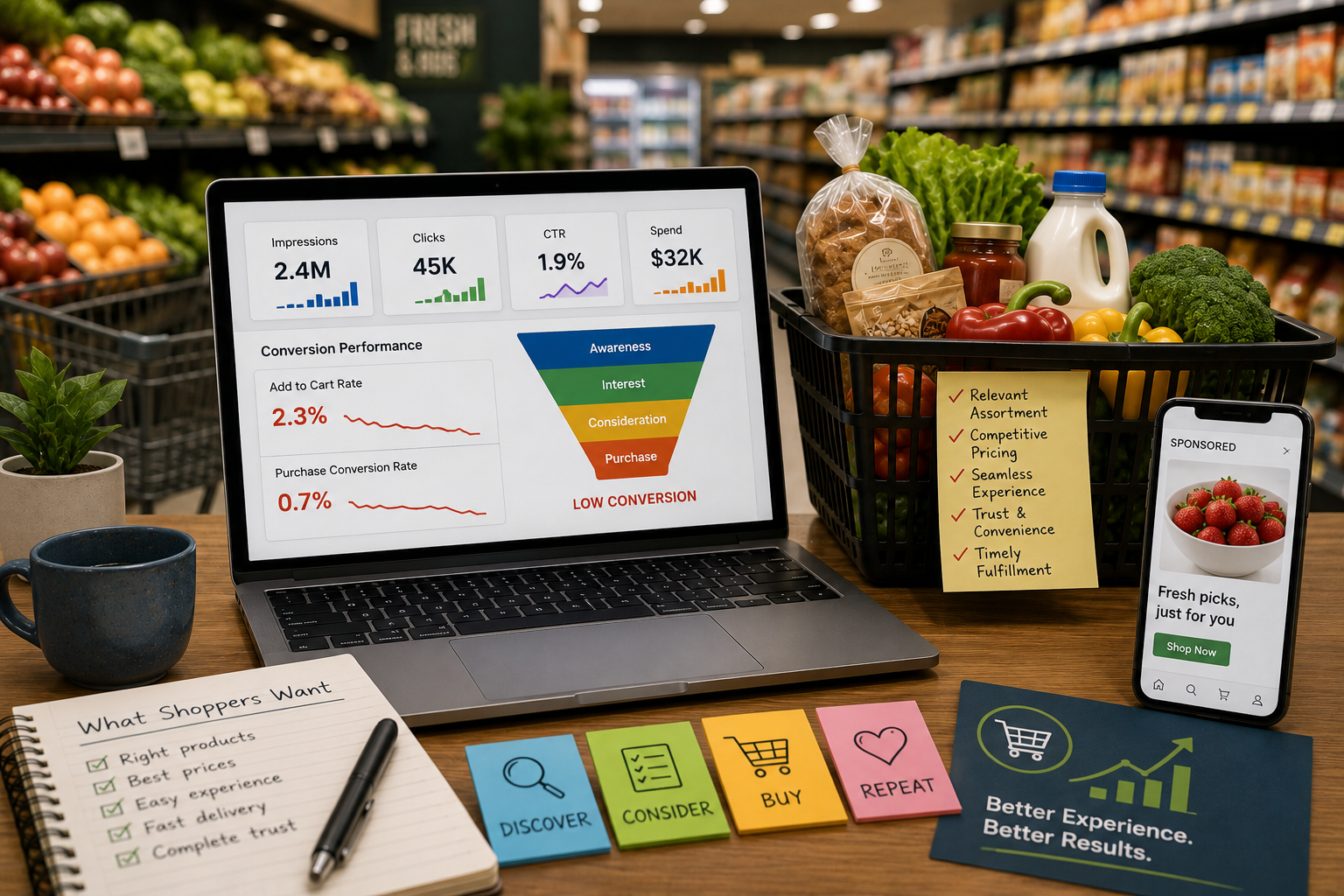

Retail media has become one of grocery's biggest growth stories. Sponsored placements, promoted search results, and on-site advertising are reshaping how grocery products get discovered.
But visibility isn't the same thing as conversion, and treating retail media as a complete solution on its own is a mistake grocery brands are starting to notice the cost of.
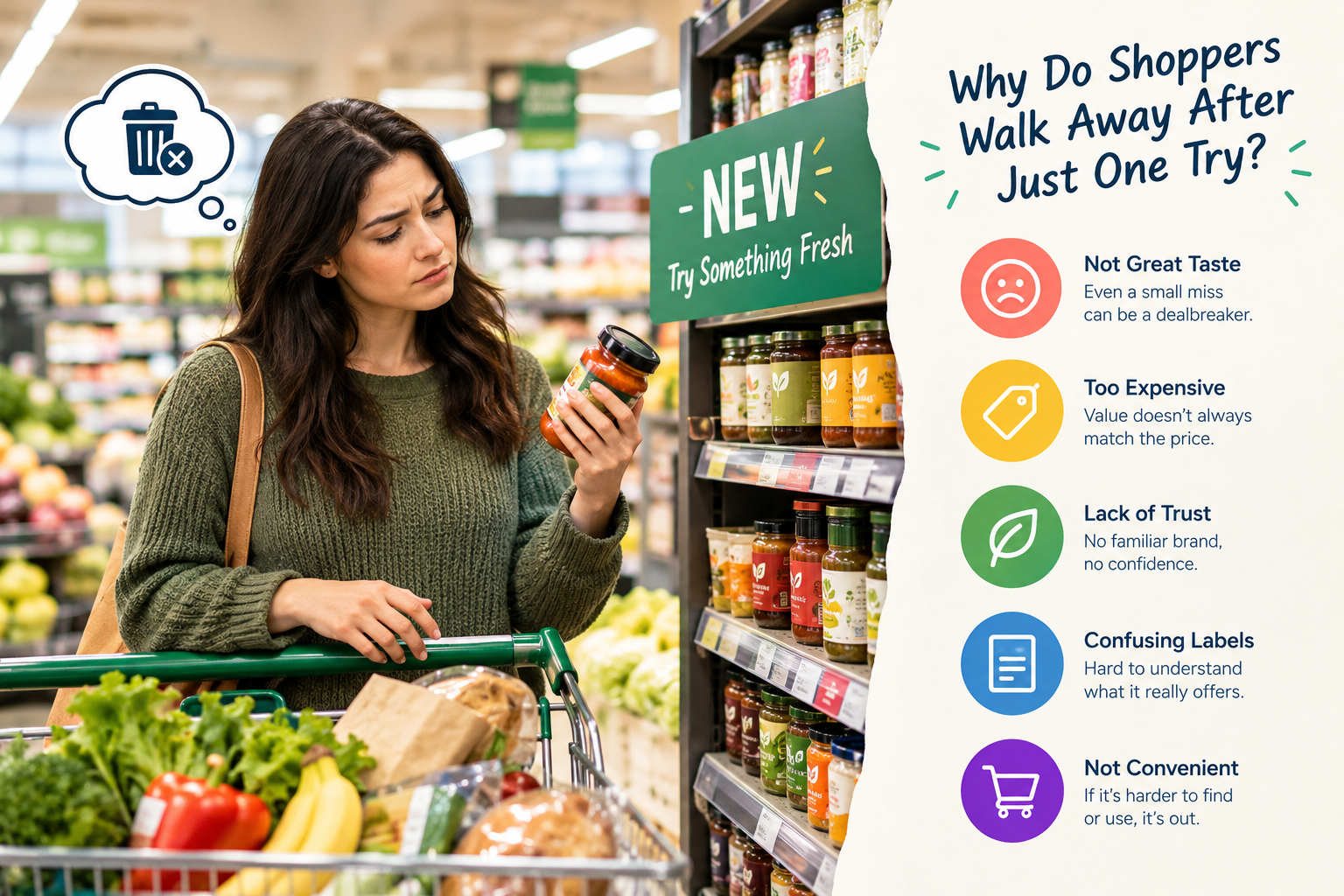
A sponsored placement gets a shopper to look. What happens after that look is still determined by the product page, and retail media budgets don't fix a weak one.
A few things are true about where retail media actually sits in the funnel:
● Retail media is exceptionally good at earning attention
● It's not designed to do the job of building confidence or answering questions
● A strong media placement leading to a weak product page is a wasted media dollar
● The brands getting the most out of retail media are the ones pairing it with content that actually converts the attention it buys
Current Grocery Trends
1. Retail Media Spend Is Growing Faster Than Content Investment
Many grocery brands are increasing retail media budgets faster than they're improving the product pages that media traffic actually lands on. That mismatch is starting to show up in conversion data.
2. Shoppers Arriving From Sponsored Placements Have Different Expectations
A shopper who clicked a sponsored placement often has higher purchase intent than one browsing casually, and a weaker page experience disappoints a more valuable shopper than usual.
3. Attention Is Getting More Expensive, Which Raises the Stakes on Conversion
As more brands compete for the same retail media inventory, the cost of earning attention keeps climbing. That makes what happens after the click more financially important than it used to be, not less.
Industry Trends Impacting the Grocery Market
1. Retail Media ROI Is Being Measured More Closely
Brands are getting more sophisticated about tracking what happens after a sponsored click, not just the click itself. That scrutiny is exposing which media spend is actually converting and which isn't.
2. The Product Page Is the Real Bottleneck for Many Brands
For a lot of grocery brands, the constraint on retail media ROI isn't the media itself, it's what the media is pointing to. A better-targeted placement doesn't fix a page that doesn't answer a shopper's real questions.
3. Video Is What Turns Paid Attention Into an Actual Decision
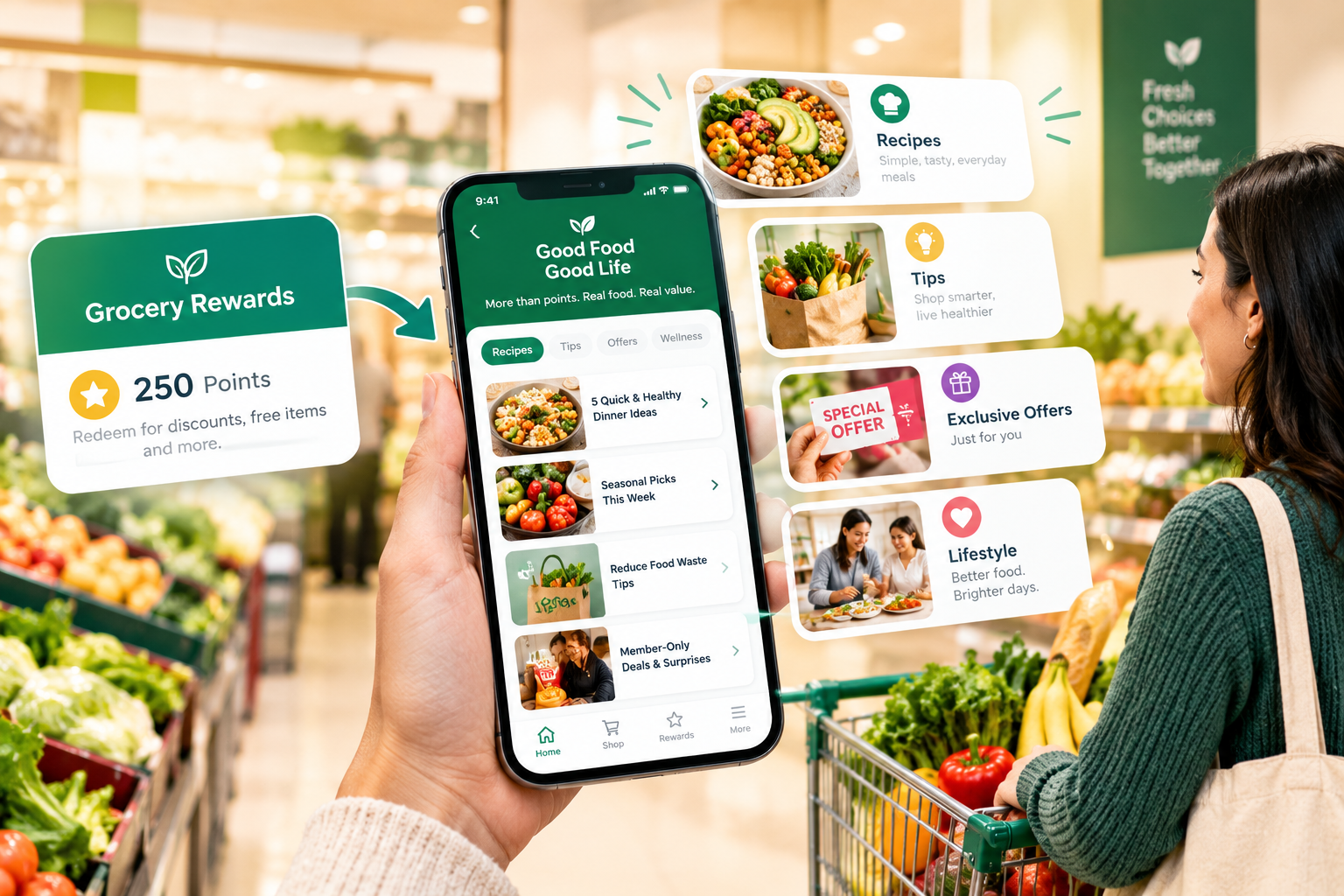
This is where shoppable video becomes the other half of a retail media strategy, not a separate initiative. A sponsored placement earns the click. Video on the page it leads to is what helps convert that click into a purchase, by showing the product in use rather than just describing it. Because grocery catalogs are large and retail media campaigns rotate constantly, AI-generated video is what makes it feasible to keep that page-level content matched to whatever's actually being promoted at any given time.
Challenges and Opportunities in Grocery
The challenge is that retail media and content are often managed as separate workstreams, sometimes by separate teams, which makes the mismatch between attention and conversion easy to miss until the numbers are already disappointing.
The opportunity is that fixing this doesn't require more media spend. It requires connecting the media strategy to the page experience it's driving traffic toward.
Strategic Recommendations for Grocery Brands and Retailers
The first priority is auditing what retail media traffic is actually landing on, not just how much traffic is being driven.
The second is treating video investment as part of the retail media strategy, not a separate content initiative competing for a different budget.
The third is measuring retail media success by conversion, not just clicks or impressions, since that's the number that actually reflects whether the spend is working.
Looking Ahead
Retail media isn't going away, and it shouldn't. It's genuinely effective at earning attention. But grocery brands that keep treating it as the whole strategy, rather than one half of a two-part system, will keep leaving conversion on the table that a stronger product page could have captured.
Want your retail media spend to actually convert, not just earn clicks? See how leading grocery brands are pairing media with video to close the gap between attention and purchase.
FAQ
Why doesn't retail media alone guarantee grocery sales conversion?
Retail media is effective at earning shopper attention through sponsored placements, but conversion depends on what the shopper encounters after clicking. A weak product page can waste the value of an expensive media placement.
How can grocery brands improve conversion from retail media traffic?
By pairing retail media investment with strong content, particularly video, on the product pages that media traffic lands on, so the attention earned through media has a better chance of converting into a purchase.
Why is video important for grocery retail media strategy?
Video can show a product in use, providing the kind of context and confidence a static product page often lacks, which helps convert the higher-intent traffic that retail media placements typically bring in.
Should grocery brands measure retail media success by clicks or conversions?
Conversion is a more meaningful measure of retail media success than clicks or impressions alone, since it reflects whether the traffic being purchased is actually translating into sales.
Unlock Exclusive Insights
By submitting this form, you agree to Firework's privacy policy and consent to receive personalized marketing communications. You can unsubscribe at any time.