Amazon A+ Content Set the Standard. Here’s How to Apply It to Your Own PDPs.


Amazon's A+ Content defined what a high-performing product page should look like. Rich visuals, comparison modules, lifestyle storytelling, and structured explanations helped shoppers understand products faster and buy with confidence.
But Amazon hasn’t stopped there.
With the introduction of Amazon Rufus, the company has made it clear that static content alone is no longer enough. The future of PDPs is interactive, conversational, and intent-driven.
For brands and retailers, the takeaway is simple. What worked on Amazon should now be applied to brand-owned PDPs using video-first content, AI-generated assets, and AI-powered guidance.
What Amazon A+ Content Got Right
A+ Content worked because it removed friction.
Instead of forcing shoppers to piece together information from bullet points and reviews, A+ Content delivered clarity through:
Visual explanations
Side-by-side comparisons
Use-case storytelling
Feature callouts in context
The result was a PDP that educated before persuading. Conversion lift followed naturally because shoppers felt informed, not sold to.
That same principle still holds. The difference is how it is now being delivered.
Rufus Signals the Shift From Static Pages to Interactive Guidance
Amazon Rufus represents the next evolution of A+ Content.
Rather than presenting fixed modules or predefined questions, Rufus allows shoppers to ask questions in natural language and receive contextual answers in real time. It adapts based on what the shopper wants to know, not what the brand assumes they need.
This fundamentally changes the role of the PDP.
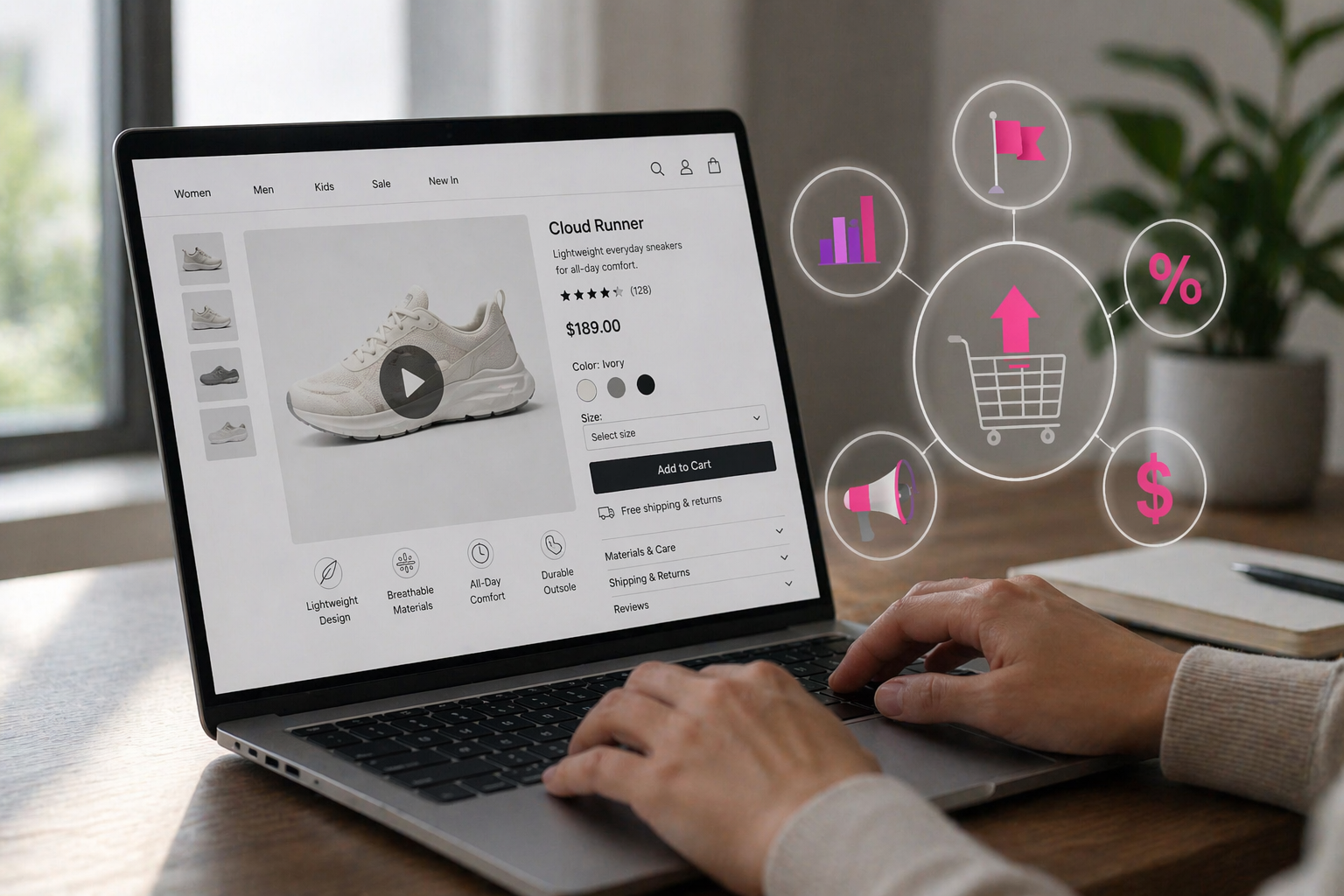
Product pages are no longer static destinations. They are interactive decision layers that respond to intent, clarify uncertainty, and guide shoppers forward without forcing them to leave the page.
Why This Matters for Brand-Owned PDPs
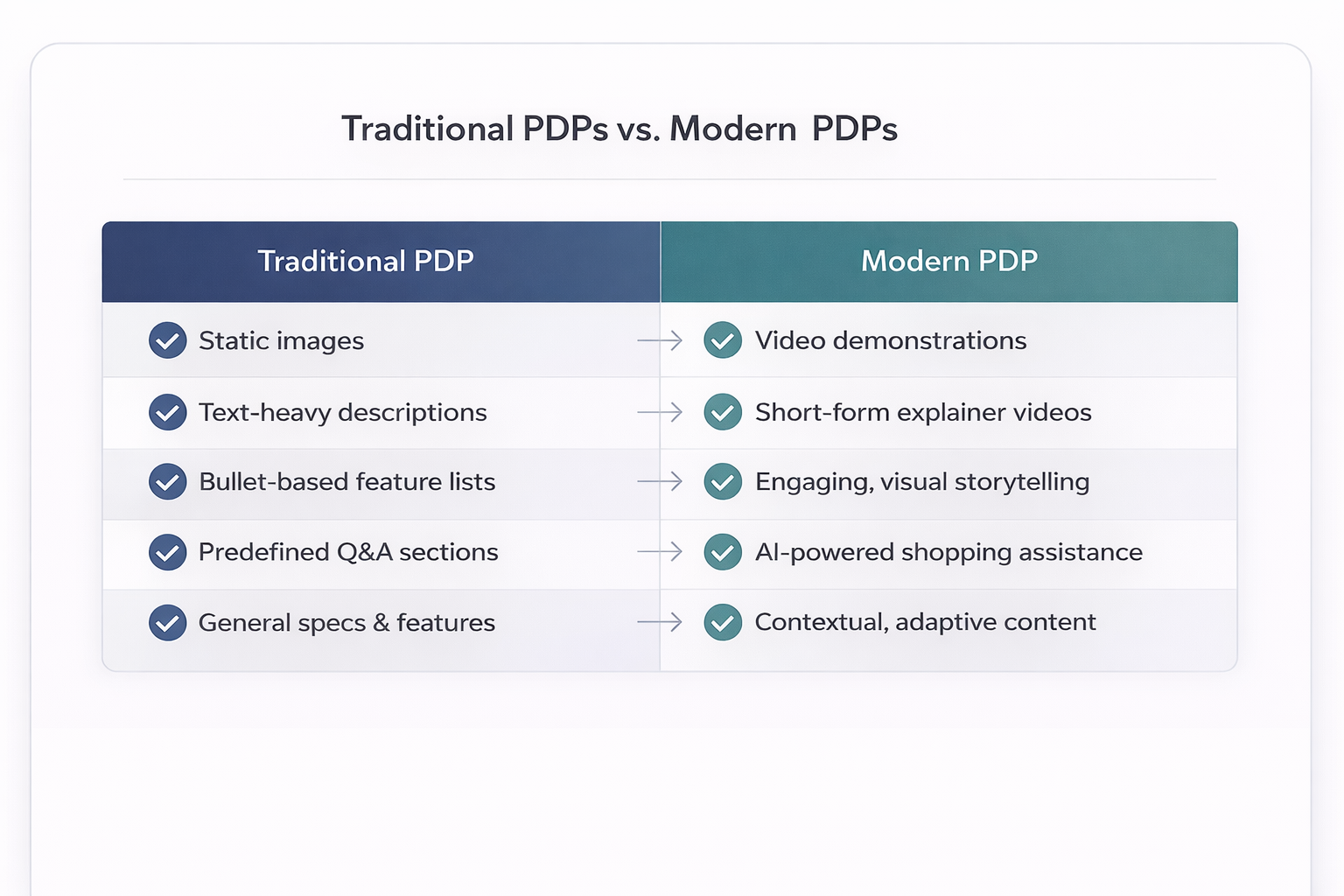
Most brand PDPs still rely on:
Long descriptions
Static images
Manual FAQs
One-size-fits-all layouts
Meanwhile, shopper expectations have shifted.
Shoppers now expect:
Visual proof instead of text-heavy explanations
Answers without scrolling or searching
Guidance that adapts to their needs
Confidence before commitment
Amazon Rufus is built around these expectations. Brands that want to compete on experience must adopt the same mindset, even if the execution looks different.
Applying the Rufus Model With Video-First Content
Amazon A+ Content relied heavily on images and layouts. Modern PDPs rely on video.
Short-form video can:
Demonstrate products in real use
Show fit, scale, or installation
Explain features faster than text
Reduce uncertainty for high-consideration purchases
This video does not need to be produced from scratch. Many brands now pull high-performing content from social platforms, repurpose influencer clips, or generate product videos using AI.
The result is richer storytelling at a fraction of the cost and time required for traditional production.
How AI-Generated Video Makes A+ Principles Scalable
One of the limitations of Amazon A+ Content is speed. Updating content takes time and coordination.
AI-generated video removes that bottleneck.
Brands can:
Turn product images into animated demos
Generate explainer videos at scale
Localize content by market or language
Refresh PDP content without reshoots
Test multiple narratives across the same product
This allows PDPs to stay current, relevant, and optimized without slowing down merchandising or marketing teams.
Replacing Static FAQs With AI-Powered Guidance
Rufus demonstrates that shoppers no longer want fixed Q&A sections. They want answers that adapt to what they ask and where they are in the journey.
On brand-owned PDPs, this shows up as AI-powered FAQs or assistants that:
Respond dynamically to shopper questions
Surface relevant product content or video
Clarify compatibility, use cases, or edge cases
Reduce bounce caused by unanswered questions
When paired with video, this creates a powerful loop. A shopper asks a question, receives a clear answer, and immediately sees visual confirmation without breaking the flow.
The Modern A+ Framework for PDPs
Amazon has shown the direction. Brands can apply the same logic with more flexibility.
Amazon-style elements evolve into:
Feature modules becoming short-form video
Comparison charts becoming video-led comparisons
Lifestyle imagery becoming social and influencer content
Static Q&A becoming AI-powered guidance
Rigid layouts becoming scrollable, content-first experiences
The goal is not to copy Amazon’s layout. It is to match Amazon’s intent. Reduce friction, increase understanding, and build confidence before checkout.
Why This Is the Competitive Advantage Going Forward
Shoppers are no longer comparing PDPs to other PDPs, they are comparing experiences.
Amazon Rufus has raised the bar for what guidance feels like. Brands that rely solely on static content risk falling behind, not because their products are worse, but because their experiences feel outdated.
Retailers that apply these lessons to their own PDPs stop competing on discounts and start competing on clarity.
What This Means for Retail Teams
If your PDPs still rely on static descriptions and manual FAQs, you are forcing shoppers to do the work.
Modern PDPs should:
- Guide instead of list
- Show instead of describe
- Respond instead of wait
Video-first content and AI-powered guidance make this possible at scale.
Talk to a Firework expert to see how video-first PDPs, AI-generated content, and AI-powered shopping assistance can bring Amazon-level guidance to your own product pages.
FAQ
What is Amazon Rufus?
Amazon Rufus is a generative AI shopping assistant that helps shoppers ask questions and receive contextual product guidance in real time.
How is Rufus different from traditional product page content?
Rufus adapts to shopper intent instead of presenting fixed content or predefined questions.
Can brands replicate this experience on their own sites?
Yes. AI-powered FAQs and assistants can deliver similar guidance when paired with strong video and product content.
Why is video important alongside AI guidance?
Video provides visual proof that reinforces AI explanations and builds confidence faster than text alone.
Is this approach only for enterprise retailers?
No. AI-generated video and AI-powered guidance make advanced PDP experiences accessible to brands of all sizes.
Unlock Exclusive Insights
By submitting this form, you agree to Firework's privacy policy and consent to receive personalized marketing communications. You can unsubscribe at any time.