AI-Generated Video for Ecommerce: How Brands Turn Content Gaps Into Sales
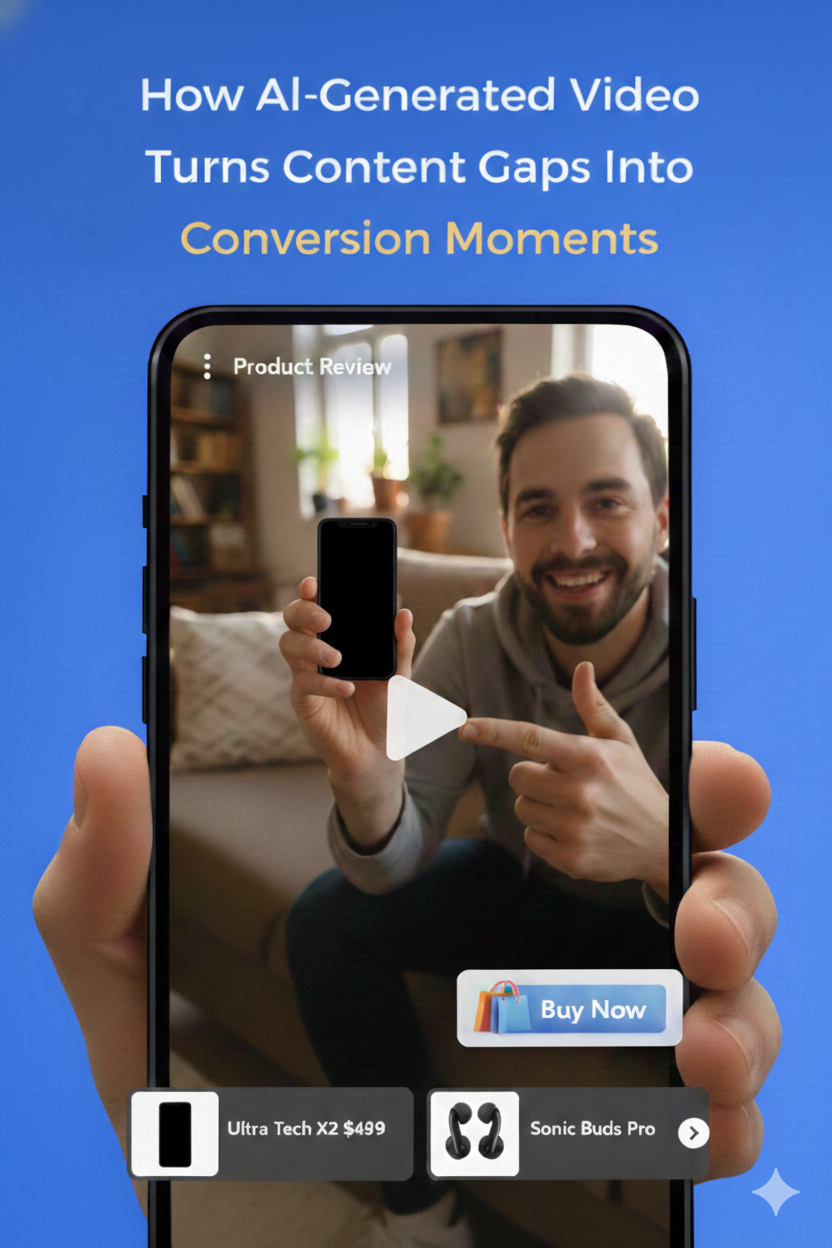

Ecommerce teams have spent years optimizing for traffic: better SEO, smarter ads, cleaner funnels. But in 2026, conversion challenges rarely come down to visibility alone. Shoppers are finding products easily. What they’re struggling with is confidence.
The modern shopper doesn’t abandon them because they aren’t interested, they abandon them because something feels unclear, incomplete, or unproven. And in most cases, the issue isn’t the product, it’s the content gap surrounding it.
As retail moves toward video-first, AI-guided experiences, that gap is becoming more obvious. The brands closing it fastest aren’t adding more copy or images. They’re using AI-generated content and shoppable video to turn moments of hesitation into moments of action.
The Content Gap Is the New Conversion Bottleneck
The content gap lives in the space between interest and decision.
It shows up when:
- A shopper understands what a product is, but not how it fits into their life
- A PDP lists features, but doesn’t show outcomes
- A customer wants reassurance but has to leave the site to find it
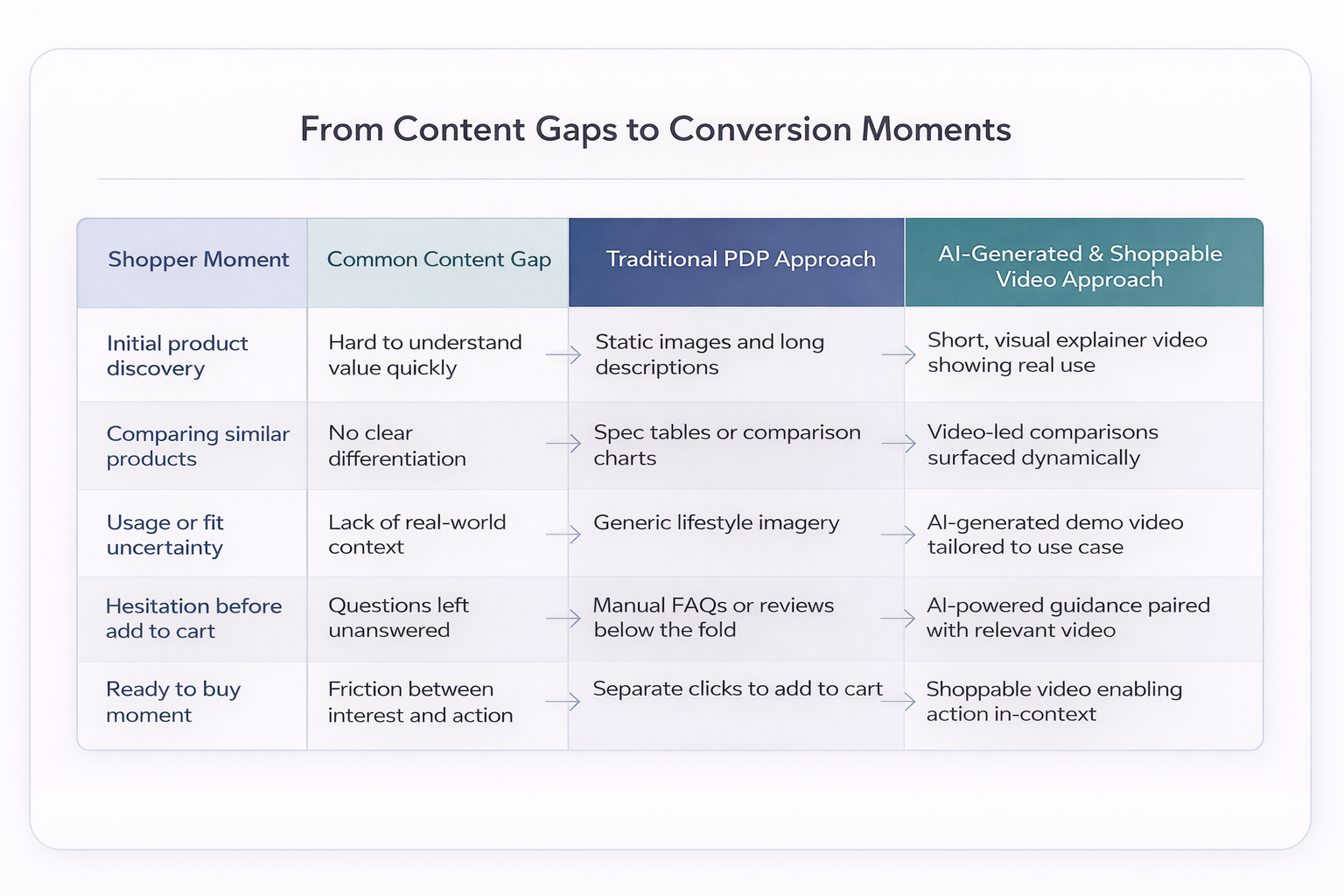
Traditionally, retailers have tried to solve this with:
- Longer product descriptions
- More static images
- Bulky comparison charts
But these solutions ask shoppers to work harder at the exact moment they’re deciding whether to buy. In a world shaped by TikTok, YouTube, and Instagram, that friction feels outdated. Shoppers don’t want to read their way to confidence, they want to see it, and they want social validation.
Why Video Became the Default Language of Discovery
Video has become the most trusted format in commerce for one simple reason: it compresses learning.
In seconds, a shopper can understand:
- How a product looks in real use
- How it compares to alternatives
- Whether it aligns with their needs, style, or expectations
That’s why discovery increasingly looks more like scrolling than searching. Instead of navigating filters and dropdowns, shoppers move through short, visual stories that explain products through demonstration.
This shift is especially visible in high-consideration categories including beauty, fashion, consumer electronics, home improvement, where context matters as much as specs.
But while social platforms mastered video discovery, most brand websites still struggle to scale it meaningfully.
The Scaling Problem That Held Video Back
Retailers have always known video converts. The challenge has never been belief, it’s been production.
Creating high-quality video for every product, variation, season, and market has historically required:
- Studio shoots
- Long production timelines
- Significant budget
As catalogs grow and shopper expectations rise, that model breaks. You can’t hand-produce your way to full coverage. This is where AI-generated video changes the equation.
AI-Generated Video Closes the Gaps Static Content Can’t
AI-generated video doesn’t replace premium brand storytelling. It fills the spaces where no video exists at all. Instead of asking “Can we afford to create a video for this product?” the question becomes “Where would video reduce friction right now?”
AI-generated video makes it possible to:
- Create explainers for long-tail SKUs
- Generate comparison or feature-focused videos dynamically
- Refresh content based on seasonality or shopper behavior
- Localize video at scale across regions and languages
Most importantly, it allows retailers to respond to intent, not just publish content and hope for the best. When video becomes flexible and scalable, it stops being an asset library and starts functioning as a conversion tool.
From Watching to Buying: Where Shoppable Video Comes In
Video alone builds confidence. Shoppable video removes the final step. Instead of watching, then searching, then clicking, shoppers can:
- Explore products inside the video
- Compare options without leaving the experience
- Add to cart at the moment of understanding
This matters because confidence is fragile. Every extra step is a chance to lose momentum.
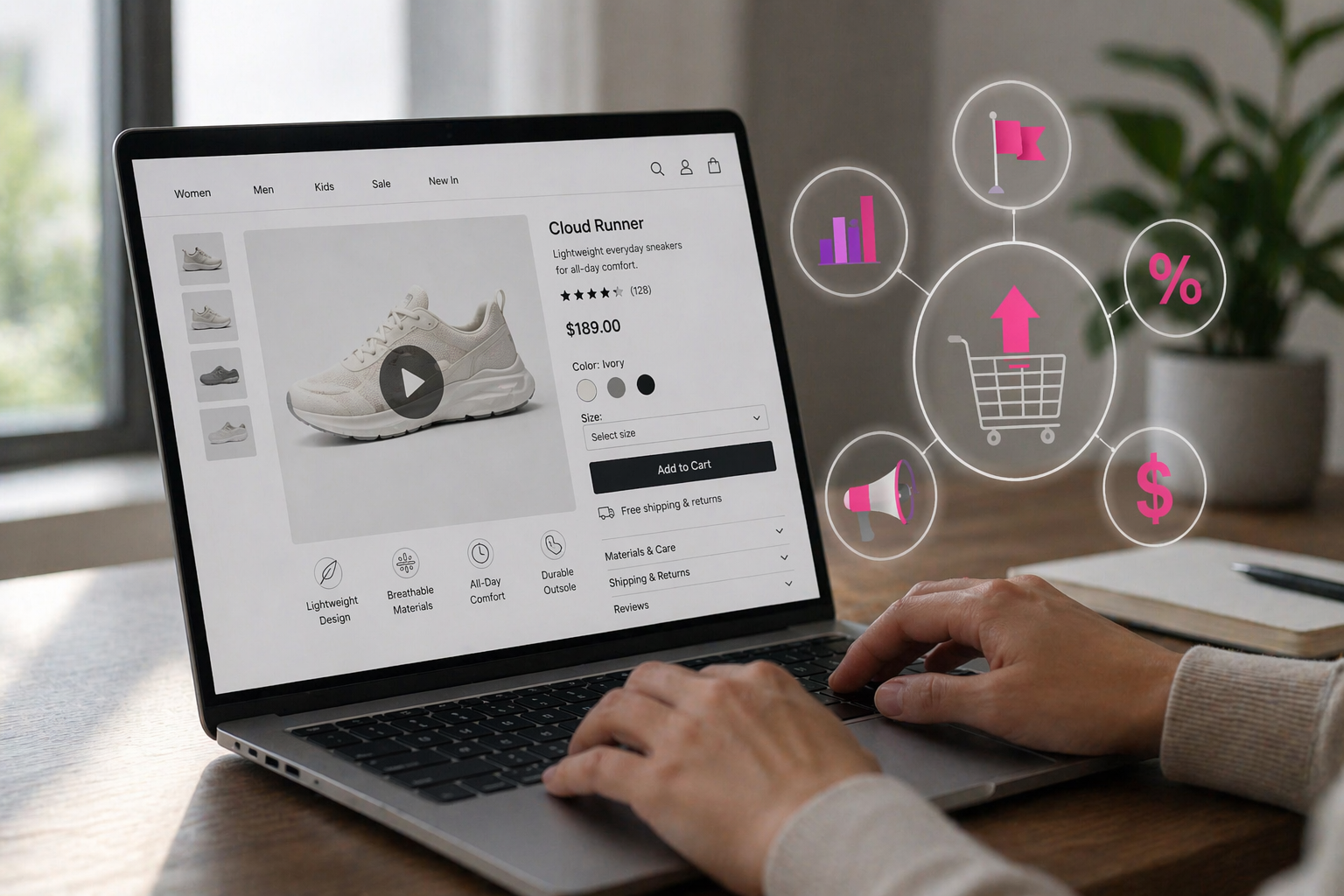
Shoppable video turns explanation into action, especially when paired with AI-generated content that surfaces at the right time in the journey. Together, they transform PDPs from static endpoints into active decision environments.
Turning Hesitation Into Guidance, Not Pressure
The most effective video experiences feel helpful and personalized.
AI-generated and shoppable video work best when they:
- Answer the question a shopper is already asking
- Demonstrate use, fit, or functionality clearly
- Reduce the mental load of decision-making
This is a subtle but important shift. Instead of pushing shoppers toward checkout, retailers are guiding them toward clarity.
In practice, this might look like:
- A short AI-generated explainer video triggered after a shopper scrolls past specs
- A shoppable comparison video when multiple products are viewed
- A visual “how it works” moment embedded directly into the PDP
These are conversion moments, not because they sell harder, but because they remove doubt and add social validation.
AI, Video, and the Rise of Guided Commerce
As AI shopping assistants and agent-driven experiences become more common, content plays a new role.
Shopping is becoming conversational:
- Shoppers describe needs, not SKUs
- AI interprets intent, not keywords
- Journeys adapt dynamically, not linearly
In this environment, video becomes the language AI uses to explain, recommend, and reassure. Static content struggles to keep up with that flexibility.
AI-generated video gives retailers the ability to:
- Support conversational discovery with visual proof
- Adjust explanations based on where shoppers are stuck
- Serve different content to different intents in real time
This is what turns ecommerce from a catalog into an experience.
Why Conversion Moments Matter More Than Conversion Rates
Conversion rate is an outcome, and shoppers don’t need more persuasion, they need less uncertainty.
AI-generated and shoppable video create micro-moments where:
- Understanding clicks
- Doubt disappears
- Decisions feel easy
These moments compound. They increase confidence, reduce returns, and build trust over time. Retailers who focus only on the final click miss the opportunity to improve the journey that leads there.
The Bigger Shift: From Content Creation to Content Systems
The future of retail content isn’t about producing more assets, it’s about building systems that adapt.
AI-generated video enables that shift by:
- Filling content gaps at scale
- Supporting guided, intent-based journeys
- Making explanation an always-on capability
When paired with shoppable formats, video becomes more than inspiration, it becomes infrastructure.
Looking Ahead
Every abandoned cart represents a question left unanswered. AI-generated video, combined with shoppable experiences, turns those unanswered questions into moments of clarity, and those moments into conversion.
The brands that win won’t be the ones with the most content. They’ll be the ones that show up with the right explanation, at the right moment, in the format shoppers trust most.
Explore how video-first, AI-powered content can transform how shoppers discover and decide, directly on your site.
FAQ
What is a content gap in ecommerce?
A content gap is the space between what a shopper needs to feel confident buying and what a product page actually shows. It often appears when PDPs rely on static images and text instead of visual explanation and guidance.
Why does video help close content gaps better than text?
Video shows products in use, context, and motion. It answers questions faster than text and reduces uncertainty by demonstrating outcomes rather than listing features.
How is AI-generated video different from traditional product video?
AI-generated video allows retailers to create and update product explanations at scale without relying on long production cycles or studio shoots. This makes it easier to fill content gaps across large catalogs.
What is shoppable video and why does it matter?
Shoppable video allows shoppers to explore products and add them to cart directly within the video experience. It removes friction by letting shoppers act at the moment they feel confident.
Does this replace influencer or studio-produced content?
No. AI-generated video complements high-production and creator content by filling gaps where video didn’t previously exist or couldn’t scale efficiently.
Which industries benefit most from AI-generated and shoppable video?
Industries with higher consideration products see the biggest impact, including fashion, beauty, consumer electronics, and home improvement.
How does this fit into AI-guided or agentic commerce experiences?
AI-generated video gives shopping assistants and guided experiences a visual layer they can surface in real time, helping shoppers understand and decide without leaving the page.
Unlock Exclusive Insights
By submitting this form, you agree to Firework's privacy policy and consent to receive personalized marketing communications. You can unsubscribe at any time.