Home Decor Ecommerce Statistics 2026: Market Size, Trends, and What Drives Conversion

Home decor is one of the largest and fastest-growing categories in ecommerce, and one of the hardest to convert. Shoppers browse extensively, research across multiple channels, and often hesitate at the final step. The category's 1.4% average conversion rate is the second lowest in retail ecommerce, trailing only luxury goods.
That gap between intent and purchase is not a traffic problem. It is a content and experience problem. Shoppers need to see how a product looks in a real space, understand scale and texture, and feel confident before committing to a high-consideration purchase. The brands closing that gap with video, AI, and richer PDP experiences are pulling away from those that aren't.
The statistics below cover the full picture: global market size, online channel growth, consumer behavior, conversion benchmarks, and the content factors that separate high-performing home decor brands from the rest.
What Is Home Decor Ecommerce?
Home decor ecommerce encompasses the online sale of products used to enhance interior spaces: furniture, floor coverings, wall art, textiles, lighting, decorative accessories, and seasonal items. It is one of the most visually driven categories in retail, where the shopper's inability to see a product in her own space creates a persistent confidence gap that static images and bullet-point copy cannot close.
The category spans a wide price range, from impulse-buy decorative accessories under $30 to considered furniture purchases exceeding $2,000, which creates significant variance in purchase behavior, return rates, and content requirements across the same brand.
Home Decor Market Size Statistics
1. The global home decor market is valued at $716.53 billion in 2026, forecast to reach $924.34 billion by 2031
The market is growing at a 5.21% CAGR, driven by rising consumer investment in interior spaces, the expansion of online retail channels, and growing demand for personalized and sustainable home products. North America retains the largest regional share at 41.98% of global revenue in 2025, while Asia-Pacific is advancing at an 8.11% CAGR through 2031.
2. The US home decor market stands at $145.52 billion in 2025, projected to reach $212.93 billion by 2034
The US market is growing at a 4.32% CAGR through 2034, driven by rising home renovation spending, ecommerce penetration, sustainability-focused product launches, and increasing adoption of AI and digital visualization tools that reduce purchase uncertainty.
3. The online home decor market is valued at $120.65 billion in 2025, growing to $255.27 billion by 2032 at an 11.3% CAGR
Online is outpacing the overall market by a wide margin. The 11.3% annual growth rate reflects the accelerating shift of home decor purchases to digital channels, driven by broader ecommerce adoption, the expansion of mobile shopping, and improving digital product experiences including AR visualization and AI-powered discovery.
4. Over 82% of consumers are willing to shop for home decor online
Consumer willingness to buy home products online has crossed a threshold. The friction is no longer about digital reluctance, it is about confidence at the point of purchase. Shoppers who cannot visualize a product in their space, confirm its scale, or answer product questions without leaving the page are the ones who do not convert.
5. US consumers spend an average of $5,635 on home renovation and $1,598 on home decor annually
These are considered, not impulse, purchases. The average home decor spend per household means brands are competing for a meaningful share of discretionary budget. Winning that spend requires a digital experience that mirrors the confidence-building that physical retail provides through touch, scale, and in-person consultation.
Home Decor Ecommerce Conversion Statistics
6. Home decor and furniture ecommerce converts at 1.4%, the second lowest rate of any retail category
For context: beauty and personal care converts at 4.9 to 4.94%, food and beverage at 6.22%, and even fashion at 3.06%. The home decor gap is structural. Shoppers love to browse but hesitate to buy. The reason is not price sensitivity alone, it is the difficulty of visualizing a product in a real-world context from a static PDP.
7. Home and lifestyle brands show the widest conversion variance of any ecommerce category
A $43 curated decor accessory store behaves nothing like a $224 premium kitchen brand, even though both sell home products. The wide variance signals that conversion in this category is more determined by PDP quality and content richness than in most other verticals. Brands that invest in contextual product presentation consistently outperform the category average.
8. 63% of Wayfair's orders arrived via mobile devices in Q3 2024
Mobile dominates home decor discovery and purchase completion. This creates a specific content requirement: product pages must communicate scale, texture, and room context within the constraints of a small screen and a short attention window. Video outperforms static imagery on mobile in every dimension: engagement, time-on-page, and conversion.
Consumer Behavior Statistics
9. Roughly a quarter of employees work from home, and 52% have a hybrid arrangement
Time spent at home directly correlates with willingness to invest in it. Remote and hybrid work has structurally shifted how consumers value their living spaces, converting the home from a nighttime destination to a full-time environment that needs to function, look good, and reflect personal identity. This shift is a sustained demand driver, not a pandemic-era anomaly.
Younger consumers treat home decor as a form of self-expression, not just functional furnishing. This demographic prioritizes authenticity, sustainable origin, and multipurpose functionality. They also represent the fastest-growing share of online home decor buyers, and their purchase behavior is heavily influenced by video content and social discovery.
Sustainability has moved from differentiator to baseline expectation across the home category. Recycled materials, reclaimed wood, and ethically sourced textiles are no longer niche features, they are increasingly prerequisites for consideration among environmentally conscious buyers, particularly in premium segments.
12. By 2029, an estimated 92.5% of US households will have a smart home device
Smart home integration is reshaping what consumers expect from home products. Decor that works with voice assistants, automated lighting, and connected home systems is moving from novelty to expectation. Brands selling in the home category will increasingly need to communicate product compatibility and functionality alongside aesthetics.
Social Commerce and Discovery Statistics
Pinterest and Instagram remain the dominant discovery surfaces for home decor, but TikTok's "home styling" content has accelerated this trend dramatically. Shoppers arrive at brand sites having already seen a product demonstrated in context which raises the bar for what the owned PDP needs to deliver to complete the sale.
14. 67% of marketers plan to increase influencer budgets for home decor in 2026
Influencer content works in home decor because it solves the visualization problem. Seeing a product in someone else's real home at actual scale, with real lighting, in a real room, builds more purchase confidence than any studio photograph. The challenge for brands is scaling that context beyond one-off influencer posts and into the owned PDP experience.
AI and Technology Statistics
Muse is the clearest signal yet that the home decor industry has identified visualization as the primary conversion lever. Reducing decision fatigue and improving purchase confidence before the shopper reaches checkout is the job the PDP needs to do. AI-generated room scenes are one approach; shoppable video demonstrating products in real spaces is another that is already proven at scale.
16. 44% of shoppers are more likely to add a home product to cart after interacting with AR visualization, and 65% are more likely to complete the purchase
The confidence gap in home decor is real and measurable. Shoppers who can see a product in context convert at dramatically higher rates than those who cannot. This is the single most important conversion insight in the category.
17. AI-driven personalization is identified as a primary growth driver for US home decor ecommerce, alongside digital visualization tools
Style-based recommendations, virtual staging, and space planning tools are increasingly expected by buyers, particularly among younger demographics making first-home purchases or renovations. Brands that surface the right product to the right shopper at the right moment based on browsing history, stated preferences, and room context outperform those relying on generic catalog browsing.
What Home Decor Statistics Mean for Brands and Retailers
The home decor market is large, growing, and structurally under converting online. The gap between the category's strong market growth and its low conversion rate is not inevitable, it is an execution gap that the best-performing brands are actively closing.
Three things consistently move the needle:
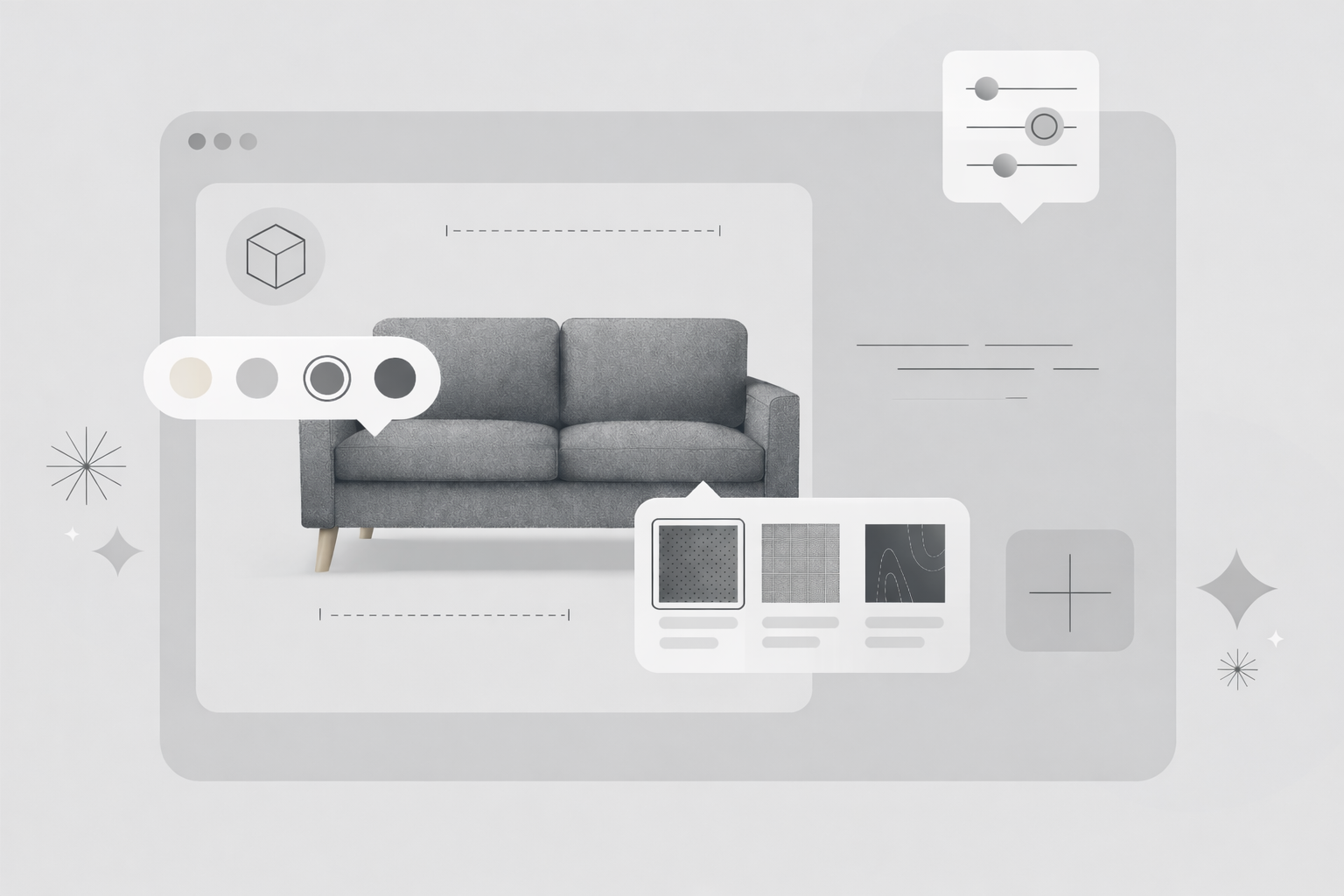
Context at the point of decision. Shoppers who cannot visualize a product in their space will not buy it. Video demonstrations, shoppable room scenes, and AI-assisted visualization are the most effective tools for bridging that gap. Static imagery and written descriptions are insufficient for a category where scale, texture, and spatial fit are the primary purchase drivers.
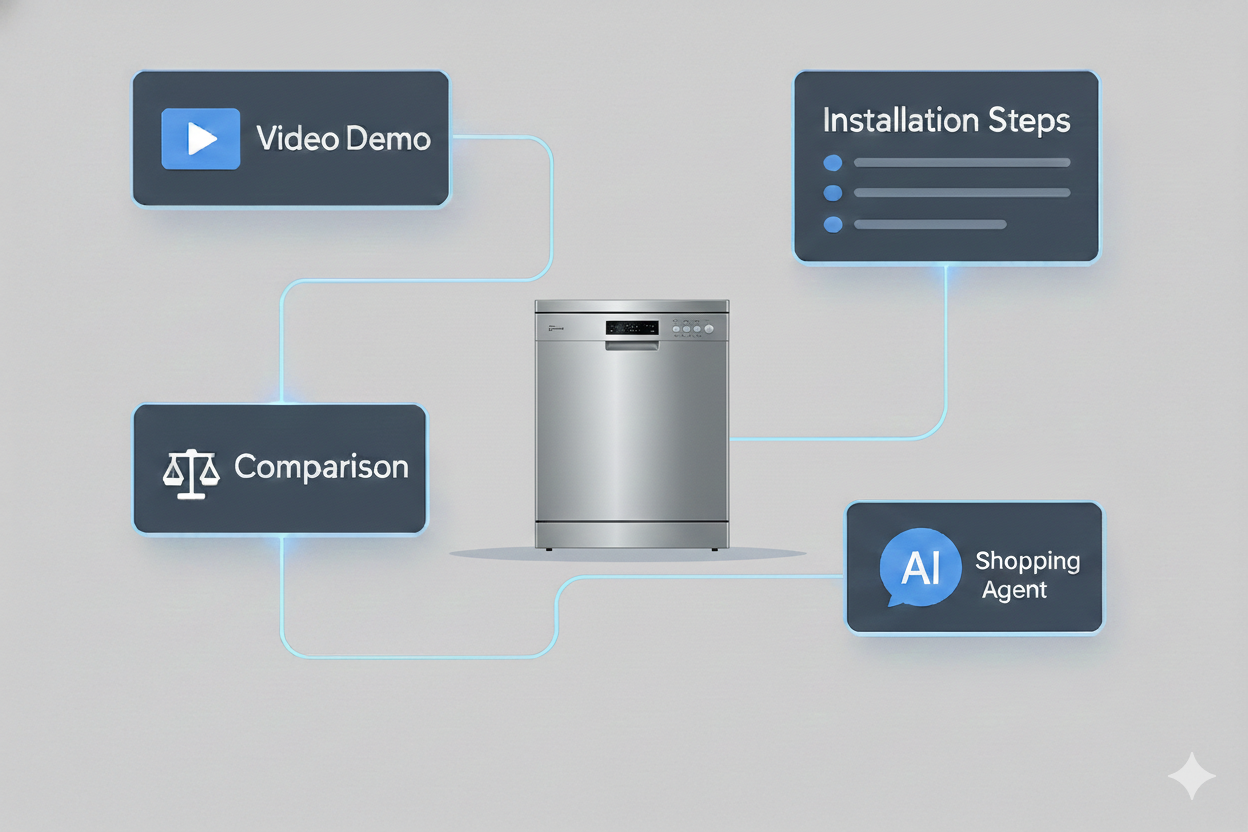
AI that answers questions on the PDP. Home decor shoppers arrive with specific questions including about dimensions, materials, compatibility with existing pieces, care instructions. A product page that cannot answer those questions in real time sends shoppers to YouTube, Reddit, or a competitor. An AI shopping agent embedded in the PDP answers in the moment and keeps the sale on the page.
Content at catalog scale. The home decor conversion problem is partly a content coverage problem. Brands with hundreds or thousands of SKUs cannot produce high-quality video and visualization assets for every product through traditional production methods. AI-generated content that covers the full catalog, not just hero products, is what separates brands with a 1.4% category average from those operating significantly above it.
Talk to a Firework expert about building an interactive experience for your home decor catalog.
FAQ
How big is the home decor ecommerce market in 2026? The online home decor market is valued at approximately $120.65 billion in 2025, growing to $255.27 billion by 2032 at an 11.3% CAGR. The broader global home decor market, including offline channels, stands at $716.53 billion in 2026. North America holds the largest share at roughly 42% of global revenue.
What is the average ecommerce conversion rate for home decor? Home decor and furniture converts at approximately 1.4% on average, making it one of the lowest-converting categories in ecommerce. The primary driver of low conversion is the difficulty shoppers face in visualizing products in their own spaces. Brands that address this gap with video, AR, and AI-assisted PDPs consistently outperform the category average.
What drives home decor ecommerce conversion? The highest-impact conversion drivers in home decor are contextual product visualization (seeing the product in a real or realistic space), real-time answers to product questions at the PDP level, and mobile-optimized experiences. Video content, particularly demonstrations showing scale, texture, and room context, outperforms static imagery on every conversion metric in this category.
What are the biggest trends in home decor ecommerce in 2026? The major trends shaping the category are: the continued shift of purchases to mobile (63% of Wayfair orders arrive via mobile), the adoption of AI visualization tools like room scene generators, rising consumer demand for sustainable and personalized products, and the growing influence of social content in driving discovery among Gen Z and millennial buyers.
Why do home decor shoppers have lower conversion rates than other categories? Home decor purchases are high-consideration, often high-AOV, and require spatial visualization that static digital experiences cannot provide. The category's conversion rate improves significantly when brands invest in contextual content: video demonstrations, AR tools, and AI shopping agents that answer product questions in real time.
Unlock Exclusive Insights
By submitting this form, you agree to Firework's privacy policy and consent to receive personalized marketing communications. You can unsubscribe at any time.