The Hidden Cost of a Beautiful Lookbook That Doesn't Convert
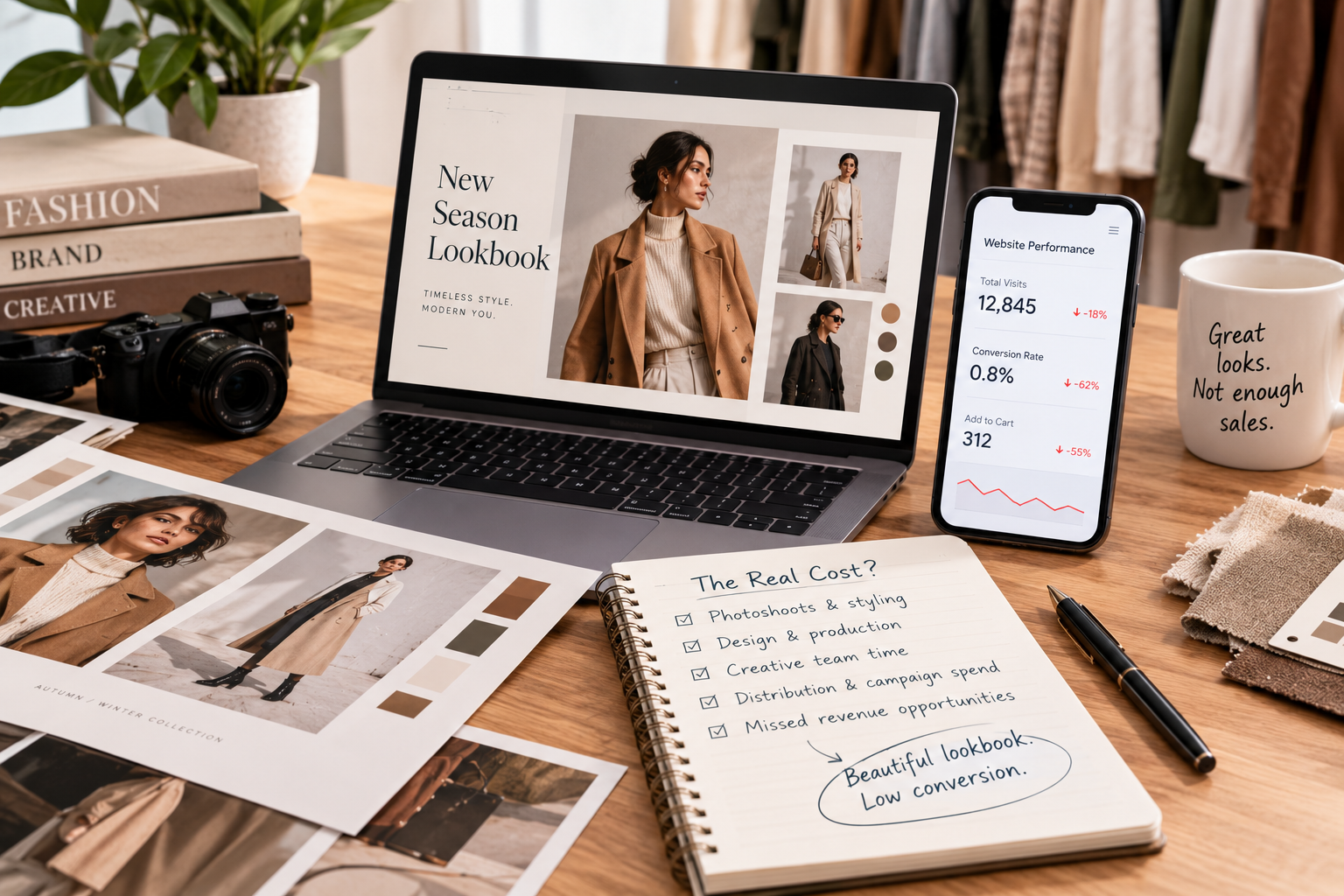

A great lookbook does real work for a fashion brand. It sets a mood, tells a story, establishes an aesthetic identity that a plain product grid never could. Many brands invest heavily in getting this right, and for good reason.
The quiet cost shows up after that: a shopper falls in love with a look, then has to work hard to figure out how to actually buy the pieces they just saw. That gap between inspiration and purchase is where a lot of that hard-earned interest quietly disappears.
A few things are true about this gap:
● Lookbook content is often optimized for aesthetic impact, not purchase pathway
● A shopper inspired by a styled look doesn't always know which specific products created it
● Every extra step between inspiration and purchase is a chance for interest to cool or a shopper to get distracted
● Brands that close this gap are capturing demand that beautifully produced but poorly connected content is currently leaving on the table
Current Apparel Shopper Trends
1. Inspiration and Purchase Intent Often Peak at Different Moments
A shopper's excitement about a styled look is highest right when they see it. If buying those pieces requires several extra steps, that peak moment of interest has often faded by the time they get there.
2. Shoppers Don't Always Know How to Deconstruct a Styled Look
A well-composed outfit shot doesn't always make clear which specific pieces are shown, especially when layering, accessories, or multiple items are involved, leaving a shopper to guess or search separately.
3. Friction at This Stage Doesn't Look Like a Complaint, It Looks Like a Quiet Exit
A shopper who can't easily figure out how to buy what they just admired usually doesn't ask for help, they simply move on, which makes this gap easy for a brand to miss entirely.
Industry Trends Impacting the Apparel Market
1. Brand Storytelling and Direct Commerce Are Still Often Treated as Separate Functions
Lookbook and campaign content is frequently produced by a different team, with different goals, than the ecommerce content built to drive purchases, which can leave a real gap between the two.
2. The Best-Performing Content Increasingly Merges Both Goals at Once
Content that maintains real aesthetic quality while also making every piece immediately shoppable is emerging as a stronger performer than either beautiful-but-disconnected or shoppable-but-generic content on its own.
3. Shoppable Video and Tagged AI-Generated Images Close the Gap a Lookbook Leaves Open
This is where shoppable video does something a traditional lookbook can't: preserve the aesthetic storytelling while making every piece in the shot immediately purchasable, right at the moment a shopper's interest is highest. AI-generated images can do similar work for still photography, turning a styled lookbook shot into a tagged, shoppable image where every visible piece links straight to its product page. Together, AI-generated video and images make it realistic to produce that kind of shoppable, story-driven content at the scale and pace a full seasonal lookbook actually requires.
Challenges and Opportunities in Apparel
The challenge is that aesthetic storytelling and direct purchase pathways have often been treated as competing priorities, produced by different teams with different incentives.
The opportunity is that this doesn't have to be a tradeoff. Brands that merge both goals into a single piece of content are capturing purchase intent that a beautiful but disconnected lookbook currently lets slip away.
Strategic Recommendations for Apparel Brands and Retailers
The first priority is auditing how many steps actually separate a shopper's moment of inspiration from being able to purchase what they saw.
The second is using shoppable video and tagged imagery specifically to preserve storytelling quality while eliminating that gap, rather than choosing between beautiful content and direct commerce.
The third is aligning brand and ecommerce teams around this shared goal, rather than treating lookbook production and shoppable content as separate workstreams with different objectives.
Looking Ahead
A beautiful lookbook will always have real value for a fashion brand's identity, but its impact is limited if it doesn't also lead somewhere. Brands that close the gap between inspiration and purchase, in both video and still imagery, will convert more of the interest their creative work is already earning, rather than losing it in the space between admiration and checkout.
Want your lookbook to inspire and convert at the same time? See how leading fashion brands are using shoppable video and tagged imagesto close the gap between a great look and an easy purchase.
FAQ
Why doesn't a beautiful fashion lookbook always drive sales?
Lookbook content is often optimized for aesthetic storytelling rather than making it easy for a shopper to identify and purchase the specific pieces shown, creating a gap between inspiration and actual purchase.
Why is it hard for shoppers to buy pieces they see in a styled fashion photo?
Styled looks often combine multiple items, layering, and accessories without making clear which specific products are shown, leaving shoppers to search separately or guess, which can cause them to lose interest.
How can fashion brands make lookbook content easier to purchase from?
Shoppable video and tagged AI-generated images allow every piece in a styled look, whether moving or still, to become directly purchasable while preserving the storytelling and aesthetic quality that makes lookbook content compelling in the first place.
Should fashion brands treat brand storytelling and ecommerce content as separate priorities?
Increasingly, no. Content that merges strong aesthetic storytelling with direct shoppability, across both video and still imagery, tends to outperform content that treats these as separate, competing goals.
Unlock Exclusive Insights
By submitting this form, you agree to Firework's privacy policy and consent to receive personalized marketing communications. You can unsubscribe at any time.