Why Apparel Sizing Charts Fail the Shoppers Who Need Them Most
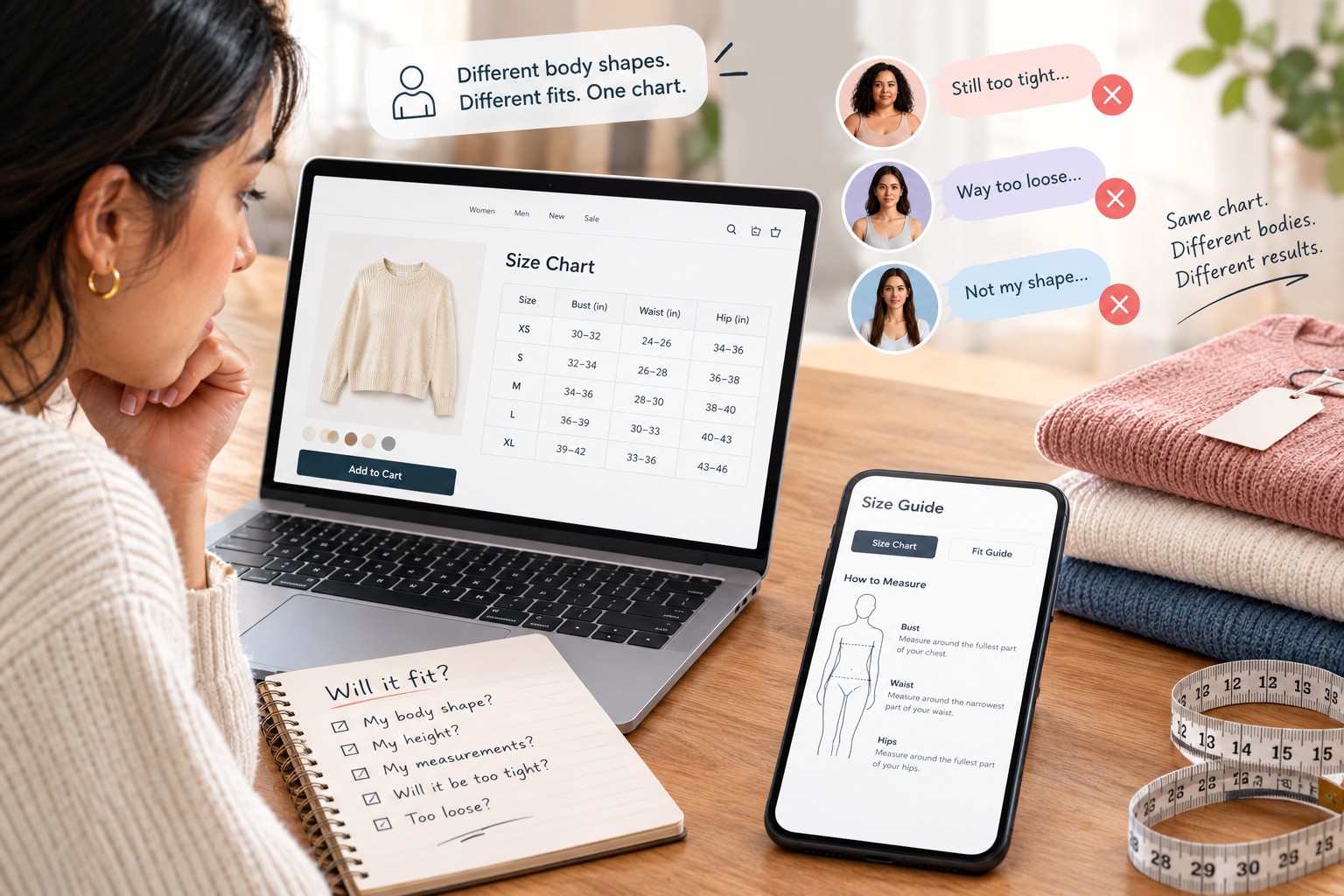

A standard size chart works reasonably well for a shopper whose body closely matches the proportions it was built around. It works far less well for everyone else, and "everyone else" is a much larger group than most sizing content accounts for.
Height, proportion, and body shape vary enormously within any single size label. A chart built around a single set of assumed measurements per size can't capture that variation. The shoppers most likely to need real sizing guidance are often the ones a standard chart serves worst.
A few things are true about this gap:
● A single size label can fit very differently depending on a shopper's specific proportions
● Shoppers outside the "average" a size chart assumes often have the most uncertainty and the least useful guidance
● This isn't primarily a plus-size or petite-specific issue, it affects any shopper whose proportions don't match a chart's baseline assumptions
● Brands that address this well are solving a problem that affects a much larger share of shoppers than sizing content typically acknowledges
Current Apparel Shopper Trends
1. Shoppers Increasingly Expect Sizing Guidance Tailored to Real Bodies
As shoppers become more vocal about inconsistent or unhelpful sizing information, expectations are rising for content that reflects real variation in body shape and proportion, not just a single averaged chart.
2. Uncertainty Compounds for Shoppers Outside Standard Assumptions
A shopper who already has to guess how a size will translate to their body faces more friction and more hesitation than one who fits the chart's assumptions closely, even when the underlying product would work well for them.
3. Sizing Frustration Is a Common, Quiet Reason for Cart Abandonment
Shoppers who can't get a confident read on fit for their specific body type often simply leave rather than take a chance on a purchase they're unsure about.
Industry Trends Impacting the Apparel Market
1. Standard Sizing Content Hasn't Kept Pace With Awareness of Body Diversity
Even as conversations about size inclusivity have grown, the actual content most brands provide, a single chart per size, hasn't evolved much to reflect that awareness.
2. A Few Brands Are Starting to Show Real Variation, Most Aren't
Some brands have begun showing how a single size looks across different body types, and early signs suggest this content meaningfully helps shoppers who previously had to guess. Most brands still haven't followed.
3. Video and AI-Generated Images Can Show Real Variation a Chart Can't Capture
A size chart reduces a body to a few numbers. Shoppable video showing how the same size or item actually looks and fits across a real range of body types gives shoppers something a chart fundamentally can't: a visual reference closer to their own body. For a quick, scannable reference alongside a product listing, AI-generated images can show the same item across a range of body types without requiring a shopper to watch a video.
Challenges and Opportunities in Apparel
The challenge is that showing real variation across body types requires more content than a single static chart, which has kept many brands from investing in it despite the clear need.
The opportunity is that most competitors haven't solved this well. Better, more representative sizing content is a real, meaningful differentiator, not just an incremental improvement.
Strategic Recommendations for Apparel Brands and Retailers
The first priority is acknowledging that a single size chart doesn't serve the full range of shoppers actually buying a product, not treating it as a solved problem.
The second is using video and imagery to show real fit across a genuine range of body types, giving shoppers a point of reference closer to their own body than an averaged chart provides.
The third is prioritizing this content for styles where fit uncertainty is highest, rather than treating sizing content as one-size-fits-all across an entire catalog.
Looking Ahead
Sizing charts will likely remain a starting point, but they were never built to answer the question most shoppers actually have: how will this look and fit on someone like me. Brands that close that gap with real, representative content will reduce the hesitation and cart abandonment that a purely numerical chart leaves unresolved.
Want shoppers to see real fit across real body types? See how leading apparel brands are using video and AI-generated images to make sizing genuinely clear for more shoppers.
FAQ
Why don't standard apparel size charts work well for many shoppers?
Size charts are built around a single set of assumed proportions per size, but body shape and proportion vary significantly even within the same size label, leaving many shoppers with limited useful guidance.
Is sizing chart uncertainty only a problem for plus-size or petite shoppers?
No. It affects any shopper whose body proportions don't closely match a chart's baseline assumptions, which is a much larger and more varied group than sizing content typically addresses.
How does sizing uncertainty affect apparel purchase behavior?
Shoppers who can't get a confident sense of fit for their specific body type often abandon a purchase rather than risk buying something that might not fit correctly.
How can apparel brands provide better sizing guidance than a standard chart?
Video or AI-generated images showing how the same item fits across a real range of body types give shoppers a visual reference that's often more useful than a numerical chart, especially for those outside standard size assumptions.
Unlock Exclusive Insights
By submitting this form, you agree to Firework's privacy policy and consent to receive personalized marketing communications. You can unsubscribe at any time.