TikTok Shop Now Drives Most of Its Sales From One Category: Beauty
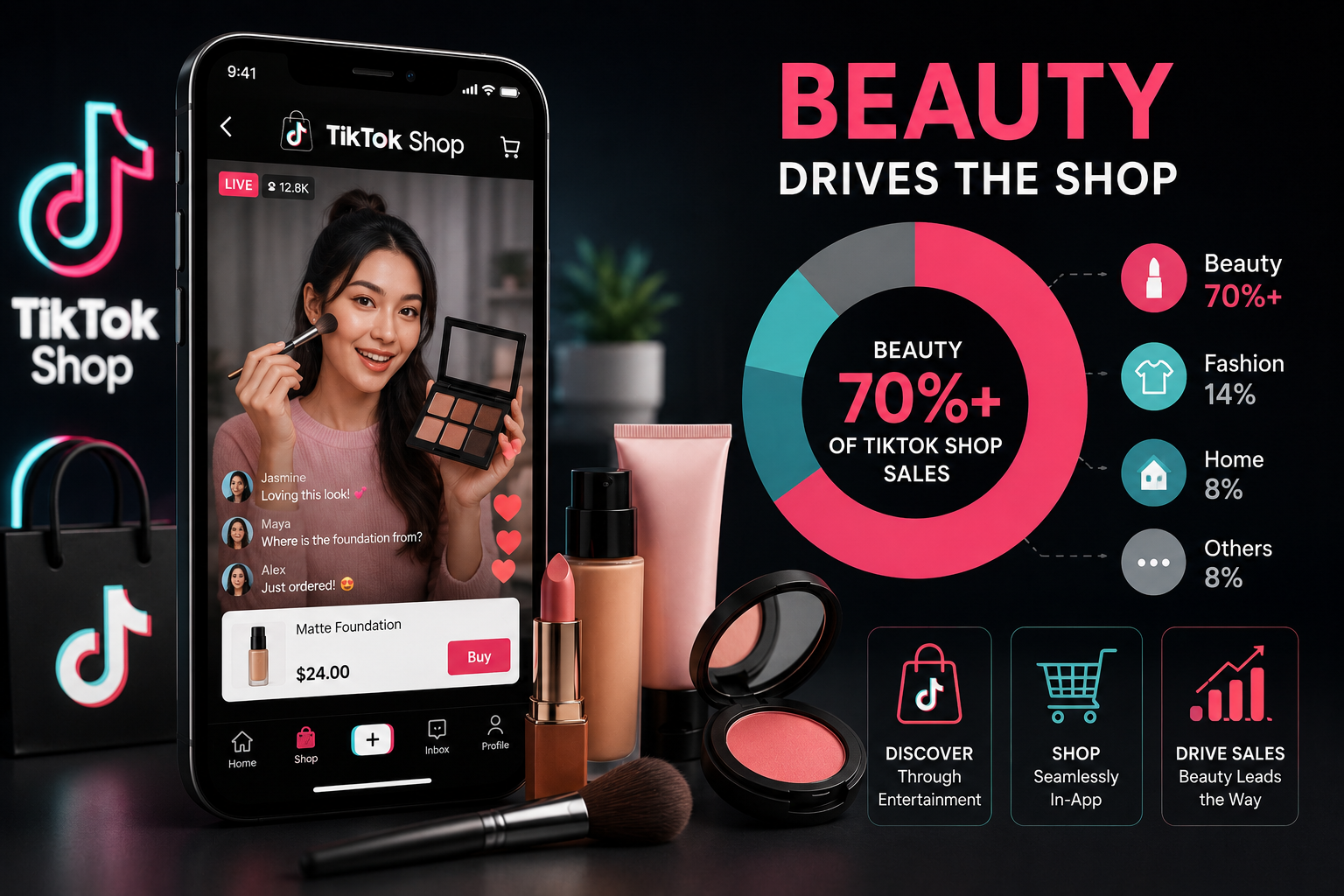

Beauty and personal care now account for roughly 79% of all US TikTok Shop sales, according to recent platform data. That's not a leading category. That's a platform whose commerce activity is, in practice, mostly a beauty marketplace with other categories around the edges.
For beauty brands, this changes the calculation on where discovery and purchase intent actually live.
A few things stand out about this concentration:
● Beauty isn't just popular on TikTok Shop, it's the category defining what the platform's commerce experience is
● Shoppers on the platform are arriving with beauty-specific purchase intent already primed by the content ecosystem around them
● Brands treating TikTok Shop as one channel among many may be underweighting where a huge share of category-specific purchase intent is concentrating
● Video isn't optional context on this platform, it's the entire discovery mechanism
Current Beauty Consumer Trends
1. Discovery and Purchase Have Fully Merged on This Platform
On TikTok Shop, the video that introduces a product and the moment a shopper can buy it are often the same experience. There's no separate step between discovering something and being able to act on it.
2. Purchase Intent Arrives Pre-Primed by Content
A shopper browsing TikTok Shop's beauty content has often already been influenced by creator videos, trends, and social proof before they ever reach a product listing. That's a very different starting point than a shopper arriving at a traditional ecommerce search result.
3. Category Concentration Changes the Competitive Field
When one category accounts for the large majority of a platform's commerce activity, the brands competing for attention within it are competing against an enormous volume of beauty-specific content, not against a handful of other categories for general attention.
Industry Trends Impacting the Beauty Market
1. Video-Native Platforms Are Where Beauty Discovery Actually Happens Now
This level of category concentration confirms something beauty brands have suspected for a while: for this category specifically, video-first platforms aren't a supplementary channel, they're close to the primary one.
2. Brands Without a Strong Video Presence Are Increasingly Invisible in Their Own Category
If the majority of a platform's beauty commerce runs through video, a brand without a meaningful video presence isn't just missing an opportunity, it's largely absent from where a significant share of category shopping is actually happening.
3. Scaling Video Content Becomes the Real Bottleneck
The brands winning attention on video-first commerce platforms are the ones producing enough content to stay visible across trends, product lines, and shopper questions. This is where AI-generated video matters most, making it possible to produce that volume of content without a full production cycle for every piece. Pairing that content with shoppable video on a brand's own site extends the same discovery-to-purchase experience beyond any single platform.
Challenges and Opportunities in Beauty
The challenge is that this level of category concentration raises the bar for what "showing up" in beauty discovery actually requires. A minimal or occasional video presence isn't enough when the category is this saturated with content.
The opportunity is that beauty brands already have a natural advantage here: the category lends itself to visual, demonstrable content in a way many other categories don't.
Strategic Recommendations for Beauty Brands and Retailers
The first priority is treating video-first platforms as core beauty discovery infrastructure, not a secondary or experimental channel.
The second is building the capacity to produce video content at a volume that matches how saturated this category's content ecosystem has become.
The third is extending that same video-driven discovery experience to a brand's own site, so the same trust-building content that works on social also works at the point of direct purchase.
Looking Ahead
Beauty's concentration on video-first commerce platforms isn't a temporary trend, it reflects how well the category suits demonstrable, visual content. The brands that build real video capacity now will keep showing up in a discovery landscape that's only getting more visual and more competitive.
Want to show up where beauty discovery is actually happening? See how leading beauty brands are scaling video content to stay visible across a saturated content landscape.
FAQ
How much of TikTok Shop's sales come from beauty products?
Beauty and personal care account for roughly 79% of all US TikTok Shop sales, making it by far the platform's dominant commerce category.
Why is beauty so concentrated on video-first commerce platforms?
Beauty products lend themselves naturally to visual, demonstrable content, showing texture, application, and results, which aligns closely with how video-first platforms structure product discovery.
What does this concentration mean for beauty brands' marketing strategy?
It suggests that video-first platforms should be treated as core discovery infrastructure for beauty brands, not a secondary channel, given how much category-specific purchase intent is concentrated there.
How can beauty brands keep up with the volume of video content this category requires?
AI-generated video makes it possible to produce content at the scale needed to stay visible across trends and product lines, without relying solely on traditional, slower production cycles.
Unlock Exclusive Insights
By submitting this form, you agree to Firework's privacy policy and consent to receive personalized marketing communications. You can unsubscribe at any time.