Trust Is Beauty's New Currency, and Video Is How You Earn It

Beauty has always sold on some combination of aspiration, novelty, and results. What's changed is how much proof consumers now expect before they believe any of it.
A claim that would have been taken at face value a few years ago now gets cross-checked, questioned, and compared against real reviews and demonstrations before a purchase happens. That shift has quietly become one of the most important dynamics in the category.
A few things define this shift:
● Consumers increasingly assume a claim is exaggerated until shown otherwise
● Ingredient transparency and visible proof are replacing marketing language as the basis for trust
● A brand's willingness to show, not just tell, has become a genuine differentiator
● Trust, once earned, is proving to be one of the more durable advantages a beauty brand can build
Current Beauty Consumer Trends
1. Skepticism Has Become the Default Starting Point
Where a beauty claim used to be given the benefit of the doubt, consumers increasingly start from a position of skepticism and require the brand to close that gap with real evidence.
2. Ingredient and Efficacy Claims Are Actively Fact-Checked
Consumers routinely research ingredient claims and compare them against independent sources before trusting a product's marketing. A brand's own description is no longer the final word.
3. Peer Proof Carries More Weight Than Brand Messaging
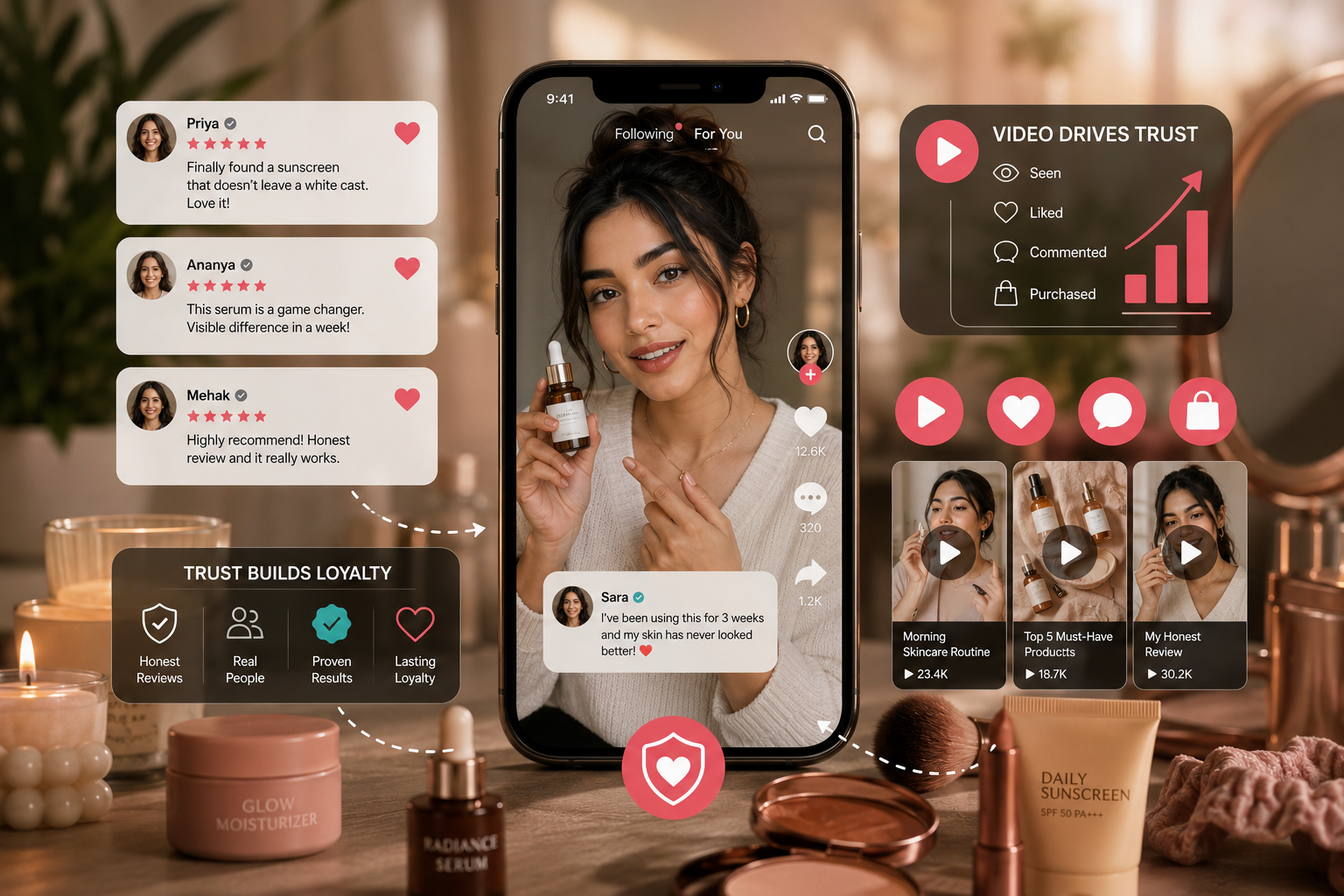
Reviews, user-generated content, and visible before-and-after demonstrations increasingly carry more persuasive weight than a brand's own polished marketing copy.
Industry Trends Impacting the Beauty Market
1. Vague Claims Are Losing Effectiveness Faster Than Ever
Generic language, "clinically proven," "dermatologist recommended," without specific, visible backing increasingly reads as a red flag rather than a reassurance to an informed, skeptical consumer.
2. Trust Is Becoming a Compounding Advantage
Brands that consistently deliver on visible, demonstrable claims build a kind of trust that's hard for competitors to quickly replicate, since it's earned incrementally over many honest interactions, not established through a single campaign.
3. Video Is the Clearest Way to Close the Trust Gap
Claims are easy to make and increasingly hard to be believed on text alone. This is where video becomes essential, showing real application, real texture, and real results in a way that's much harder to dismiss as marketing exaggeration than a written claim. Because trust has to be earned across an entire product line, not just a hero product, AI-generated video is what makes it realistic to provide that level of visible proof consistently, across a full catalog.
Challenges and Opportunities in Beauty
The challenge is that rebuilding consumer trust in an environment of default skepticism takes more consistent effort than the marketing playbook that used to work in a more trusting environment.
The opportunity is that trust, once genuinely earned, is a durable advantage. Brands that commit to visible, honest proof now are building something competitors relying on the old playbook will find difficult to catch up to quickly.
Strategic Recommendations for Beauty Brands and Retailers
The first priority is treating every claim as something that needs visible proof, not just confident language.
The second is investing in video specifically because it's harder to dismiss as exaggeration than text, and because it directly addresses the skepticism consumers now bring by default.
The third is applying that same standard of proof consistently across an entire product line, not just flagship products, since trust built inconsistently doesn't compound the same way.
Looking Ahead
The beauty brands that will matter most over the next several years won't necessarily be the ones with the boldest claims. They'll be the ones that have built a track record of showing, not just telling, and that record is what earns the benefit of the doubt in a category where skepticism has become the default.
Want to build trust that compounds instead of claims that get questioned? See how leading beauty brands are using video to prove what they claim, not just state it.
FAQ
Why are beauty consumers more skeptical of brand claims now?
Consumers increasingly have access to independent reviews, ingredient research, and peer comparisons, which has shifted the default assumption from trusting a claim to questioning it until proof is shown.
How can beauty brands rebuild consumer trust?
By consistently backing claims with visible, demonstrable proof, particularly through video, rather than relying on marketing language alone. Trust built this way tends to compound over time as a durable brand advantage.
Why is video more effective than text at building trust in beauty marketing?
Video shows real application, texture, and results in a way that's harder to dismiss as exaggeration than a written claim, directly addressing the skepticism many consumers now bring by default.
Does trust apply differently to flagship products versus a brand's full catalog?
Trust needs to be built consistently across an entire product line, not just flagship items, since inconsistent proof across a catalog undermines the compounding advantage that genuine, broad-based trust can provide.
Unlock Exclusive Insights
By submitting this form, you agree to Firework's privacy policy and consent to receive personalized marketing communications. You can unsubscribe at any time.