What Is Agentic Commerce? A Simple Guide for Retail Teams

Retail teams have spent years optimizing funnels, personalizing content, and improving conversion rates. But as shopper behavior changes and AI becomes more capable, the traditional “rules-based” approach to e-commerce is starting to break down. That’s where agentic commerce comes in.
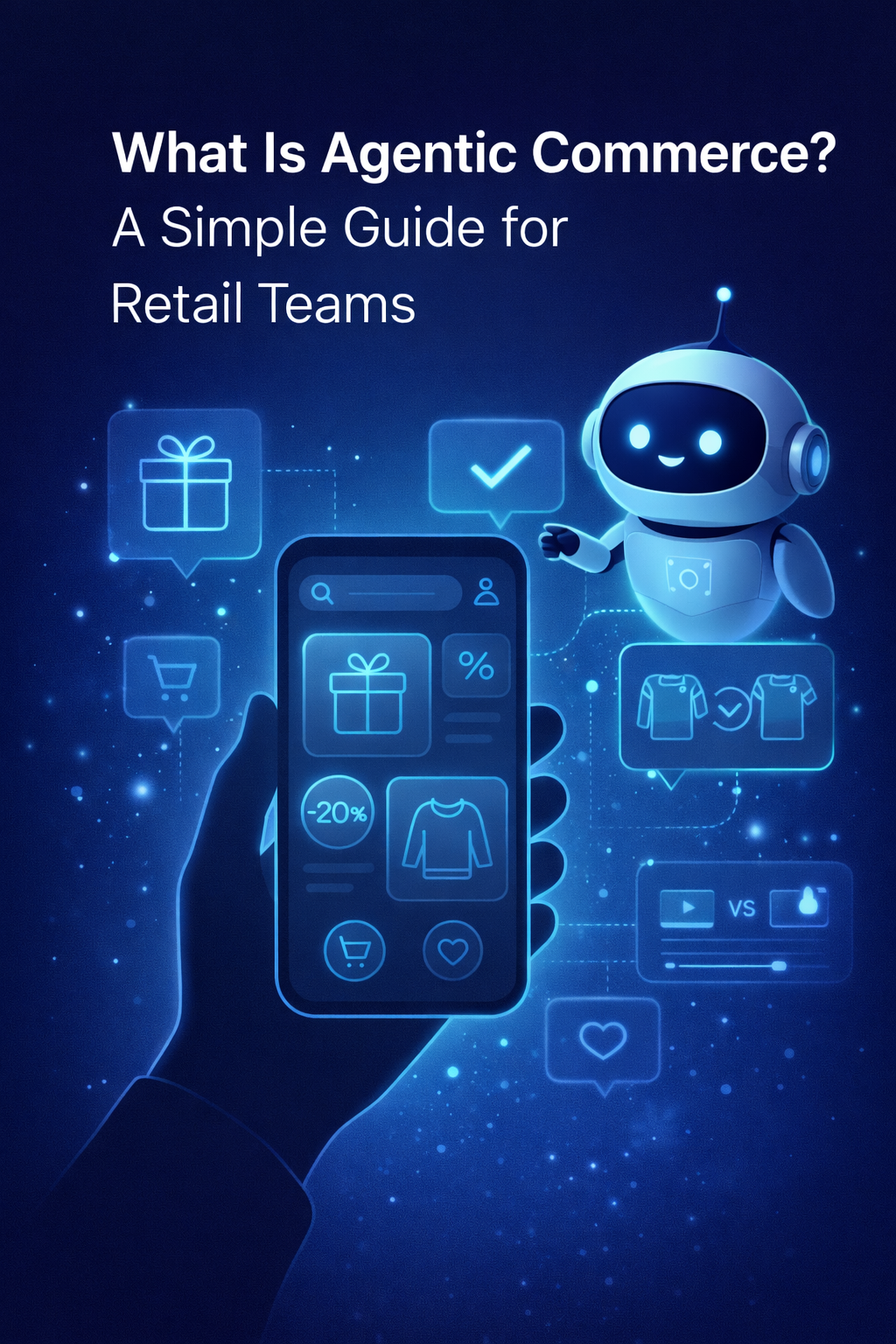
Agentic commerce represents a shift from static, predefined shopping experiences to AI systems that can act on behalf of the shopper. Instead of simply responding to clicks or filters, these systems actively guide decisions, answer questions, recommend next steps, and adapt in real time based on intent.
For retail teams, agentic commerce isn’t about replacing humans or rebuilding everything from scratch. It’s about evolving how digital experiences work, so they feel more like a knowledgeable associate and less like a catalog.
What Does “Agentic” Actually Mean in Commerce?
In simple terms, agentic means the system can take initiative.
Traditional e-commerce tools wait for shoppers to act. Shoppers search, click filters, compare products, and manually decide what to do next. Agentic systems do the opposite. They observe behavior, interpret intent, and proactively assist.
An agentic commerce experience might:
- suggest the right product before the shopper finishes searching
- answer questions without forcing a page refresh
- surface alternatives when something is out of stock
- explain differences between similar products
- guide the shopper from consideration to checkout
The key difference is that the system is no longer passive. It actively helps the shopper move forward.
Why Agentic Commerce Is Emerging Now
This shift is happening because shopper expectations have changed faster than most retail sites.
Consumers are used to conversational interfaces like ChatGPT, instant recommendations from social platforms, and algorithm-driven discovery everywhere else online. When they land on a retail site that requires multiple clicks, manual comparisons, or long scrolls to find answers, friction becomes obvious.
At the same time, AI has matured. Modern models can understand natural language, interpret context, and generate helpful responses in real time. That makes it possible for retail experiences to feel guided rather than static.
Agentic commerce is the natural result of these two forces colliding: higher shopper expectations and more capable AI.
Here’s what Joe Cano, SVP of Digital at Lowe’s has to say about the shifting experience:
How Agentic Commerce Shows Up in the Shopping Journey
Agentic commerce doesn’t live in one place. It shows up across the entire funnel. At the discovery stage, agentic systems help shoppers articulate what they want, even when they don’t know how to describe it. Instead of forcing keyword-based search, shoppers can express intent in natural language and receive curated results.
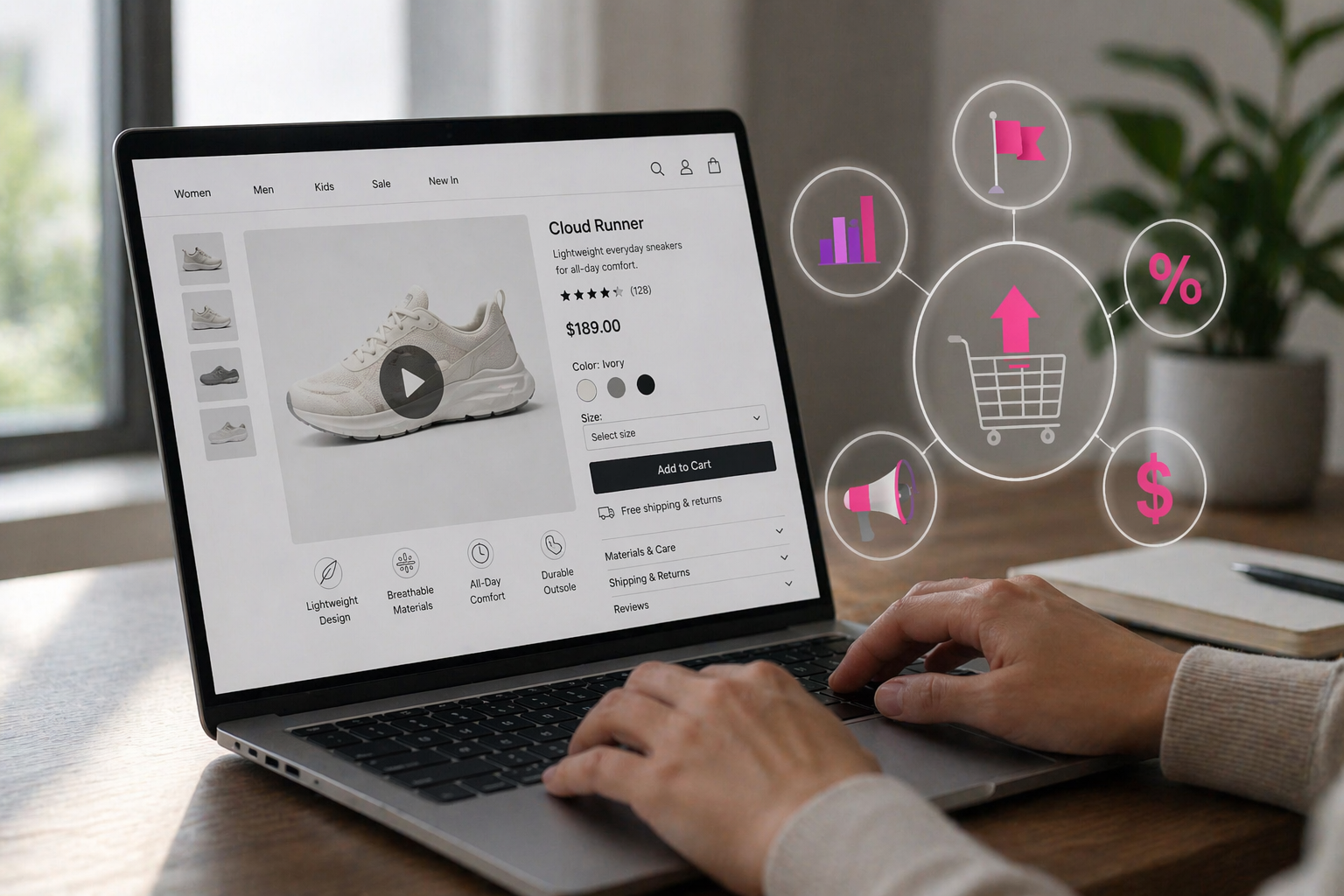
On the product detail page, agentic systems answer questions, surface relevant videos, explain differences, and adapt content based on what the shopper is trying to decide. The PDP becomes a guided experience, not a static page.
During checkout and post-purchase, agentic systems can recommend bundles, confirm fit or compatibility, suggest alternatives, and reduce uncertainty that leads to abandonment or returns.
The common thread is continuous guidance, not one-time personalization.
Agentic Commerce vs. Traditional Personalization
Many retail teams already use personalization, but agentic commerce goes further.
Traditional personalization is rules-based. If a shopper viewed X, show Y. If they’re in region A, show offer B. These rules work, but they’re limited and static.
Agentic commerce is dynamic and contextual. It adapts in real time based on:
- what the shopper is doing right now
- what questions they’re asking
- how confident or uncertain they appear
- where they’re getting stuck
Instead of predefining every path, retail teams set guardrails, and the AI determines how best to guide each shopper within those boundaries.
Why Retail Teams Should Care
Agentic commerce directly addresses some of the biggest challenges retail teams face today.
- It reduces bounce rates by answering questions faster.
- It improves conversion by increasing confidence.
- It lowers returns by improving product understanding.
- It shortens decision cycles by removing friction.
Most importantly, it aligns digital shopping with how people actually want to buy: with help, clarity, and reassurance. For teams managing PDP performance, conversion optimization, or customer experience, agentic commerce isn’t a future concept, it’s a response to real, current problems.
What Agentic Commerce Is Not
It’s not a chatbot bolted onto a broken experience or replacing merchandising, brand voice, or strategy. Agentic commerce works best when retail teams define the goals, guardrails, and content and AI handles the moment-to-moment guidance at scale.
Think of it as amplifying your best store associate across every shopper, every page, and every moment.
How Retail Teams Can Start Thinking Agentic
You don’t need to rebuild your entire stack to move toward agentic commerce. Most teams start by asking better questions:
Where do shoppers hesitate most?
Which PDP questions show up repeatedly?
Where does abandonment spike?
What content do shoppers leave the site to find elsewhere?
Agentic systems are most effective where friction already exists. Start there.
Why Agentic Commerce Is the Next Evolution of E-Commerce
E-commerce has spent years optimizing layouts, funnels, and performance metrics. Agentic commerce shifts the focus back to the shopper, and how they actually make decisions.
Talk to a Firework expert to explore how agentic commerce is reshaping product discovery and decision-making across the shopping journey.
FAQ
1. What is agentic commerce?
Agentic commerce is a model where AI agents actively guide shoppers through discovery, decision-making, and purchase. Instead of shoppers navigating static pages, AI helps recommend products, answer questions, compare options, and reduce friction in real time.
2. How is agentic commerce different from traditional e-commerce?
Traditional e-commerce relies on manual browsing, filters, and static PDPs. Agentic commerce introduces AI-driven guidance that adapts to shopper intent, behavior, and context — making the experience more conversational, personalized, and efficient.
3. What role do PDPs play in agentic commerce?
In agentic commerce, PDPs become dynamic decision hubs. AI can surface the most relevant videos, FAQs, comparisons, and recommendations directly on the product page, helping shoppers move from interest to confidence faster.
4. Does agentic commerce replace human sales associates?
No. It complements them. Agentic commerce handles repetitive questions and early-stage guidance digitally, while human teams can focus on higher-value interactions, complex support, and relationship building.
5. How does agentic commerce improve conversion rates?
By reducing uncertainty and decision fatigue. AI agents provide immediate answers, personalized recommendations, and visual proof, which shortens the path to purchase and reduces bounce and cart abandonment.
6. Is agentic commerce only for large retailers?
While enterprise retailers benefit most due to scale and complexity, any brand with a large catalog, high-consideration products, or frequent shopper questions can see impact from agentic commerce.
7. How does video fit into agentic commerce?
Video is a core input for AI agents. Product demos, how-to videos, comparisons, and short explainers give AI the visual context it needs to help shoppers understand products quickly and confidently.
8. Can agentic commerce work across mobile and desktop?
Yes, and it’s especially powerful on mobile. AI-guided experiences help mobile-first shoppers find answers faster without endless scrolling, which is critical for conversion on smaller screens.
9. How does agentic commerce affect returns?
Better guidance leads to better decisions. When shoppers understand products before buying, mismatches decrease, often resulting in lower return rates and higher satisfaction.
10. How can retail teams start adopting agentic commerce?
Start by improving PDP content depth (video, FAQs, comparisons), enabling AI-assisted discovery, and integrating tools that personalize experiences in real time without rebuilding your entire tech stack.
Unlock Exclusive Insights
By submitting this form, you agree to Firework's privacy policy and consent to receive personalized marketing communications. You can unsubscribe at any time.