California's New Textile Law Is Coming. Here's What It Means for How Fashion Brands Talk About Sustainability
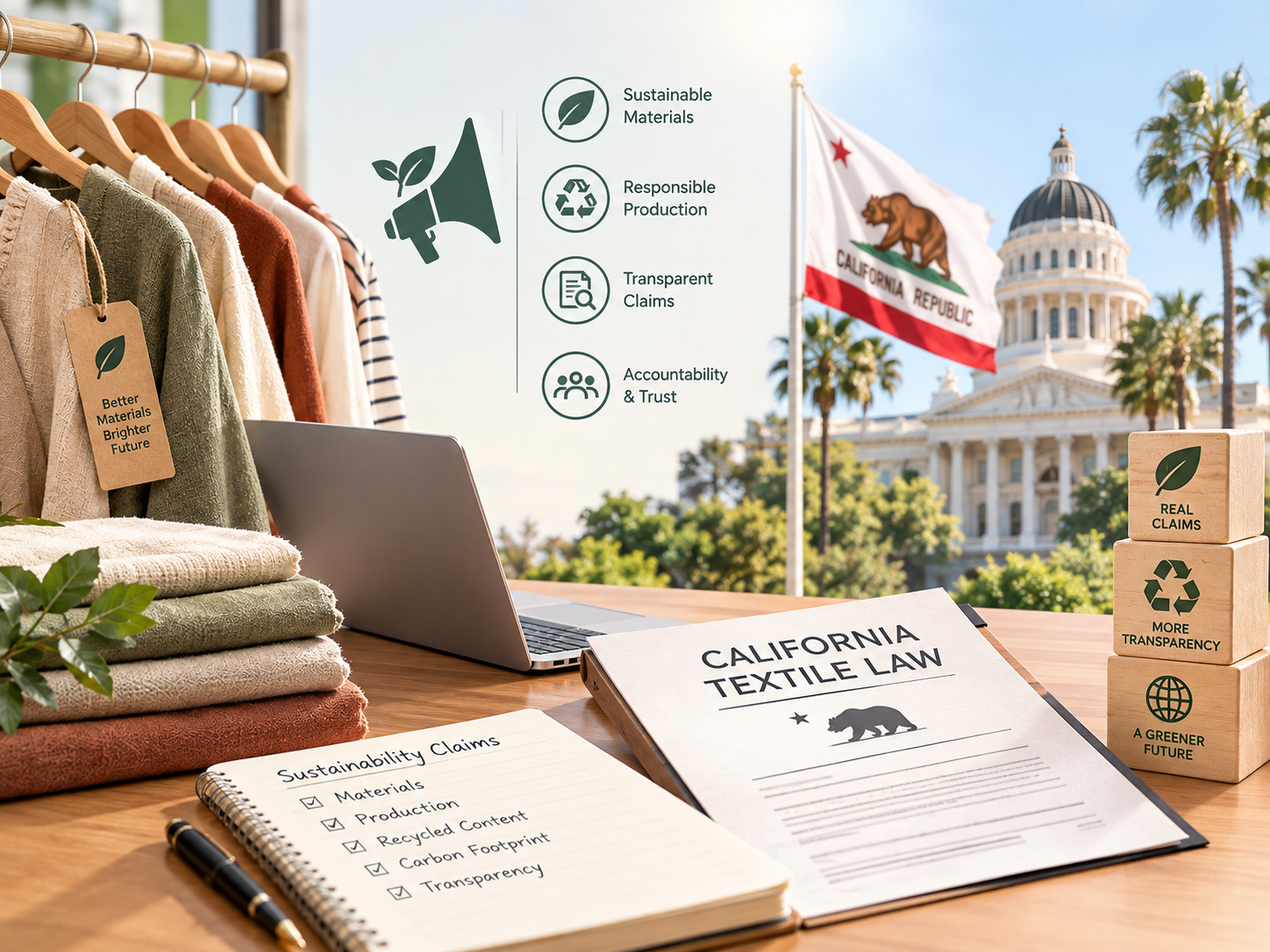

California has become the first state in the country to establish an extended producer responsibility program specifically for textiles, apparel, footwear, and accessories. The law shifts the cost and responsibility for end-of-life textile waste onto producers, rather than leaving it entirely to consumers and municipal waste systems.
For an industry already navigating tariffs, sourcing shifts, and rising scrutiny of sustainability claims, this adds a new, concrete compliance obligation, and a new reason shoppers may start asking sharper questions.
A few things are true about what's changing:
● Producers now bear direct responsibility for textile waste outcomes, not just marketing language around sustainability
● Other states are likely to watch California's program closely as a model
● Shoppers are increasingly aware of sustainability regulation, even when they don't know the specifics
● Vague sustainability claims are becoming a bigger liability as actual regulation catches up to marketing language
Current Apparel Shopper Trends
1. Shoppers Are More Regulation-Aware Than They Used to Be
Even without knowing the details of a specific law, shoppers increasingly sense when sustainability claims are backed by real accountability versus when they're just marketing language.
2. Skepticism Toward Vague Sustainability Claims Is Rising
Broad claims like "eco-friendly" or "sustainable" are facing more scrutiny, especially as real regulatory frameworks start defining what actual producer responsibility looks like.
3. Transparency Is Becoming an Expectation, Not a Differentiator
What used to set a brand apart, being open about sourcing and end-of-life impact, is increasingly just the baseline shoppers expect, particularly from brands operating in or selling into California.
Industry Trends Impacting the Apparel Market
1. Other States Are Likely to Follow California's Lead
Extended producer responsibility programs have followed this pattern in other industries, starting in one state and spreading as a template. Apparel brands should expect this to be the first of several similar programs, not an isolated case.
2. Compliance Costs Will Vary by How Prepared a Brand Already Is
Brands with existing sustainability infrastructure, recycling partnerships, take-back programs, will face a smaller lift than brands starting from a purely marketing-driven sustainability position.
3. Video Can Make Real Sustainability Practices Tangible, Not Just Claimed
A sustainability claim in text is easy to make and easy to doubt. Showing an actual take-back program, real material sourcing, or genuine end-of-life handling in video gives shoppers something concrete to evaluate. As brands adjust practices to meet requirements like California's, AI-generated video makes it realistic to communicate those real changes clearly and consistently across a full product line, not just in a single sustainability campaign.
Challenges and Opportunities in Apparel
The challenge is that this adds a genuine compliance and cost obligation on top of an already difficult year of tariffs and sourcing disruption for the category.
The opportunity is that brands who get ahead of this, both in actual practice and in how clearly they communicate it, will be better positioned than competitors treating it as a reluctant, last-minute compliance exercise.
Strategic Recommendations for Apparel Brands and Retailers
The first priority is understanding actual compliance obligations under California's program now, rather than waiting for enforcement to clarify expectations.
The second is being specific and honest about real sustainability practices, since vague claims are facing more scrutiny as actual regulation defines the standard.
The third is using video to show real practices, sourcing, take-back programs, material handling, giving shoppers something concrete rather than another abstract claim.
Looking Ahead
California's program is likely the first of several similar laws apparel brands will need to navigate, not a one-off. Brands that treat this as an opportunity to genuinely clarify their sustainability practices, rather than just another compliance checkbox, will be in a stronger position as more states follow this template.
Want to show real sustainability practices instead of just claiming them? See how leading fashion brands are using video to make genuine sustainability efforts visible and credible.
FAQ
What is California's new textile extended producer responsibility law?
It's legislation making California the first state to require apparel, footwear, and accessory producers to take financial and operational responsibility for textile waste and end-of-life disposal, rather than leaving that burden to consumers and municipal systems.
Will other states adopt similar textile recycling laws?
It's likely. Extended producer responsibility programs have historically started in one state and spread as other states adopt similar frameworks, following patterns seen in other industries.
How does this law affect how apparel brands should market sustainability?
As real regulatory requirements take shape, vague sustainability claims face more scrutiny. Brands are better served by being specific and transparent about actual practices rather than relying on general environmental language.
How can apparel brands communicate real sustainability efforts effectively?
Video that shows actual practices, such as take-back programs or material sourcing, gives shoppers something concrete to evaluate, which is more credible than a general sustainability claim in text alone.
Unlock Exclusive Insights
By submitting this form, you agree to Firework's privacy policy and consent to receive personalized marketing communications. You can unsubscribe at any time.