Why Fabric and Drape Are Nearly Impossible to Sell With a Photo
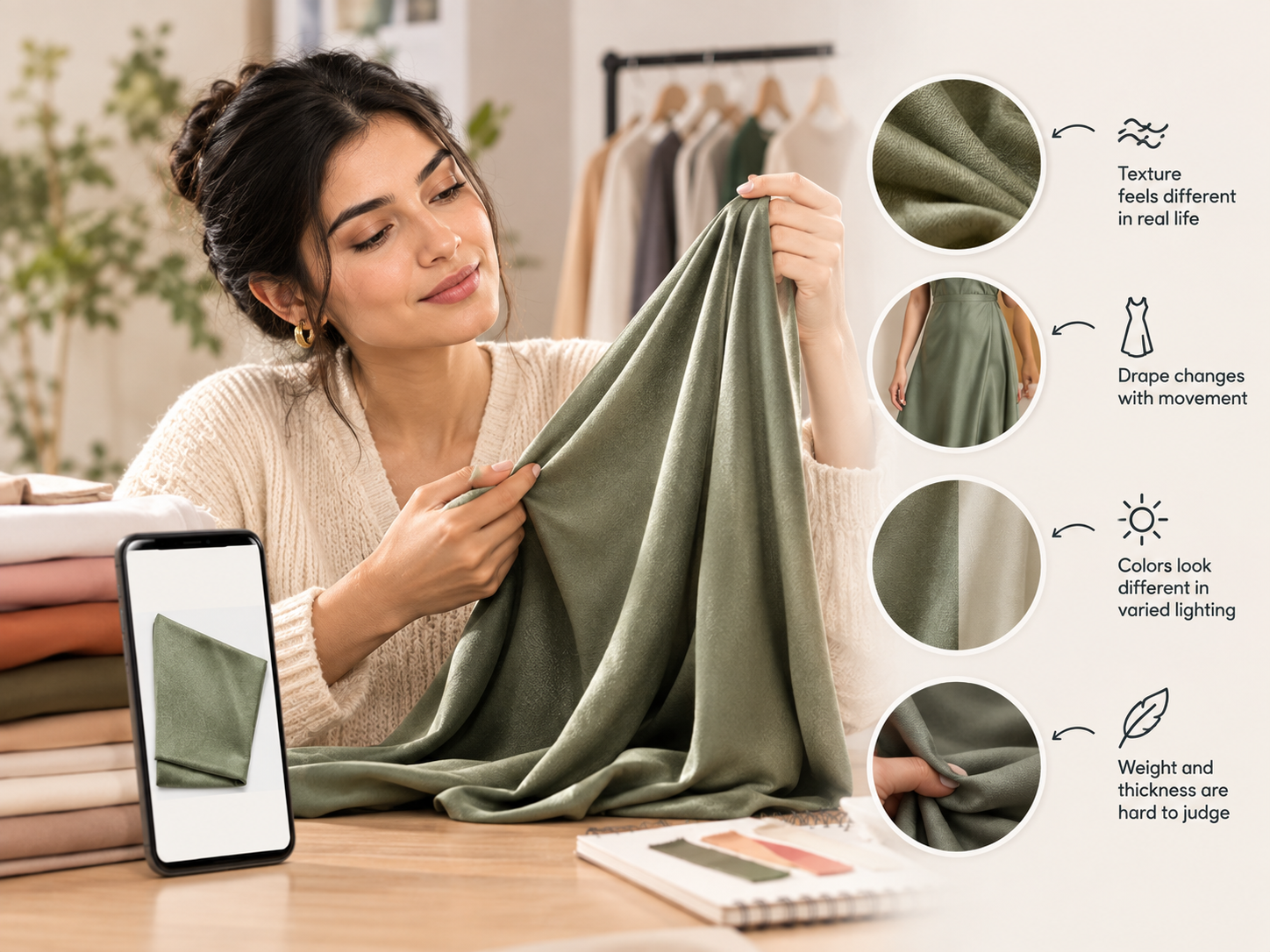

A product photo can tell a shopper a lot: the color, the general cut, roughly how something is supposed to fit on a hanger. What it struggles to tell a shopper is how a fabric actually moves.
Drape, weight, stretch, and structure are some of the most important things a shopper wants to know before buying apparel, and they're some of the hardest things a static image can communicate.
A few things are true about this gap:
● Shoppers frequently can't tell from a photo whether a fabric will feel structured or flowy
● That uncertainty is a common, underdiscussed driver of apparel returns
● Fabric behavior only becomes obvious in motion, which a still image simply can't show
● Brands that solve this well are addressing a real gap most competitors haven't closed
Current Apparel Shopper Trends
1. Fabric Uncertainty Is a Quiet but Common Purchase Blocker
Many shoppers hesitate on apparel purchases specifically because they can't tell how a fabric will actually feel and move, even when the color and fit look right in a photo.
2. Written Fabric Descriptions Don't Solve the Problem
Terms like "flowy," "structured," or "lightweight" mean different things to different shoppers, and a written description doesn't resolve that ambiguity the way seeing the fabric in motion would.
3. Shoppers Increasingly Expect to See Movement, Not Just a Static Pose
As shoppers get used to seeing video content elsewhere in their shopping experience, a single static product photo increasingly feels incomplete for anything beyond the simplest garments.
Industry Trends Impacting the Apparel Market
1. Fabric-Related Returns Are an Underexamined Cost
Much of the conversation about apparel returns focuses on sizing. Fabric mismatch, expecting something structured that turned out flowy, or the reverse, is a quieter but real contributor that gets less attention.
2. Brands Are Starting to Treat Fabric Behavior as Core Product Information
Rather than a secondary detail buried in a materials tab, fabric behavior is increasingly being treated as essential information that belongs front and center in the buying decision.
3. Video Is the Only Format That Actually Shows Drape
This is where shoppable video does something a photo fundamentally can't: show how a fabric moves on a real body, in motion, answering the drape question directly instead of leaving it to guesswork. Because apparel catalogs are large and turn over quickly by season, AI-generated video is what makes it realistic to show that kind of movement across a full range of styles and fabrics, not just a handful of hero pieces.
Challenges and Opportunities in Apparel
The challenge is that fabric behavior has historically been treated as a minor detail. Most ecommerce experiences simply aren't built to communicate it clearly.
The opportunity is that this is a solvable content gap, and one that most competitors haven't prioritized closing, which makes it a real point of differentiation for brands that do.
Strategic Recommendations for Apparel Brands and Retailers
The first priority is treating fabric behavior, not just color and cut, as essential product information.
The second is using video specifically to show drape and movement, since that's the one thing a written description or static photo can't adequately convey.
The third is prioritizing this content for the styles most likely to create fabric-related uncertainty, structured pieces, flowy fabrics, anything where the material itself is doing a lot of the visual work.
Looking Ahead
Sizing will keep getting most of the attention in conversations about apparel returns, but fabric uncertainty is a real, quieter driver sitting right alongside it. Brands that close that gap with real video content will convert more confidently and take back fewer of the sales they make.
Want shoppers to see exactly how your fabrics move before they buy? See how leading apparel brands are using video to show drape, not just describe it.
FAQ
Why is fabric drape difficult to communicate in ecommerce product photos?
A static photo can show color and general shape, but it can't show how a fabric moves, drapes, or feels, which are qualities that only become clear when a garment is seen in motion.
Does fabric uncertainty contribute to apparel returns?
Yes, though it gets less attention than sizing. Shoppers who expect a fabric to feel one way, structured versus flowy, for example, and find it feels different upon arrival are a real, if underdiscussed, source of apparel returns.
How can apparel brands better communicate fabric behavior online?
Video that shows a garment in motion on a real body is currently the clearest way to demonstrate how a fabric drapes and moves, addressing a gap that written descriptions and static photos leave open.
Should apparel brands prioritize video for all products or specific styles?
Styles where fabric behavior is especially important to the overall look and fit, structured pieces or flowy fabrics in particular, benefit most from video content that shows drape and movement clearly.
Unlock Exclusive Insights
By submitting this form, you agree to Firework's privacy policy and consent to receive personalized marketing communications. You can unsubscribe at any time.