TikTok Shop Grew 108% in Fashion. What That Means for Where Discovery Happens Now
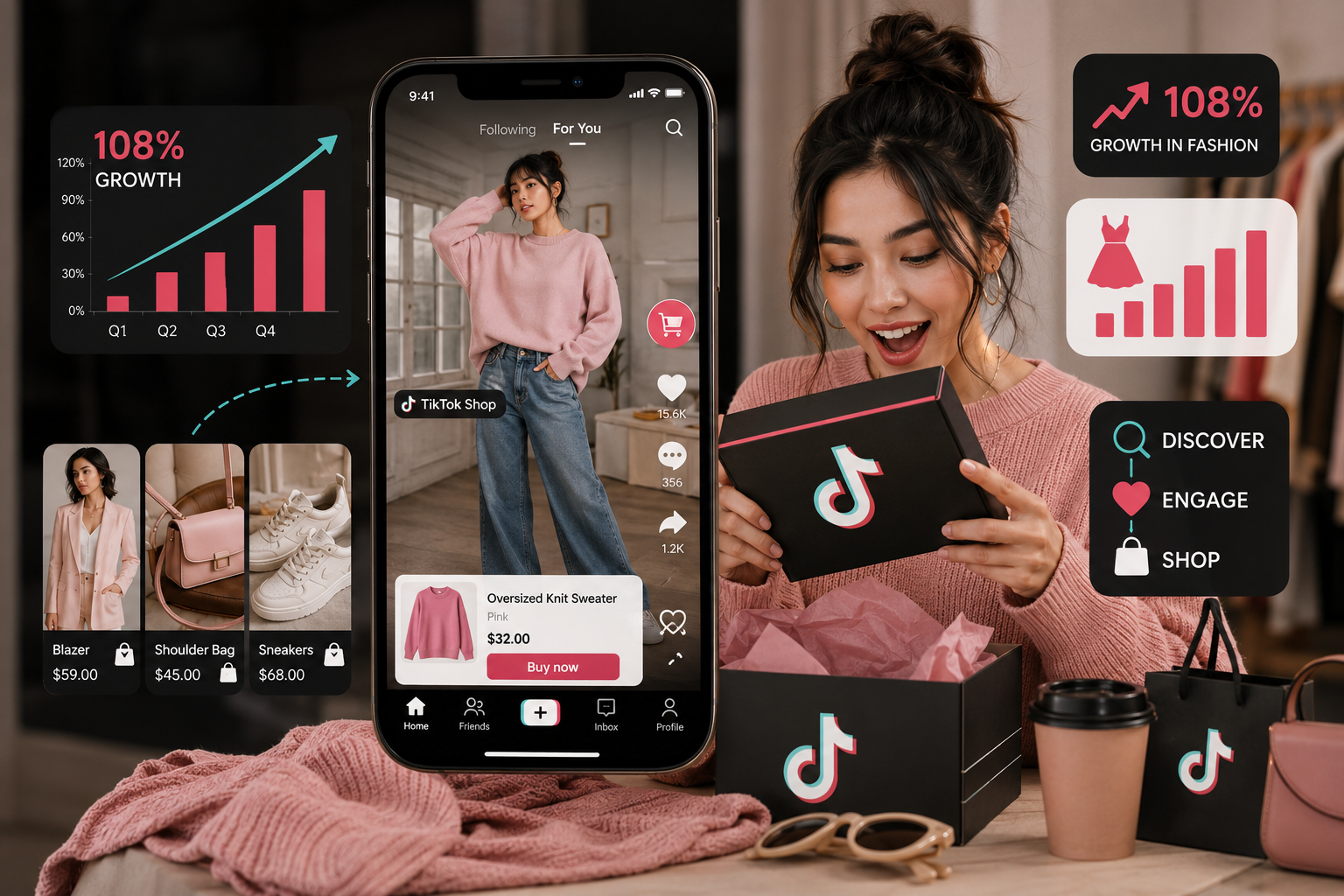

Fashion sales on TikTok Shop grew 108% year over year, with the category on pace for an estimated $20 billion in sales in 2026. Social commerce overall now represents a meaningfully growing share of total US ecommerce activity.
A growth rate like that isn't just a platform success story. It's a signal about where fashion discovery is actually concentrating, and it's moving faster than a lot of brand strategies have caught up to.
A few things stand out about this growth:
● Doubling in a single year suggests fashion shoppers are actively shifting behavior, not just platforms adding incremental volume
● Social commerce is capturing discovery that used to happen through traditional ecommerce search and browsing
● The gap between brands with a real social commerce strategy and those treating it as an afterthought is widening quickly
● Video isn't a supplementary format on this platform, it's the entire product experience
Current Apparel Shopper Trends
1. Fashion Discovery Is Shifting Toward Platforms, Not Just Brand Sites
A growth rate this steep suggests shoppers aren't just adding a new channel alongside their usual ecommerce habits, they're meaningfully reallocating where their fashion discovery and purchasing actually happens.
2. The Path From Discovery to Purchase Is Getting Shorter
On social commerce platforms, the gap between seeing a product and being able to buy it has largely collapsed. That's a fundamentally different shopper journey than the multi-step path a traditional ecommerce search and browse experience requires.
3. Trend-Driven Buying Behavior Is Accelerating
Fast-moving trend cycles, amplified by short-form video content, are compressing the window in which a fashion product is relevant, which rewards brands that can move quickly and produce content at pace.
Industry Trends Impacting the Apparel Market
1. A 108% Growth Rate Represents a Real Shift in Consumer Behavior, Not Just Platform Expansion
Growth at this rate typically reflects genuine behavioral change, not simply more users joining an existing platform. Fashion shoppers appear to be actively choosing social commerce over other discovery paths at an accelerating rate.
2. Brands Without a Social Commerce Strategy Are Increasingly Absent From a Major Growth Channel
As this channel's share of fashion discovery grows, brands without a meaningful presence there aren't just missing incremental sales, they're absent from where a growing share of category activity is happening.
3. Producing Enough Video to Compete Requires a Different Content Model
This is where AI-generated video becomes central to a real social commerce strategy, since keeping pace with a 108% growth rate in this channel requires a volume of content that traditional production models struggle to sustain. Extending that same video-first, shoppable experience to a brand's own site through shoppable video means the discovery-to-purchase experience that's working on social can also work everywhere else a shopper encounters the brand.
Challenges and Opportunities in Apparel
The challenge is that a growth rate this steep leaves little time for brands to gradually build a social commerce strategy. The channel's importance is compounding quickly.
The opportunity is that many fashion brands are still underinvested here relative to how much category activity is concentrating in this channel, which means real, achievable differentiation for brands that move now.
Strategic Recommendations for Apparel Brands and Retailers
The first priority is treating social commerce as a primary discovery channel for fashion, not a secondary or experimental one, given the pace of its growth.
The second is building a content production model that can keep pace with fast-moving trend cycles, rather than relying on occasional, slower-produced content.
The third is extending the same video-first discovery experience to a brand's own site, so growth captured on social platforms also strengthens direct-to-consumer channels.
Looking Ahead
A 108% growth rate doesn't happen quietly, and it doesn't happen slowly. Fashion brands that treat this channel's growth as a signal to act now will be building real advantage in a channel that's compounding in importance faster than most other parts of the fashion ecommerce landscape.
Want to keep pace with where fashion discovery is actually accelerating? See how leading fashion brands are using video to compete in social commerce's fastest-growing category.
FAQ
How much did fashion sales grow on TikTok Shop in 2026?
Fashion sales on TikTok Shop grew 108% year over year, with the category on pace for an estimated $20 billion in sales in 2026.
What does this growth rate suggest about fashion shopper behavior?
A growth rate this steep typically reflects a genuine shift in consumer behavior, with shoppers actively reallocating where they discover and purchase fashion products, rather than simply reflecting platform user growth.
Why is video important for competing in fast-growing social commerce channels?
Keeping pace with rapid trend cycles and high growth requires a volume of content that traditional, slower video production methods struggle to sustain, making scalable video production essential to a competitive social commerce strategy.
Should fashion brands treat social commerce as a primary or secondary channel?
Given the pace of growth in channels like TikTok Shop, fashion brands increasingly need to treat social commerce as a primary discovery channel rather than a secondary or experimental one.
Unlock Exclusive Insights
By submitting this form, you agree to Firework's privacy policy and consent to receive personalized marketing communications. You can unsubscribe at any time.