Easter 2026 Trends: How Consumer Behavior Is Shaping Spring Commerce

Easter has quietly become one of the most underestimated moments in the retail calendar.
What was once centered around chocolate and baskets has evolved into a multi-category shopping event, spanning food, gifts, home décor, apparel, and digital experiences.
In 2026, that evolution is accelerating.
From earlier discovery to experience-driven shopping, Easter is now a seasonal commerce window that brands can’t afford to overlook.
1. Easter Starts Earlier Than Brands Think
One of the biggest shifts in 2026 is when Easter shopping begins.
Consumers are no longer waiting until the week before, they’re starting weeks in advance:
- Browsing begins about a month before Easter
- Discovery peaks in mid-late March
- Purchase intent spikes in the final week before the holiday
This creates a two-phase opportunity:
- Early phase → inspiration & discovery
- Late phase → conversion & urgency
Brands that wait until April to activate campaigns are already behind.
2. Easter Is Now a Multi-Category Shopping Moment
Easter is no longer just about candy.
Spending spans across:
- food and hosting
- gifts and toys
- apparel and accessories
- home décor and seasonal refresh
In fact, Easter drives billions in retail spend annually, with consumers buying across multiple categories, not just one.
This makes it one of the most flexible seasonal moments for brands.
Even brands outside “traditional Easter categories” can win,if they position correctly.
3. The Rise of “Easter as an Experience”
Easter in 2026 is increasingly about experience, not just products.
Retailers are leaning into:
- in-store events and activations
- themed product bundles
- interactive campaigns (digital egg hunts, social content)
- family-centered shopping moments
This aligns with a broader shift: Consumers are shopping for moments, not just items.
Events like Easter festivals, giveaways, and in-store activations continue to drive engagement and foot traffic.
4. Nostalgia + Elevated Aesthetic Are Driving Design Trends
Easter aesthetics are evolving in two directions:
1. Nostalgic & playful
- pastel colors
- classic Easter symbols (bunnies, eggs, florals)
- “childlike wonder” design themes
2. Elevated & modern
- refined spring palettes
- reusable home décor
- design that extends beyond the holiday
The takeaway: Easter is becoming part of year-round lifestyle branding.
5. Value-Conscious Shopping Is Shaping Purchase Behavior
Even as spending remains strong, shoppers are more price-aware in 2026.
Retail trends show:
- increased competition driving promotions
- price sensitivity influencing decisions
- demand for bundles and value offers
For example, retailers are actively lowering prices and competing on seasonal products to attract budget-conscious shoppers. Consumers still spend, but they expect more value for it.
6. Bundles Are Driving Higher Conversion
Easter is one of the strongest moments for bundled products.
Why?
Because bundles:
- reduce decision fatigue
- increase perceived value
- align with gifting behavior
High-performing examples include:
- gift sets (kids + adults)
- meal kits + hosting bundles
- décor + seasonal add-ons
The psychology is simple: “Less thinking, more value.”
7. Discovery Is the Most Underrated Lever
Easter shopping is heavily driven by inspiration, not just intent.
Consumers don’t always know exactly what they want, they’re exploring:
- gift ideas
- hosting inspiration
- seasonal products
That’s why discovery-first experiences matter more than ever.
Brands that win in 2026 are:
- showing products in context
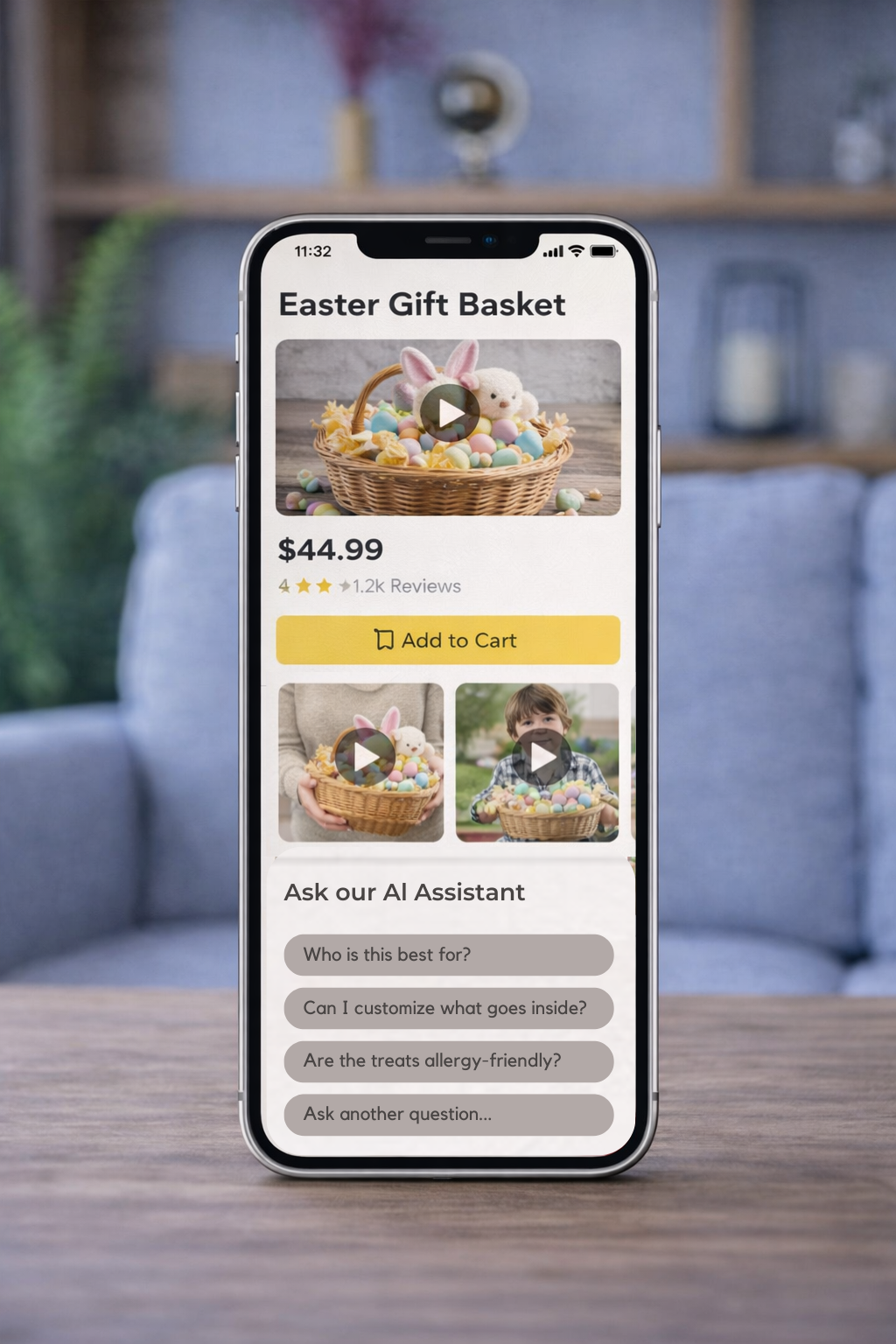
- using visual formats (video, short-form content)
- guiding shoppers through options
8. The Shift Toward Guided Shopping Experiences
This is where Easter trends intersect with a bigger shift in ecommerce.
Traditional shopping still looks like:
Search → filter → browse → decide
But modern experiences are moving toward:
Guided discovery → assisted decisions → faster purchase
During high-consideration moments like gifting or hosting, shoppers don’t want to do the work themselves.
They want:
- recommendations
- answers
- confidence
This is where AI-powered shopping experiences start to play a role.
What This Means for Ecommerce Teams
Easter 2026 isn’t just a seasonal campaign, it’s a test of how well your experience supports:
- early discovery
- guided decision-making
- multi-category shopping
- value-driven purchases
Brands that treat Easter as a one-week promotion will miss the opportunity. Brands that treat it as a full-funnel commerce moment will win.
Key Takeaways
Easter is evolving into a much more strategic retail moment.
To compete in 2026, brands should focus on:
- activating earlier in the shopping journey
- supporting discovery, not just search
- bundling products for value and convenience
- designing for experience, not just transactions
- aligning content with shopper intent
Turn Seasonal Discovery Into Conversion
Easter is driven by inspiration, exploration, and decision-making in the moment.
See how interactive video and AI-powered shopping experiences help brands guide shoppers from discovery to purchase.
Unlock Exclusive Insights
By submitting this form, you agree to Firework's privacy policy and consent to receive personalized marketing communications. You can unsubscribe at any time.