How First-Party Data Is Powering the Future of Video Commerce
.png)

Why the most valuable retail experiences are built on owned data and on-site engagement
The Shift From Third-Party Targeting to First-Party Intelligence
Retail is in the middle of a structural shift.
For years, ecommerce growth was fueled by third-party data. Brands relied on cookies, external platforms, and paid media to understand and reach their customers. But that model is disappearing. Privacy changes, rising acquisition costs, and platform dependency have forced brands to rethink how they build and scale their digital experiences.
The answer has been first-party data.
But collecting data is not the advantage. Using it is. This is where video commerce becomes critical.
Because the most valuable first-party data today is not just what customers say. It is what they watch, engage with, and respond to in real time.
The PDP Has Become a Data Engine
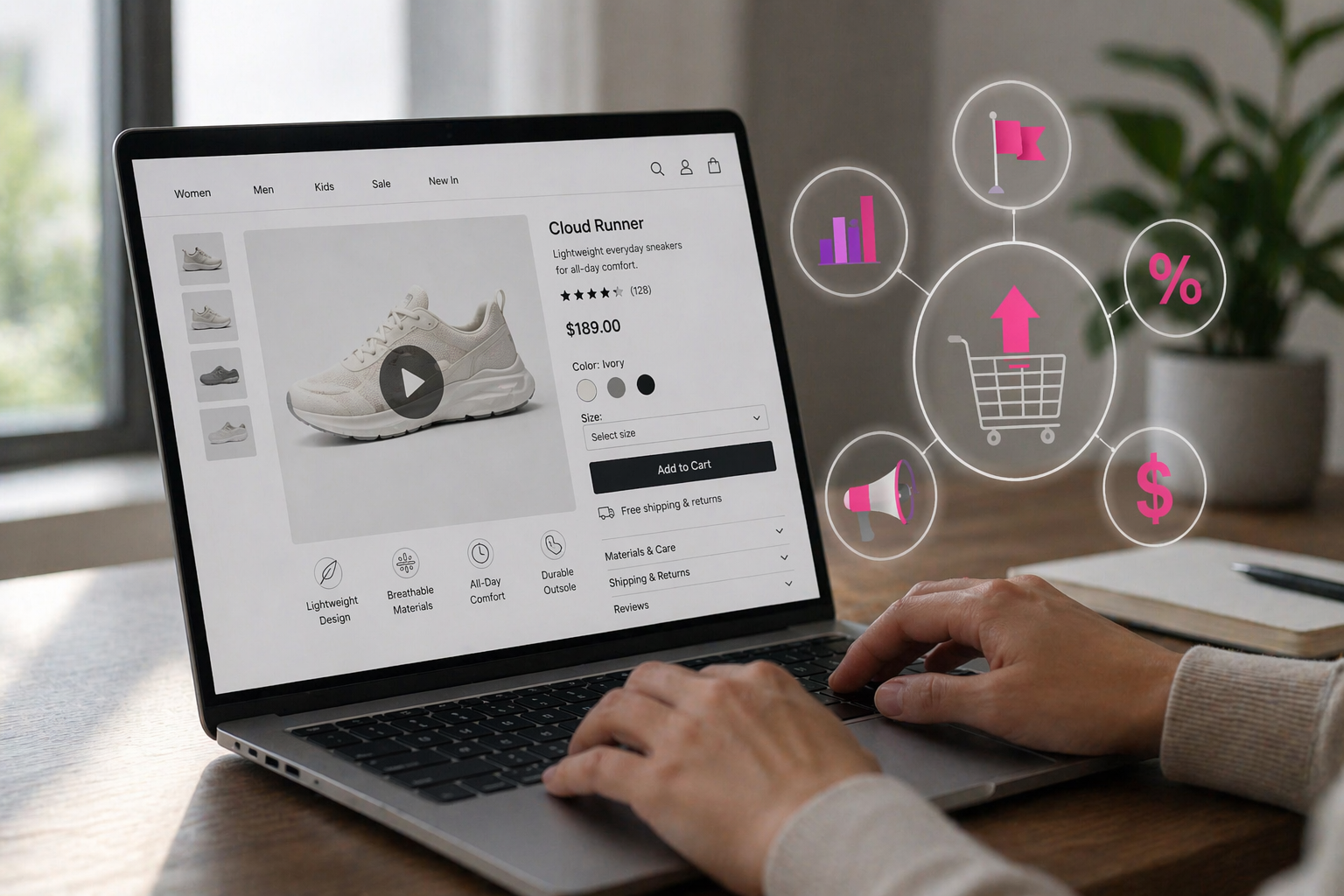
The product detail page is no longer just a destination. It has become the center of the shopping journey. With experiences like Firework Digital Showroom, brands can bring the in-store experience online, combining video, interaction, and guidance into a single environment.
Shoppers now land directly on PDPs from search, social, and increasingly from AI-driven discovery. That means the PDP is responsible for discovery, education, and conversion all at once.
But most PDPs are still static. They rely on text, images, and reviews to do all the work.
That leaves a gap. First-party video closes it.
Instead of forcing shoppers to leave the page to research, video keeps them engaged in one place. It shows the product in action, answers questions visually, and creates a more complete understanding in seconds.
Why Video Commerce Unlocks Better First-Party Data
Video commerce does more than improve engagement. It captures richer data.
With Shoppable Video, brands can understand not just what shoppers click, but how they interact with content. What they watch. How long they stay. What drives action.
These are high-intent signals.
Instead of guessing what a shopper is interested in, brands can see it directly through behavior.
And this matters, 87% of consumers say video convince them make purchasing decisions, especially in higher-consideration categories.
That means video is not just content. It is where decisions are happening.
From Data Collection to Data Activation
Most brands already collect first-party data.
The challenge is activation.
Data sitting in dashboards or CRM systems does not improve the shopping experience on its own. It needs to be applied in real time.
This is where video commerce creates an advantage.
Because content can be dynamically surfaced based on behavior. A shopper exploring a high-end appliance can be shown in-depth product demos. Someone comparing options can be guided to side-by-side walkthroughs. Someone hesitating can be shown content that answers common objections.
The experience becomes responsive. Not personalized after the fact, but adaptive in the moment.
The Role of AI in Connecting Data and Experience
First-party data becomes significantly more powerful when paired with AI.
This is where video and AI converge. With an AI Shopping Agent, brands can interpret shopper intent in real time and deliver personalized answers, recommendations, and content directly within the experience.
Instead of treating every shopper the same, AI can:
- understand intent based on engagement
- surface the most relevant video content
- answer product questions instantly
- guide shoppers through complex decisions
Video provides the context. AI provides intelligence.
Together, they create a system that learns continuously.
Why This Matters for Conversion and Retention
When first-party data is activated through video commerce, the impact is immediate.
Shoppers move faster because they have the information they need. They feel more confident because the experience adapts to their needs. And they are less likely to leave because everything they need is already there.
This directly influences:
- conversion rates
- return rates
- engagement depth
- repeat behavior
But beyond performance, it improves the experience itself.
Because it feels helpful.
Extending First-Party Data Beyond the Brand Site
The value of first-party data does not stop at your own site.
It extends into retailer environments.
Brands often lose control of how their products are represented on retailer PDPs. Content is limited, inconsistent, or not aligned with brand standards.
By syndicating video content, brands can bring the same level of product education and engagement into those environments.
This creates a more connected ecosystem where content flows between brand and retailer, supporting a unified shopping experience.
What Leading Brands Are Doing Differently
The most advanced brands are not just collecting first-party data. They are designing experiences around it.
They are embedding video into every PDP. They are using engagement signals to refine content continuously. They are pairing video with AI to guide shoppers instead of leaving them to navigate alone.
They are not thinking in terms of content or data separately.
They are thinking in systems.
The Bottom Line
First-party data is only as valuable as the experience it powers.
Video commerce is what brings that data to life.
It captures richer signals, enables real-time personalization, and turns static product pages into responsive, high-performing environments.
As ecommerce continues to evolve, the brands that win will not just own their data.
They will know how to use it.
Turn your first-party data into real-time shopping experiences.
Firework helps brands activate video and AI across the customer journey to drive conversion, engagement, and long-term value. Talk to an expert.
Frequently Asked Questions
What is first-party data in ecommerce?
First-party data is information a brand collects directly from its customers through its own channels, such as website behavior, purchase history, and on-site engagement. It is more accurate, privacy-compliant, and directly tied to real customer intent.
Why is first-party data important for video commerce?
Video commerce captures high-intent behavioral signals, such as what shoppers watch and how they engage. This makes it one of the most valuable forms of first-party data because it reflects real-time purchase intent.
How does video improve ecommerce conversion rates?
Video helps shoppers better understand products, reducing uncertainty and increasing confidence. Nearly 90% of consumers say video plays a role in their purchasing decisions.
What is video commerce?
Video commerce uses video within ecommerce experiences to help shoppers discover, evaluate, and purchase products more effectively.
How do brands use first-party data to personalize shopping experiences?
Brands use first-party data to dynamically adjust content, recommendations, and messaging in real time, creating more relevant and efficient shopping journeys.
What is the relationship between AI and first-party data in ecommerce?
AI uses first-party data to interpret shopper intent and deliver personalized experiences, including recommendations, content, and real-time answers.
Unlock Exclusive Insights
By submitting this form, you agree to Firework's privacy policy and consent to receive personalized marketing communications. You can unsubscribe at any time.