Omnichannel Shopping in 2026: How to Build Connected Experiences Shoppers Actually Use
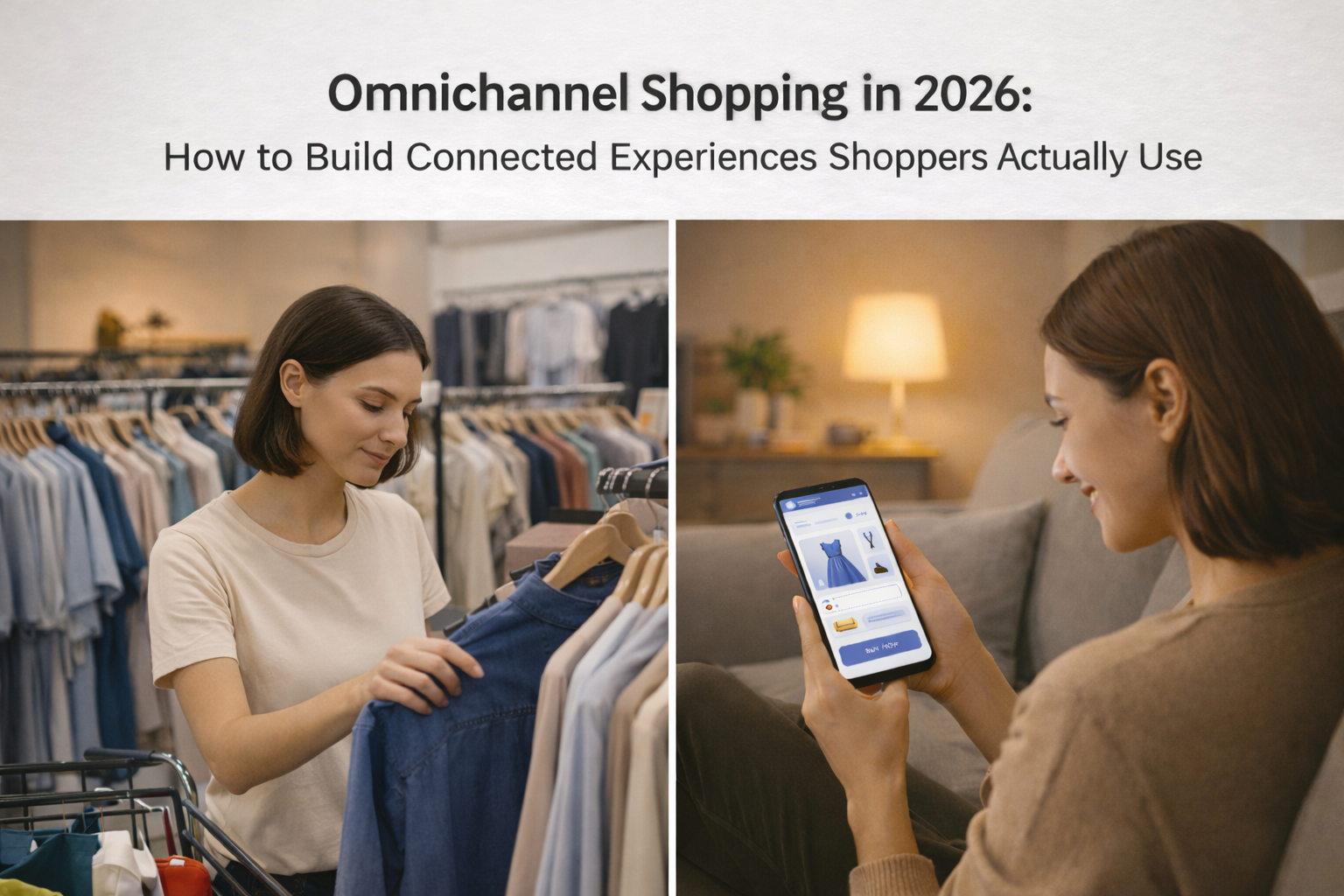

In 2026, omnichannel no longer means being present everywhere. Most retailers already are. The real challenge now is whether those channels actually work together in a way shoppers notice, trust, and use.
That challenge matters more than ever as the e-commerce market is expected to total over $7.9 trillion by 2027, raising the stakes for retailers to deliver experiences that feel connected rather than fragmented.
Shoppers don’t think in terms of channels. They move fluidly between discovery, research, and purchase, often across multiple touchpoints in a single journey. When those moments feel disconnected, repetitive, or inconsistent, friction creeps in.
Why Omnichannel Had to Evolve
Traditional omnichannel strategies focused on infrastructure: websites, apps, stores, and social platforms. Success was measured by coverage. But coverage isn’t the same as coherence.
Today, around 90% of consumers shop across multiple channels, and those omnichannel shoppers engage more frequently and more deeply than single-channel shoppers. The expectation now is continuity, where context carries across touchpoints and shoppers aren’t forced to start over.
Omnichannel in 2026 is about experience continuity, not channel presence.
The Modern Omnichannel Journey Is Nonlinear
Shoppers rarely follow a straight funnel. Instead, journeys loop and restart:
- Discovery through content, search, or social inspiration
- Research across PDPs, comparisons, reviews, and FAQs
- Confidence built through visual proof and guidance
- Purchase when uncertainty is resolved
Mobile plays a central role here. By 2027, 62% of ecommerce transactions are expected to happen on mobile devices, making mobile-first continuity essential, not optional.
Retailers that still design channel-specific experiences struggle to support this behavior.
Video Is the Unifying Layer Across Channels
Video has become one of the most effective ways to create consistency across omnichannel journeys.
It works because video:
- Travels easily across devices and platforms
- Communicates faster than text
- Provides context and reassurance
- Feels native whether shoppers are browsing, researching, or deciding
This matters as discovery increasingly happens outside traditional category pages. Social commerce alone is projected to drive $1.2 trillion in sales, blurring the line between inspiration and purchase.
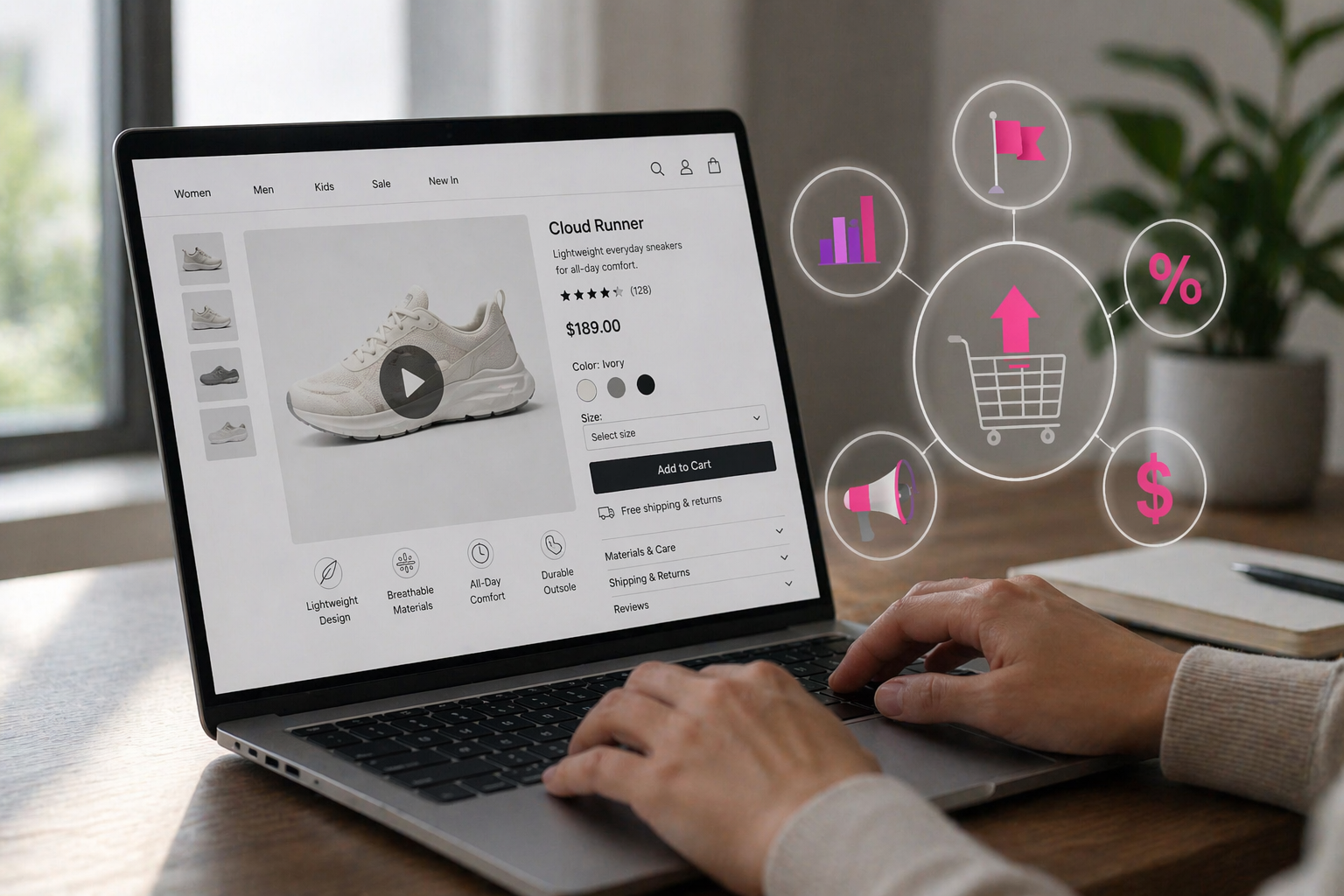
Leading retailers are bringing that behavior onto brand-owned channels, using video to keep discovery, education, and conversion connected in one place.
AI Is What Makes Omnichannel Feel Connected
Connection doesn’t come from duplicating experiences across channels, it comes from relevance.
AI shopping agents enables omnichannel continuity by:
- Interpreting intent across sessions and touchpoints
- Adjusting which content appears first
- Modifying the level of guidance based on confidence signals
- Preventing shoppers from repeating research
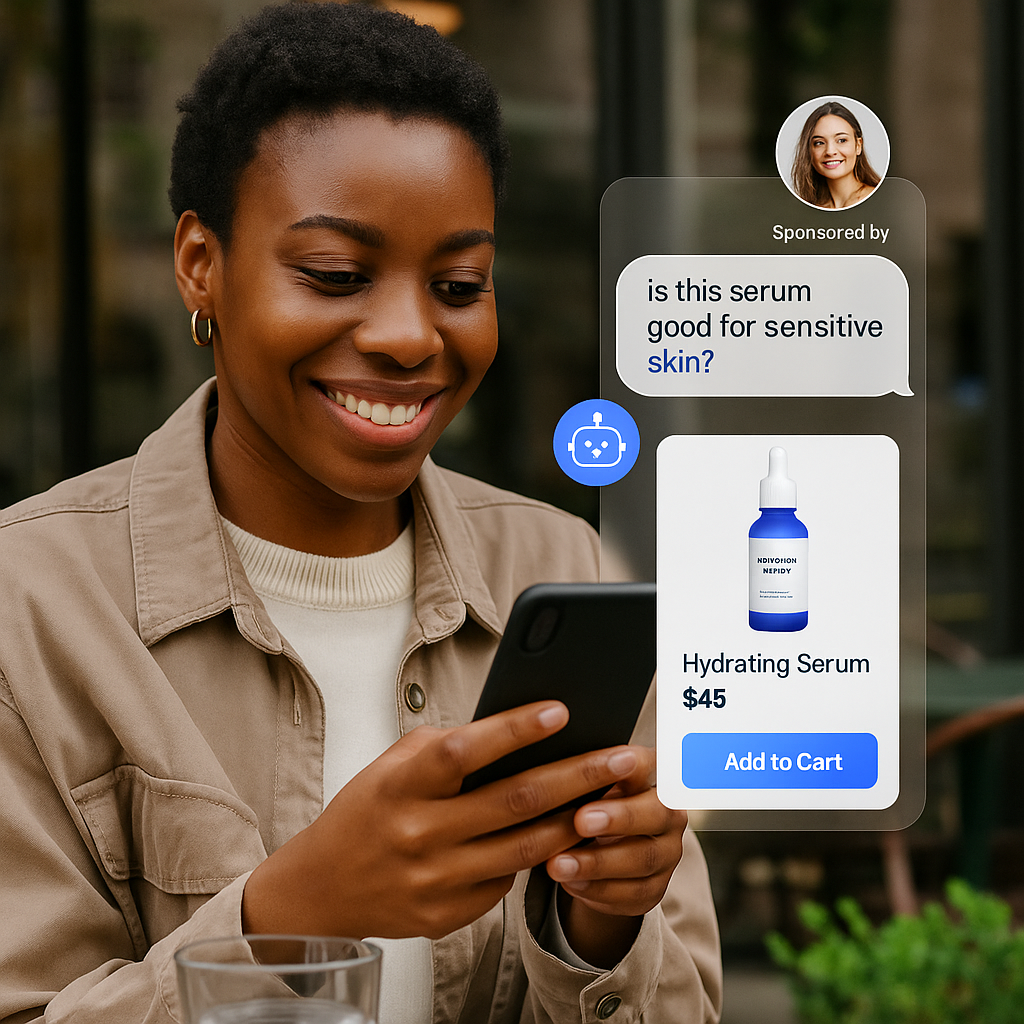
This has a measurable impact. Omnichannel shoppers are 16% more likely to increase order value compared to single-channel shoppers, reinforcing the value of connected, adaptive experiences.
What Connected Omnichannel Actually Looks Like
Retailers building effective omnichannel experiences in 2026 tend to share a few traits:
- Content feels consistent even when formats change
- Video appears wherever confidence is needed
- AI supports decisions instead of pushing products
- Journeys adapt in real time based on behavior
The business impact is clear. Companies with strong omnichannel engagement strategies retain 89% of customers, compared to just 33% for companies with weaker omnichannel approaches.
Common Omnichannel Mistakes Retailers Still Make
Despite progress, many retailers still struggle because they:
- Treat channels as silos
- Repeat content without adapting it
- Rely on static PDPs for decision-making
- Add AI without integrating it into journeys
- Measure success by channel metrics instead of shopper outcomes
Omnichannel expriences requires designing experiences, not just deploying tools.
What This Means for Retail Teams
Omnichannel success today spans ecommerce, content, data, and customer experience.
Teams that succeed:
- Design journeys, not pages
- Invest in content that travels across touchpoints
- Use AI to connect moments, not automate noise
- Treat video as infrastructure, not decoration
As ecommerce continues to scale toward $7.9 trillion globally, retailers that win will be those that connect discovery, guidance, and conversion into experiences shoppers actually want to use, not just channels they happen to touch.
Talk to a Firework expert to learn how video-first experiences and AI-guided shopping can help you build omnichannel journeys shoppers actually use across every touchpoint.
FAQ
What does omnichannel mean in 2026?
It means creating connected, adaptive experiences across touchpoints where content and context carry through the entire journey.
Why is omnichannel important for revenue?
Omnichannel shoppers engage more frequently, spend more, and show higher loyalty than single-channel shoppers.
How do video and AI work together in omnichannel commerce?
Video provides context and proof, while AI determines when and how that content appears based on shopper intent.
Is omnichannel still relevant with AI-driven commerce?
Yes. AI actually makes omnichannel more effective by connecting experiences instead of fragmenting them.
Unlock Exclusive Insights
By submitting this form, you agree to Firework's privacy policy and consent to receive personalized marketing communications. You can unsubscribe at any time.