Retail Industry Updates for 2026: What You Need to Know
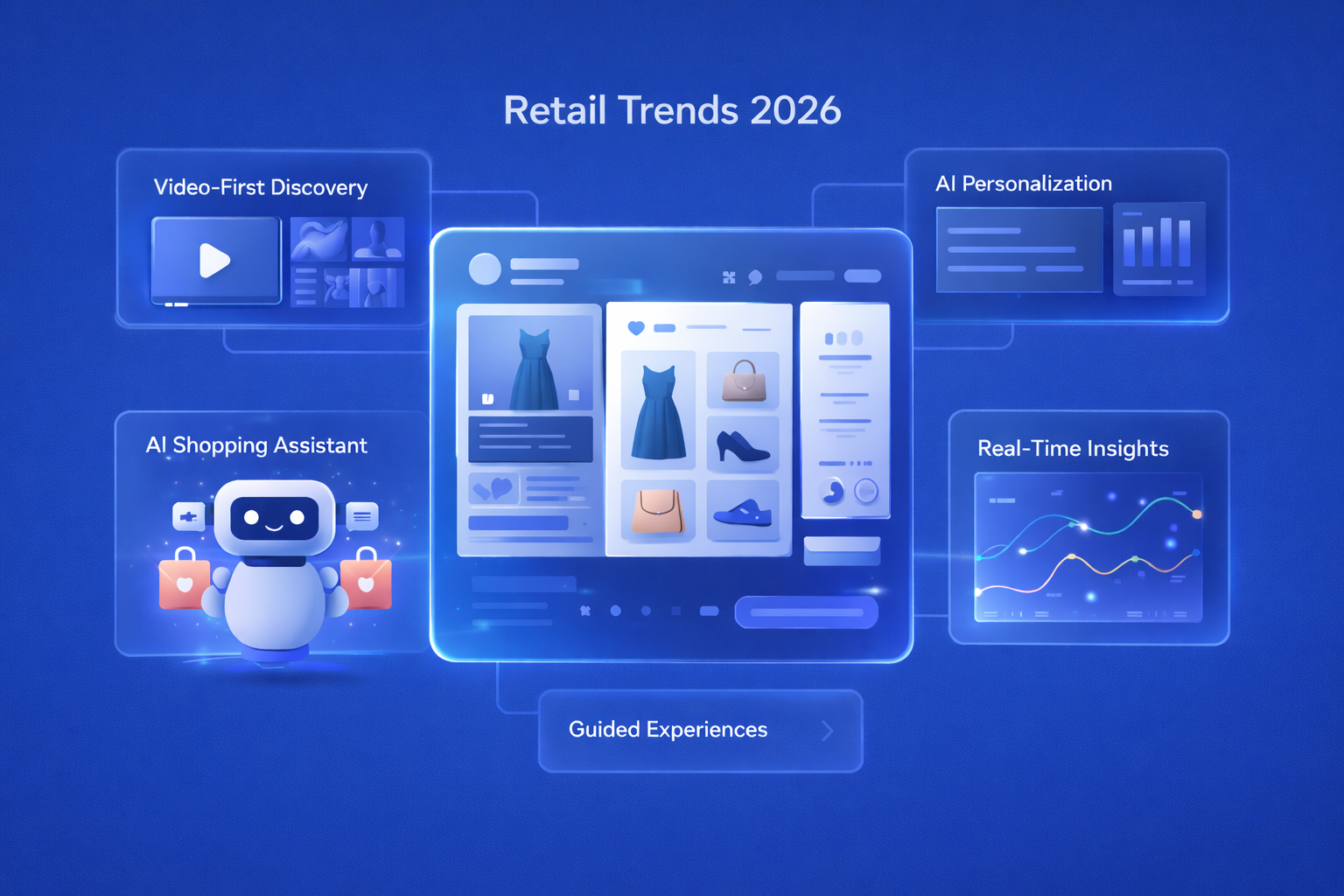

In 2026, ecommerce no longer feels like ecommerce. Product grids, filters, and long descriptions are giving way to scrollable, video-first experiences, AI-guided discovery, and personalized journeys that adapt in real time. Retailers are not just modernizing interfaces, they’re rebuilding how customers discover, understand, and decide. Across retail, the same patterns are emerging.
1) Video Commerce Is Becoming the Default Discovery Experience
Shoppers now expect product discovery to look and feel more like TikTok than a traditional category page.
Instead of clicking through menus, customers want to:
- Scroll through short, visual product stories
- See products used, styled, installed, or compared
- Learn through motion, not text
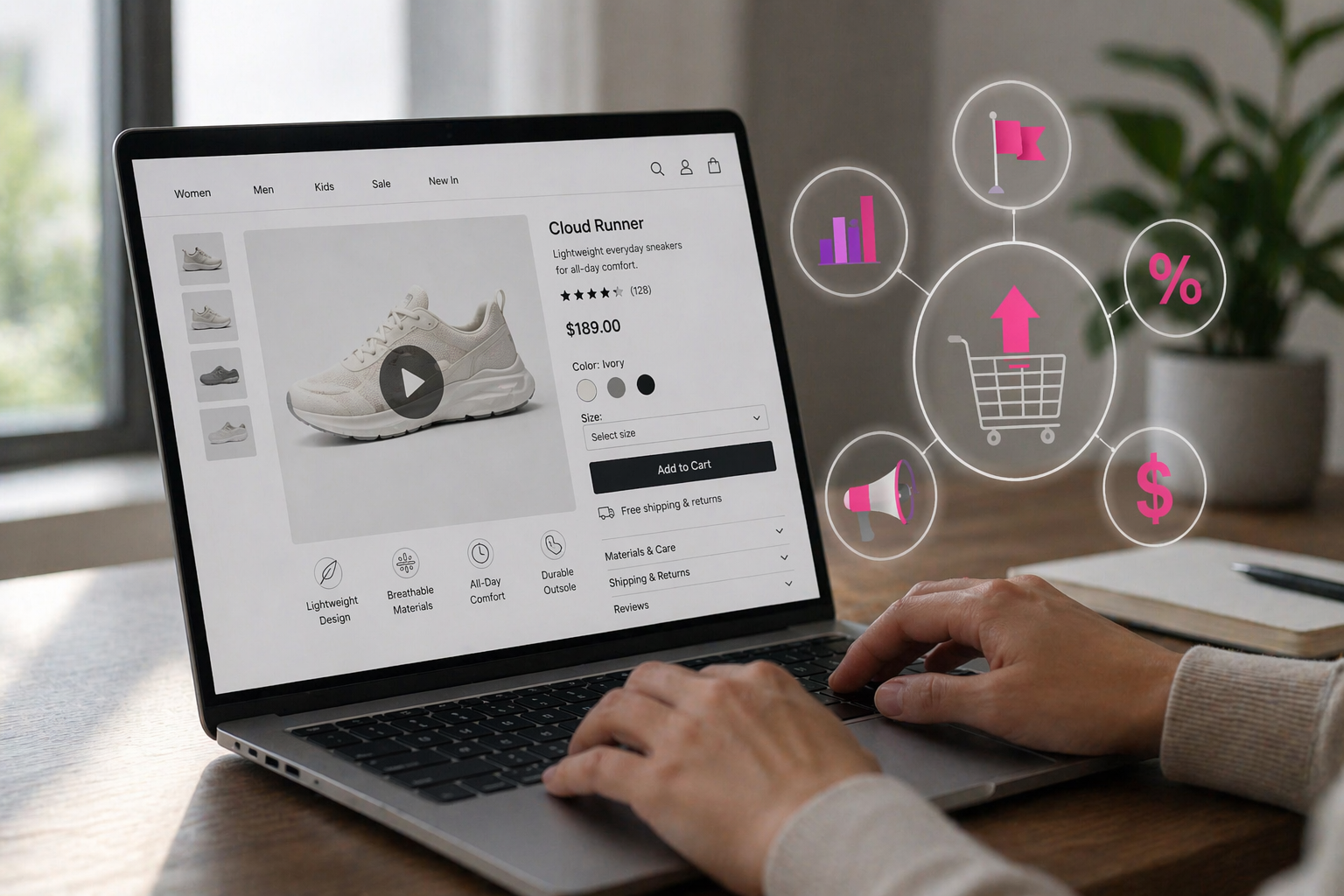
This is pushing retailers to rethink their sites as content-driven discovery environments, not static catalogs. Video is no longer an add-on to the PDP, it’s becoming the primary interface for exploration, especially higher in the funnel.
This shift is particularly visible in categories where understanding the product matters more than specs alone. Home improvement retailers, for example, increasingly rely on video to show how products work, how they fit into a project, and what outcomes customers can expect. Lowe’s has openly discussed expanding video content as part of its broader digital shopping strategy, recognizing that complex purchases require richer explanation and visual clarity as AI-driven shopping becomes more prominent.
2) AI Personalization Is Shifting From Products to Experiences
Personalization in 2026 looks fundamentally different from the recommendation engines of the past.
Rather than simply suggesting similar products, AI is now shaping:
- Which content appears first
- How information is presented
- What level of guidance a shopper receives
This turns personalization into an experience-layer problem, not a merchandising one. Two shoppers browsing the same category may see entirely different video sequences, explanations, or guided flows based on intent signals, not demographics.
Forbes has pointed to this shift as one of the defining retail changes for 2026, noting that AI is moving personalization away from static recommendations and toward adaptive, journey-level orchestration, where content and context matter as much as product selection.
Video plays a central role here. It gives AI a flexible storytelling format, something that can educate, reassure, or inspire depending on where a shopper is in their decision process.
3) AI Shopping Assistants Are Making Commerce Conversational
Search-led shopping is losing ground to intent-led, conversational discovery.
Instead of typing keywords or navigating categories, shoppers increasingly describe what they need in natural language. AI assistants interpret that intent, narrow options, and surface relevant content, often before a shopper ever reaches a traditional product page.
This changes how retailers must think about content. Product information now needs to support explanations, not just listings. Visual proof becomes essential, because AI-driven shopping doesn’t just return results, it answers questions.
Business Insider has reported on the rapid rise of AI agents in ecommerce, with nearly half of online shoppers will use AI agents by 2030, adding $115 billion to US e-commerce. In this environment, video becomes a natural companion to conversational commerce, it shows what words alone can’t fully explain.
4) Guided Experiences Are Driving Measurable Performance Gains
The move toward AI-guided, content-rich journeys isn’t theoretical. Retailers are already seeing performance impact when guidance and context are embedded into the shopping experience.
In home improvement, where purchases often involve uncertainty or technical complexity, combining AI assistance with rich product education has proven especially effective. A Retail TouchPoints analysis of Lowe’s AI-powered Mylow experience found that shoppers using the assistant convert at twice the rate of those who don’t, a result tied to reduced friction, clearer guidance, and better product understanding throughout the journey.
What’s notable isn’t just the AI, it’s how AI is paired with content that guides decisions, not just speeds them up.
5) Video Is Becoming a Signal, Not Just a Format
In 2026, video is no longer just something shoppers watch, it’s something AI systems learn from.
Engagement with video now acts as an intent signal:
- What a shopper watches
- How long they engage
- Where they pause or drop off
These behaviors inform what content gets served next, what products are prioritized, and how journeys adapt in real time.
NRF 2026 discussions reinforced that retailers must think about content not only for human consumption, but for AI interpretation, emphasizing the importance of structured, rich, and contextual media that can be surfaced in agent-driven discovery environments.
This elevates video from a conversion asset to discovery infrastructure.
6) The Commerce Experience Is Becoming Story-Led
As video and AI converge, commerce increasingly resembles storytelling rather than browsing.
Instead of comparing SKUs, shoppers follow narratives:
- How a product fits into a lifestyle
- How it solves a specific problem
- How it looks, feels, or performs in real use
This mirrors the success of social platforms, but retailers are now bringing that behavior onto their own sites, where they control the experience, data, and outcome.
The result is a shift from transactional pages to guided, story-driven journeys that build confidence before purchase.
What This Means for Retail in 2026
The industry signals are consistent:
- Shoppers expect TikTok-style discovery on brand-owned channels
- AI is reshaping how journeys begin, progress, and convert
- Video is central to both personalization and confidence
- Static ecommerce experiences are losing relevance
Retailers that succeed in 2026 won’t be the ones with the most products, they’ll be the ones with the best-guided experiences.
Talk to a Firework expert to see how AI-powered video and shopping assistance can turn your website into high-intent conversion experiences.
FAQ’s
What does video commerce mean in 2026?
Video commerce in 2026 refers to scrollable, short-form video experiences embedded directly into brand and retailer websites, similar to how consumers discover products on TikTok or Instagram. Video becomes a primary way shoppers explore, understand, and evaluate products, not just an add-on to the product page.
Why are retailers prioritizing video now?
Shoppers increasingly prefer visual, in-context learning over reading long descriptions. Video helps explain products faster, reduces uncertainty, and builds confidence, especially for complex or high-consideration purchases.
How does AI change video commerce experiences?
AI personalizes which videos shoppers see and how experiences adapt in real time. Instead of static content, AI helps guide shoppers through relevant video sequences based on intent, behavior, and context.
What is agentic commerce in simple terms?
Agentic commerce describes AI systems that actively guide shopping journeys, interpreting needs, narrowing options, and supporting decisions. In this model, content that explains and demonstrates products (like video) becomes essential.
Is video still important if AI handles discovery?
Yes. Video provides the context and engagement signals AI uses to personalize experiences and make recommendations. The way shoppers interact with video helps shape what they see next.
Where does video fit in the shopping journey?
Video now spans the full journey, from discovery and education to confidence-building before purchase, rather than living only on the product page.
Unlock Exclusive Insights
By submitting this form, you agree to Firework's privacy policy and consent to receive personalized marketing communications. You can unsubscribe at any time.