What Enterprise Brands Actually Ask Before Deploying an AI Shopping Agent
.png)

AI is quickly becoming part of the ecommerce experience. From conversational product discovery to real-time recommendations, brands are exploring how intelligent systems can guide shoppers through increasingly complex product catalogs.
But for enterprise ecommerce teams, deploying an AI shopping agent is not simply about adopting new technology. It’s about understanding how that technology will impact the customer experience, operational workflows, and measurable business outcomes.
Before introducing AI into the shopping journey, enterprise leaders tend to ask a consistent set of questions. These questions reveal what brands actually need from AI-powered commerce experiences, and why thoughtful implementation matters.
The Real Question: Will This Improve the Shopping Experience?
Enterprise brands rarely adopt technology simply because it’s new. The first question most teams ask is straightforward:
Will this actually improve the customer experience?
Ecommerce environments have grown increasingly complex. Product catalogs are larger, specifications are more detailed, and shoppers often need more information before making a confident purchase.
This creates friction during the discovery process. Shoppers may open multiple tabs, search external reviews, or leave the site entirely to research products.
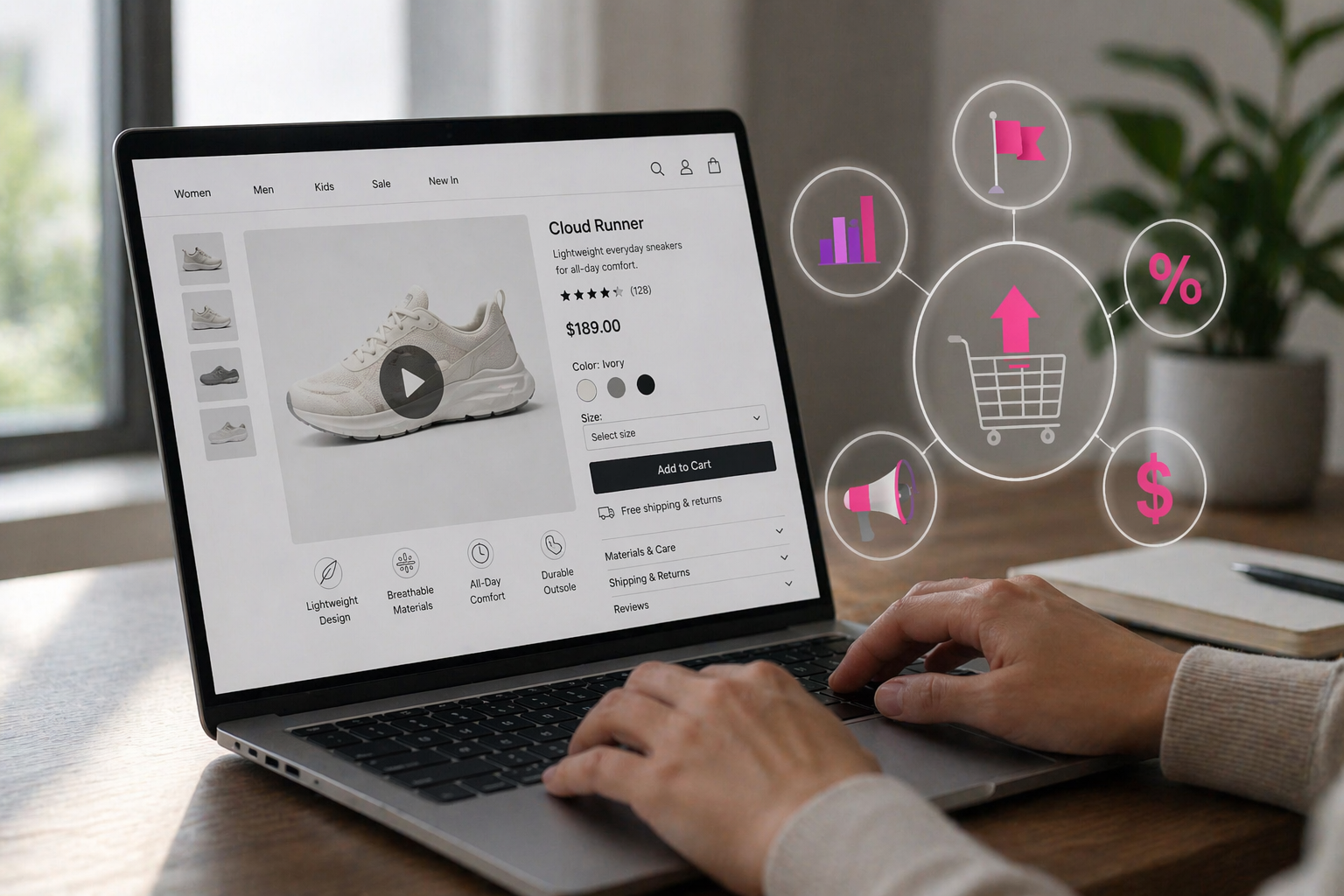
An effective AI shopping agent can address this gap by guiding shoppers through the evaluation process directly on the product page.
Rather than acting as a traditional chatbot, the AI functions more like a knowledgeable in-store associate, helping shoppers:
- understand product differences
- compare options within a catalog
- evaluate compatibility and features
- quickly find answers to common questions
By reducing uncertainty, AI can help customers move from discovery to decision with greater confidence.
Learn more about how AI shopping agents support guided product discovery.
How Will This Integrate With Our Existing Ecommerce Stack?
For enterprise brands, integration is often one of the most important considerations.
Large ecommerce organizations typically operate complex digital ecosystems that include:
- ecommerce platforms
- product information management systems (PIM)
- analytics platforms
- personalization tools
- customer service software
Introducing AI into this environment must be done carefully. Enterprise teams want to understand how easily the solution can integrate into their current infrastructure without disrupting existing workflows.
Common questions include:
- How easily can AI connect to our product catalog?
- Does it integrate with our current product detail page experience?
- Can it support multiple markets and languages?
Solutions that fit naturally into existing systems tend to be adopted much more quickly than those requiring major operational changes.
Will AI Actually Influence Conversion and Revenue?
Beyond experience improvements, enterprise brands ultimately evaluate new technologies through a performance lens.
The question becomes: Will this improve measurable ecommerce outcomes?
AI shopping agents can influence several key metrics by helping shoppers navigate complex product decisions more efficiently.
When shoppers receive contextual answers within the product experience, they are less likely to leave the site to search for information elsewhere.
This can lead to improvements in:
- product page engagement
- time spent evaluating products
- conversion rates
- average order value
In many cases, improved product understanding can also reduce post-purchase friction, such as product returns caused by confusion or incorrect product selection.
How Will This Affect Customer Trust?
Trust plays a central role in ecommerce experiences, particularly when AI is involved.
Enterprise brands need to ensure that AI interactions feel accurate, helpful, and aligned with their brand voice. Poorly implemented automation can create confusion rather than clarity.
This raises important questions around:
- the accuracy of product information
- maintaining a consistent brand tone
- transparency in AI interactions
- ensuring answers remain relevant and helpful
When AI is designed around the shopper journey, rather than automation alone, it becomes a trusted source of product guidance.
Can This Scale Across Our Entire Product Catalog?
Enterprise ecommerce catalogs often contain thousands or even millions of products. Supporting shoppers across such large inventories requires a scalable approach.
Brands evaluating AI solutions want to understand whether the system can support their entire catalog without requiring manual maintenance for each product.
An effective AI shopping agent should be able to:
- interpret large product catalogs
- surface relevant answers across product categories
- support multiple product types and technical specifications
- adapt as product catalogs evolve
Scalability is what allows AI to move beyond small pilots and become a foundational part of the ecommerce experience.
The Shift Toward Guided Commerce
The role of ecommerce product pages is evolving.
Instead of serving only as information repositories, modern product experiences are becoming interactive environments where shoppers discover, evaluate, and decide.
AI shopping agents are a key part of this shift toward guided commerce. Rather than requiring shoppers to search for answers themselves, AI can provide contextual guidance directly within the product experience.
This transformation is part of a broader shift toward agentic commerce, where intelligent systems help shoppers navigate complex decisions and find the right products more efficiently.
As ecommerce experiences continue to evolve, the brands that succeed will be those that design digital journeys around how people actually shop, combining product information, video demonstrations, and conversational guidance into a single experience.
See How AI Shopping Agents Work in Practice
For enterprise brands, deploying AI successfully depends on how well it integrates into the broader shopping journey.
Explore how AI shopping agents help guide product discovery, answer shopper questions, and support more confident purchase decisions.
Unlock Exclusive Insights
By submitting this form, you agree to Firework's privacy policy and consent to receive personalized marketing communications. You can unsubscribe at any time.