The Store Window Moved to the Feed. Fashion Brands Haven't Caught Up.
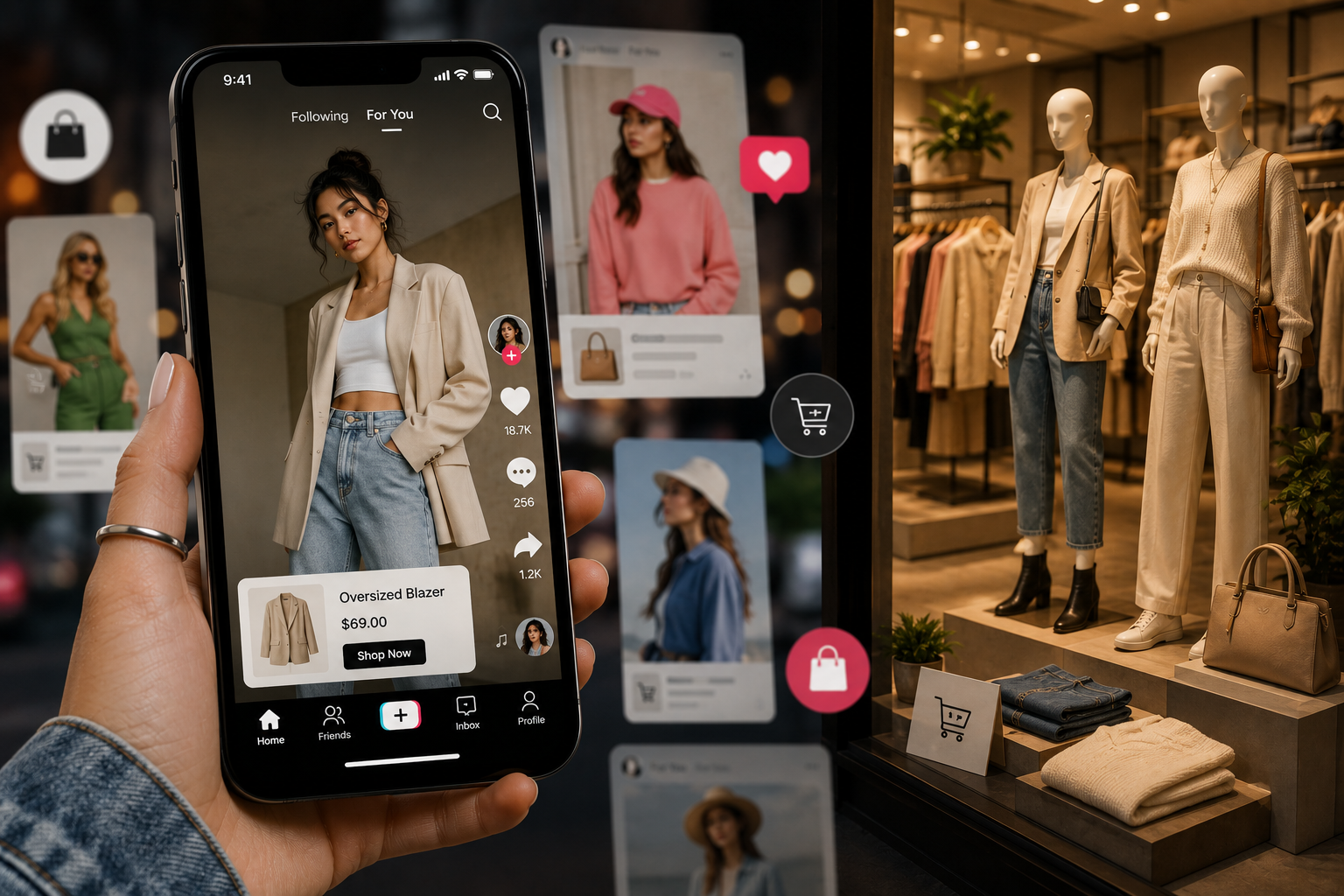

The storefront window used to do a specific job: give someone walking by a reason to stop, look, and come in. It was curated, visual, and updated regularly to stay relevant.
That first impression moment hasn't disappeared. It's moved. For a huge share of shoppers now, the equivalent of walking past a storefront window is scrolling a social feed, and the brands that understand that shift are building very different content than the ones still designing primarily for a physical or static digital storefront.
A few things define this shift:
● The feed is the new high-traffic real estate, and it behaves nothing like a storefront window
● A storefront window stays still and waits. A feed moves constantly and rewards what earns attention in the moment
● Many fashion brands are still producing content built for a static, curated moment, not a fast-moving, algorithmically driven one
● The brands winning attention in the feed are treating it as its own discovery format, not just a place to repost storefront-style imagery
Current Apparel Shopper Trends
1. Passive Browsing Has Moved From Physical Space to the Feed
Walking past shop windows on a street was a passive discovery activity. Scrolling a feed is its direct digital descendant, and it now captures a much larger share of a shopper's passive browsing time than physical storefronts do.
2. Attention in the Feed Is Earned Differently Than Attention in a Window
A storefront window can rely on a single striking, static image. A feed rewards movement, story, and relevance to what's currently trending, which a static image alone rarely provides.
3. The Feed Doesn't Wait for a Shopper to Walk By
A storefront window is there whenever someone happens to pass it. A feed is algorithmically pushed toward shoppers, which means the content itself has to earn its way into view rather than simply waiting to be seen.
Industry Trends Impacting the Apparel Market
1. Static Product Imagery Underperforms in a Video-Native Environment
Content built around a single polished photo, the digital equivalent of a storefront window, increasingly underperforms against video content built specifically for how feeds actually work.
2. Discovery-Stage Content and Purchase-Stage Content Are Converging
Just as the storefront window used to lead directly into the store, feed content increasingly leads directly into a purchase moment, collapsing discovery and conversion into a single continuous experience rather than two separate steps.
3. Video Volume Now Matters as Much as Video Quality
This is where shoppable video becomes essential to a modern discovery strategy, extending that same feed-native, video-first experience to a brand's own digital storefront. Because feeds reward frequency and relevance as much as production quality, AI-generated video is what makes it realistic to keep up with that pace across a full apparel catalog and changing seasonal styles, rather than producing occasional polished pieces the way storefront content once did.
Challenges and Opportunities in Apparel
The challenge is that a lot of fashion brand content is still built around the assumptions of a storefront window: static, occasional, curated. That doesn't match how the feed actually works or rewards content.
The opportunity is that brands willing to rebuild their discovery content around video, frequency, and relevance are competing for attention in a space many competitors haven't fully adapted to yet.
Strategic Recommendations for Apparel Brands and Retailers
The first priority is treating the feed as its own discovery format, with its own rules, rather than simply reposting storefront-style content into it.
The second is investing in video frequency, not just occasional high-production pieces, since feeds reward consistent relevance over rare polish.
The third is extending that same video-first discovery experience to a brand's own site, so the feed and the storefront work as one continuous journey rather than two disconnected experiences.
Looking Ahead
The storefront window isn't gone, it's just not where most shoppers' passive attention lives anymore. The fashion brands that rebuild their discovery content around the feed's actual rules, video, frequency, relevance, will keep earning the attention that brands still designing for a street-level window are losing.
Want your feed to work as hard as a storefront window once did? See how leading fashion brands are using video to earn attention in a feed-first discovery landscape.
FAQ
Why is the social media feed compared to a storefront window for fashion brands?
Both serve as passive discovery moments where a shopper's attention is caught before they've actively decided to look for a product. The feed has largely replaced the storefront window as where that passive attention now happens.
Why does static product imagery underperform in feeds compared to video?
Feeds are built around movement, story, and relevance to current trends, which static imagery, effective in a storefront window, doesn't convey as well as video content designed specifically for a feed-native environment.
How can fashion brands adapt their content strategy for feed-based discovery?
By treating the feed as its own format with its own rules, prioritizing video frequency and relevance over occasional polished content, and extending that same video-first experience to their own site.
Why does video volume matter as much as video quality for fashion brands?
Feeds reward consistent, frequent content that stays relevant to current trends, which requires a volume of video production that occasional, highly polished pieces alone can't sustain.
Unlock Exclusive Insights
By submitting this form, you agree to Firework's privacy policy and consent to receive personalized marketing communications. You can unsubscribe at any time.