Valentine’s Day Shopping Trends: What the Latest Retail Spending Data Reveals

Valentine’s Day isn’t just about roses and chocolates anymore. Each year, the way consumers shop and spend continues to evolve, and retail teams need to understand these shifts to capture high-intent demand during this peak seasonal moment.
According to the latest National Retail Federation (NRF) and Prosper Insights & Analytics survey, U.S. Valentine’s Day consumer spending is expected to reach a record $29.1 billion in 2026, surpassing the previous record of $27.5 billion in 2025 . That anticipated figure highlights both the continued strength of Valentine’s Day spending and expanding consumer participation.
Shoppers Are Spending More and on More Than Romantic Partners
Retailers often assume Valentine’s Day purchases are only for significant others, but the data paints a broader picture.
In 2026, the average shopper is projected to spend about $199.78 on Valentine’s Day gifts, up from $188.81 the year prior, breaking previous historical highs . What’s driving this growth?
- 83% of consumers planning to buy for romantic partners, with total partner-gift spending expected to reach about $14.5 billion
- 58% plan to purchase gifts for family members, with an expected total around $4.5 billion
- 33% say they will buy gifts for friends (about $2.4 billion) and 27% plan gifts for classmates or co-workers ($2.2 billion)
- Pet gifting is also rising, with 35% planning to buy for pets and spending for pet gifts projected around $2.1 billion in 2026
This expanding definition of Valentine’s gifting underscores how emotional connection now extends well beyond the classic consumer couple, a shift ecommerce and retail experiences must accommodate.
What Consumers Are Buying (and Where They Buy It)
While candy, flowers, and jewelry remain popular gifts, the total spend on each category reveals strategic priorities for retailers preparing seasonal assortments.
- Jewelry continues to dominate in dollars spent, with about $7 billion projected in 2026, nearly one-quarter of all Valentine’s Day spending
- Evenings out are expected to draw around $6.3 billion in spending
- Clothing, flowers, and sweet treats also remain strong drivers, with $3.5 billion, $3.1 billion, and a high incidence of candy purchasing, respectively
Where consumers shop matters too: 38% of shoppers plan to make purchases online, followed by department stores (35%), discount outlets (30%), and specialty retailers (21%) . This aligns with broader ecommerce trends showing digital touchpoints as the primary research and purchase destination, particularly for time-sensitive seasonal moments like Valentine’s Day.
Valentine’s Day Is a Strategic Conversion Moment, Not Just a Seasonal Spike
These spending patterns reveal a broader truth: Valentine’s Day is one of the most emotionally charged and high-intent shopping moments of the year. Unlike other holidays, where purchases may be planned well in advance, many Valentine’s Day shoppers decide quickly and under pressure, creating both opportunity and risk for retailers.
The expanded gifting categories (friends, family, pets) and rising average spend mean that brands whose experiences feel meaningful, reassuring, and relevant are better positioned to convert demand into revenue.
How Retailers Should Respond to These Shifts
To capitalize on these trends, retailers should focus on two strategic areas:
1. Provide Context and Confidence in the Experience
Because consumers are buying for multiple types of relationships, generic PDPs don’t cut it. Shoppers need:
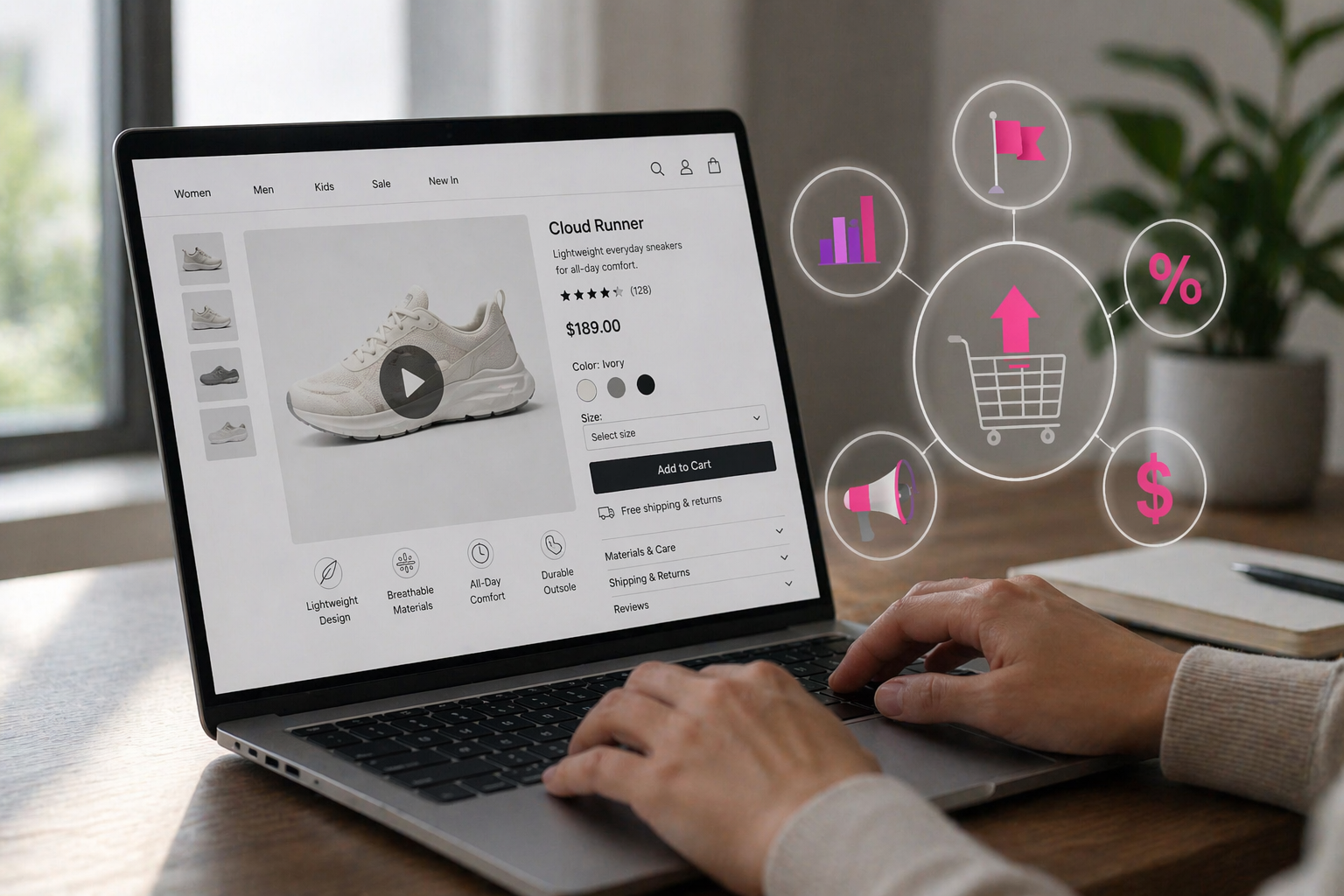
- Product video demonstrations that show real-world gifting context
- Clear guidance on what makes a product appropriate for different recipients
- Intelligent assistance that anticipates gifting use cases
This reduces hesitation and supports faster decisions in a compressed buying window.
2. Meet Shoppers Where They Are Researching and Buying
With nearly 40% of Valentine’s purchases happening online, retailers must ensure that their digital experiences are:
- Seamless across devices
- Emotionally resonant (not just informational)
- Guided by real user signals, not static rules
AI shopping assistants and contextual content personalized by intent can help surface the right product proof at the right moment, which is especially critical when shoppers are busy or uncertain.
The Role of AI in Reducing Gifting Anxiety
Valentine’s Day is full of uncertainty. AI-powered shopping tools are increasingly used to reduce that anxiety.
Forbes highlights how retailers are leveraging AI to improve seasonal demand forecasting, personalization, and product recommendations around holidays like Valentine’s Day .
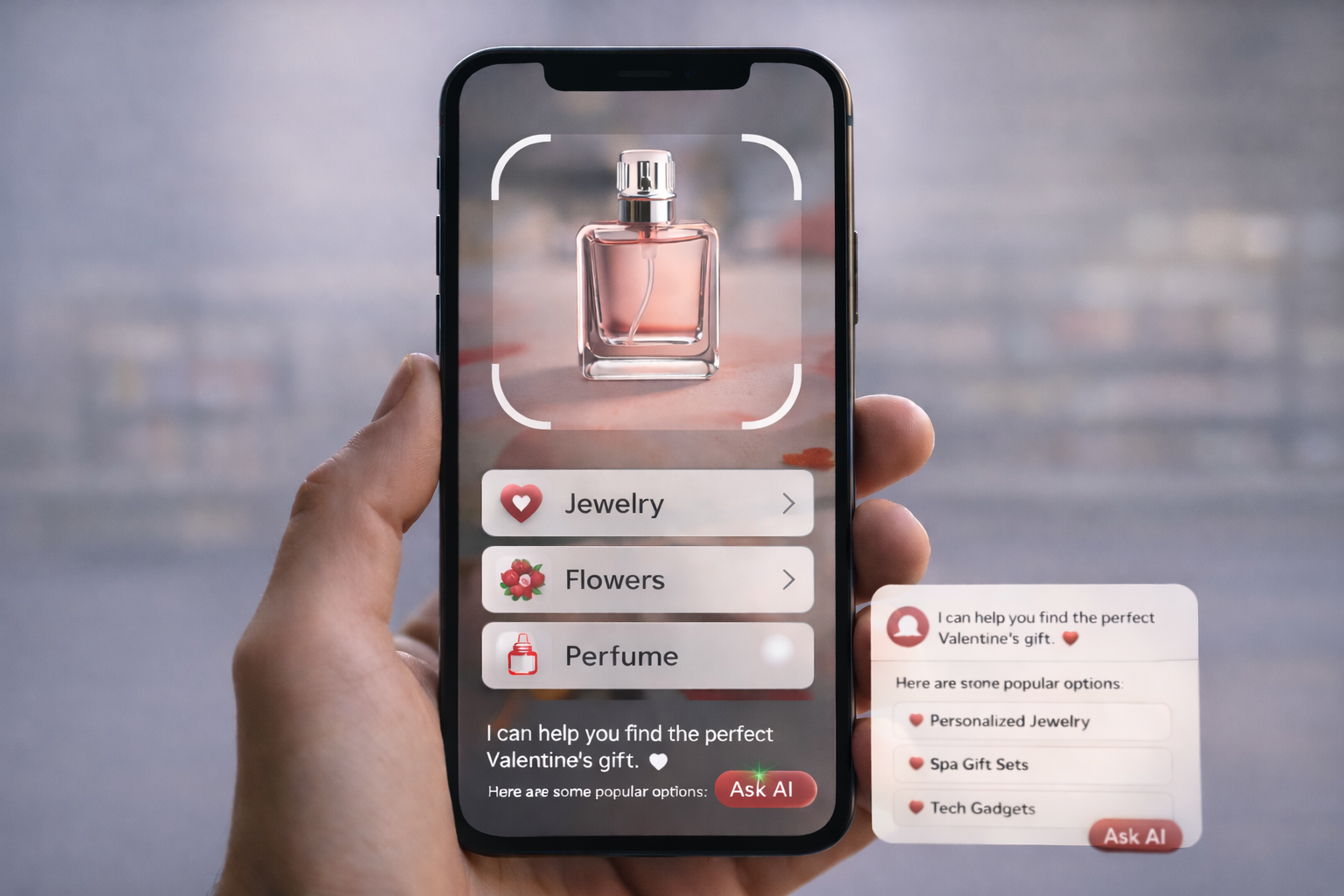
In practice, AI shopping assistants can:
- Recommend gifts based on relationship type or budget
- Answer last-minute questions instantly
- Highlight gift-appropriate products dynamically
- Surface relevant videos and reviews in real time
Instead of leaving shoppers to self-serve, AI helps guide decisions when confidence is fragile.
What This Means Beyond Valentine’s Day
Valentine’s Day spending data isn’t just a seasonal snapshot, it’s a window into how modern shoppers think about relationships, value, and validation around purchase decisions.
These behaviors generalize to other high-intent retail occasions where emotion, urgency, and uncertainty collide, such as anniversaries, birthdays, and holiday gift seasons. Retailers that build experiences around understanding why consumers buy, not just what they buy, will capture more share and build stronger shopper loyalty.
Talk to a Firework expert to see how AI-assisted shopping guidance and video-rich commerce experiences can help you convert high-intent seasonal traffic like Valentine’s Day into lasting customer engagement.
FAQ: Valentine’s Day Ecommerce
Why is Valentine’s Day different from other retail moments?
Because purchases are emotional, symbolic, and often last-minute. Shoppers need reassurance, not just information.
What type of content works best for Valentine’s Day?
Video performs especially well because it shows context, emotion, and product reality quickly.
How does AI help during Valentine’s Day shopping?
AI reduces decision anxiety by guiding shoppers toward appropriate choices and answering questions in real time.
Which categories benefit most from Valentine’s Day optimization?
Beauty, fashion, jewelry, and electronics see the biggest impact due to gifting uncertainty and emotional relevance.
Unlock Exclusive Insights
By submitting this form, you agree to Firework's privacy policy and consent to receive personalized marketing communications. You can unsubscribe at any time.