Why PDPs Need to Look More Like TikTok (and How to Do It)

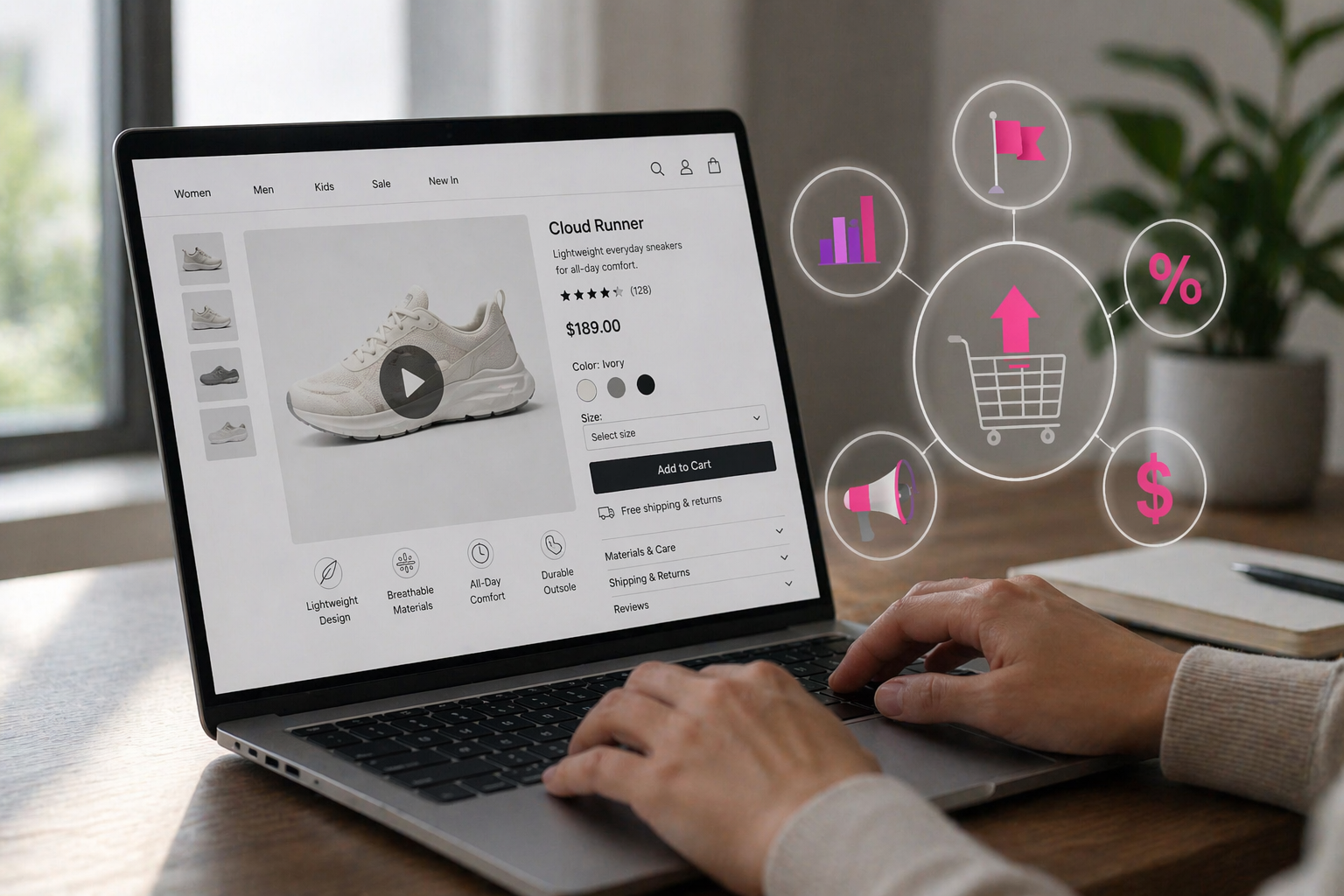
For years, the product detail page (PDP) has served as the digital shelf, a static place for specs, descriptions, and reviews. But shopping behavior has changed, and today’s consumers don’t evaluate products the way they did even three years ago.
TikTok has reshaped how people discover, compare, and decide. It has trained shoppers to expect fast answers, short videos, real people, instant validation, and effortless exploration.
Yet most PDPs still look like 2014 e-commerce: long text, fixed images, tiny thumbnails, and endless scrolling.
Here’s why modern PDPs must adopt TikTok-style design and interaction patterns, plus a blueprint for how to do it without sacrificing brand identity.
1. Shoppers Now Consume Product Information Like They Consume Content
TikTok compressed consumer behavior into a new formula: quick scan → instant value → continuous discovery.
On TikTok, shoppers:
- Watch 3–8 seconds before deciding to stay or swipe
- Rely on video to understand how something works or looks
- Expect smooth transitions between options, models, and variants
- Prefer seeing real people use products in real contexts
Traditional PDPs, however, are built for reading, not watching, swiping, or tapping. This creates a gap between how shoppers want to learn and how brands present information.
How to fix it:
Bring TikTok-style content to your PDP:
- Short, vertical videos demonstrating the product
- Visual comparison clips
- UGC-style testimonials
- Bite-sized feature explanations
Consumers should be able to “understand the product in under 10 seconds,” just like they do in their feed.
2. Video Drives Higher Confidence and Higher Conversion
Multiple studies confirm what TikTok has already proven: Video reduces friction, builds trust, and increases purchase intent.
Short videos answer key buyer questions faster than text:
- What does this look like in real life?
- How does it fit?
- How do I install or use it?
- What’s the difference between the two models?
Static PDPs force shoppers to piece these answers together through paragraphs, tech specs, and images. TikTok replaced this with micro-demos.
How to fix it:
Integrate snackable videos throughout the PDP:
- Hero video or 3-panel intro
- A “For You” video block powered by AI
- Use-case videos (skincare routine, recipe, workout, cleaning demo)
- Creator-led storytelling moments
When PDPs feel like “mini TikTok experiences,” shoppers convert faster because friction disappears.
3. Shoppers Trust Real People, Not Polished Studio Shots
TikTok set the standard for authenticity. Shoppers now want real usage, not catalog perfection.
On TikTok, the content that converts typically:
- Is shot on a phone
- Shows real context
- Includes quick commentary, reactions, or personal stories
- Feels spontaneous and honest
Meanwhile, most PDPs still rely heavily on studio photography and brand-led descriptions.
How to fix it:
Bring authenticity into your PDP:
- Creator videos
- Real customer videos
- Side-by-side UGC vs. professional shots
- “How I use this” mini-stories
- Real questions answered with AI-powered conversational responses
Authenticity drives trust, and trust drives checkout.
4. TikTok Trains Shoppers to Explore and PDPs Should Too
TikTok thrives on infinite discovery. If viewers don’t like one video, there’s another ready in milliseconds.
Most PDPs, in contrast, are linear and rigid. They force the shopper to manually hunt for information, often leading to abandonment.
How to fix it:
Introduce fluid, TikTok-like exploration on PDPs:
- “Shop the look” or “Shop the routine” modules
- AI-suggested videos based on past browsing
- Clickable stories (highlights, features, how-to)
- Multi-video carousels tailored to each shopper segment
When PDPs become dynamic, not static, shoppers stay longer and explore deeper.
5. TikTok Has Shifted the Decision Point to Earlier in the Journey
By the time shoppers reach your PDP, they already expect to see:
- What the product does
- How to use it
- Real results
- Social proof
- A point-of-view or recommendation
If your PDP fails to match the depth and richness of their TikTok experience, the shopper assumes they don’t have enough information to buy.
How to fix it:
Bring “upper-funnel” content to the PDP:
- Educational micro-videos
- Lifestyle demos
- Routine/collection walkthroughs
- Influencer POV recommendations
Your PDP must become a full-funnel environment, not just a spec sheet.
6. AI + Video = The Next Era of PDP Experience
TikTok’s algorithm excels because it understands intent, behavior, and preference in real time. Your PDP must do the same.
How to fix it:
Use AI to dynamically reshape PDP content:
- Automatically surface relevant videos
- Personalize FAQs
- Highlight top reviews for that shopper profile
- Prioritize the content most likely to convert
- Adapt layout (e.g., show fit videos first for apparel)
This ensures your PDP feels as intuitive and personalized as TikTok’s For You Page.
The Blueprint: How to Make Your PDP "TikTok-Ready"
Here’s a simple framework:
1. Lead with vertical video
Show the product in use within the first 3 seconds above the fold.
2. Add creator and customer content throughout
Authenticity = trust = conversion.
3. Add interactive video modules
Shoppable carousels, how-to clips, comparisons, UGC reaction videos.
4. Personalize the PDP with AI
Automatically adapt content based on shopper behavior.
5. Turn static text into visual story blocks
Think “slides,” not paragraphs.
6. Bring exploration to the page
More like a feed, less like a brochure.
Conclusion: TikTok Isn’t the Destination, It’s the New Design Standard
TikTok didn’t just change social media. It changed how people shop, how they learn, and how they make decisions.
Want to redesign your PDP for TikTok-trained shoppers? Firework helps enterprise retailers bring video, AI, and interactive content directly onto PDPs. Let’s transform your product pages into high-intent conversion engines.
FAQ: Why PDPs Need to Look More Like TikTok
1. Why should PDPs be inspired by TikTok at all?
Because TikTok has become the primary place where shoppers discover, evaluate, and build trust with products. Consumers now expect fast, visual, authentic content — and PDPs that rely on long text blocks and static images no longer match how people learn or decide online.
2. Will making a PDP “look like TikTok” make it feel less premium?
Not if it’s done intentionally. TikTok-style experiences on PDPs aren’t about memes or trends — they’re about short video, authentic storytelling, and fast clarity. Brands can maintain premium identity while adopting modern content formats that reflect real shopper behavior.
3. What kinds of videos perform best on PDPs?
The formats that drive the highest conversion typically include:
- Short product demos
- Creator or influencer POVs
- Before/after results
- Tutorials or quick routines
- Comparison clips (Model A vs. Model B)
- Customer UGC videos
The strongest PDPs blend professional content, creator content, and customer content.
4. Do TikTok-style PDPs work for all categories?
Yes, but especially for verticals where touch, texture, fit, or function matter. Beauty, fashion, home improvement, consumer electronics, and grocery all see strong gains from video-rich PDPs. Anywhere shoppers need context, video wins.
5. Is this just a design trend or a long-term shift?
It’s a long-term behavioral shift. TikTok fundamentally changed attention patterns and information processing. Today’s shoppers, across all ages, prefer fast, visual, explorative content. PDPs must evolve to match that shift.
6. Won’t adding more video slow down the PDP?
Firework code “weighs” less than 80kb - so the impact to your site performance will be equivalent to a small individual image.
7. Do brands need a full PDP redesign to adopt TikTok-style elements?
No. Many brands introduce video, UGC modules, and AI-powered content blocks without redesigning the entire PDP. You can layer TikTok-inspired content on top of existing templates.
8. How does AI improve TikTok-style PDP experiences?
AI helps match each shopper with the right content, the video, FAQ, or product highlight most likely to convert. This mirrors TikTok’s “For You Page” logic and ensures PDPs aren’t static but adaptive.
9. How do we measure whether TikTok-style PDPs are working?
Key metrics include:
- Conversion rate lift
- PDP engagement time
- Scroll depth
- Add-to-cart rate
- Decline in product-related customer service inquiries
- Lower return rates from improved product understanding
Most brands see gains within weeks of implementing more visual and interactive content.
10. Will this replace the need for traditional PDP content?
No. Specifications, detailed descriptions, and policy information still matter. TikTok-style enhancements don’t replace essentials, they make them more discoverable, digestible, and relevant to today’s shopper.
Unlock Exclusive Insights
By submitting this form, you agree to Firework's privacy policy and consent to receive personalized marketing communications. You can unsubscribe at any time.