AI Shopping Assistants vs Chatbots: What Enterprise Retailers Need to Know
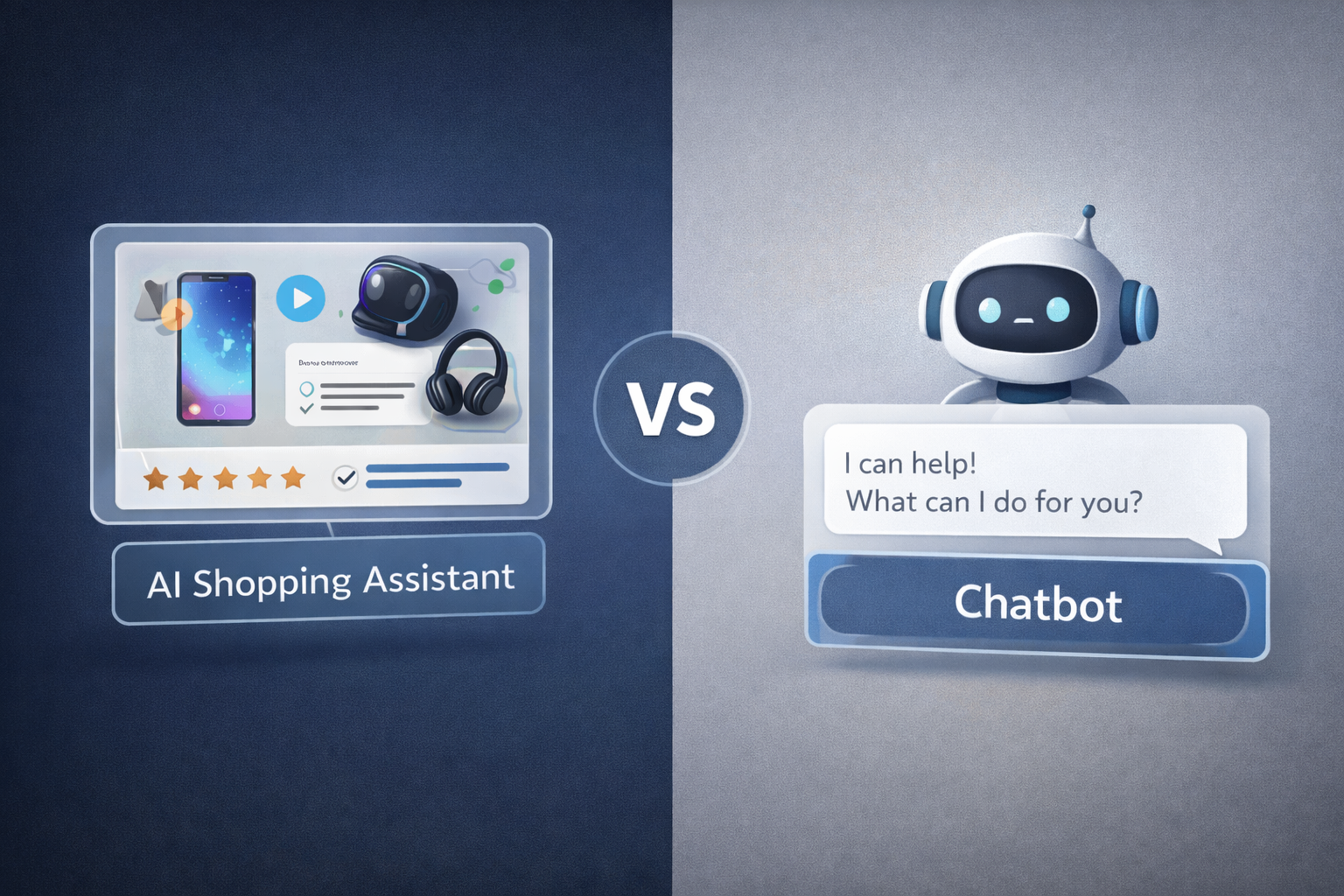

For years, chatbots were positioned as the future of ecommerce assistance. They promised instant answers, lower support costs, and 24/7 availability. Many retailers adopted them quickly, only to realize that while chatbots can answer questions, they rarely help shoppers buy.
Today, enterprise retailers are rethinking conversational commerce altogether. The conversation is shifting from “Do we have a chatbot?” to “How do we guide shoppers through complex decisions at scale?” That’s where AI shopping assistants come in.
While the two are often grouped together, AI shopping assistants and traditional chatbots serve very different roles in modern retail. Understanding the difference is critical for retailers looking to improve PDP performance, reduce drop-off, and drive higher conversion.
The Core Difference: Assistance vs Enablement
At a high level, chatbots and AI shopping assistants differ in intent.
Chatbots are built primarily for:
- Customer support
- Answering predefined questions
- Routing issues to human agent
AI shopping assistants are designed for:
- Product discovery
- Guided selling
- Real-time decision support
- Driving conversion on PDPs
In other words, chatbots focus on resolving issues after friction occurs. AI shopping assistants work to prevent friction in the first place.
Why Traditional Chatbots Fall Short in Ecommerce
Most chatbots rely on scripted flows or limited natural language understanding. They work well for transactional support questions like:
- “Where is my order?”
- “What is your return policy?”
- “How do I reset my password?”
But ecommerce, especially at the enterprise level, is not a support problem. It’s a decision problem. Shoppers don’t abandon PDPs because they lack answers. They abandon because they lack confidence.
Chatbots struggle in this context for several reasons:
- They operate outside the PDP experience, often in pop-ups or separate windows
- They don’t understand product context deeply enough to guide comparisons
- They answer questions in isolation rather than within a broader decision journey
- They are reactive, waiting for shoppers to ask the “right” question
For complex categories like beauty, fashion, home improvement, and consumer electronics, this limitation is especially visible.
What AI Shopping Assistants Do Differently
AI shopping assistants are built directly into the shopping experience, not layered on top of it.
Instead of waiting for questions, they actively support discovery and evaluation by:
- Interpreting shopper intent based on behavior, not just text input
- Surfacing relevant product content at the right moment
- Connecting features, benefits, reviews, and videos into a cohesive narrative
- Adapting responses based on where the shopper is in their journey
This makes them far closer to a knowledgeable in-store associate than a customer service tool.
Chatbots Answer Questions. AI Shopping Assistants Guide Decisions.
One of the most important distinctions is context awareness. A chatbot might answer:
“Yes, this product is compatible with iOS.”
An AI shopping assistant understands why that question matters and follows up with:
- Which features work best with iOS
- How this product compares to similar options
- Whether it fits the shopper’s stated or inferred use case
The result is not just an answer, but momentum toward checkout.
Where AI Shopping Assistants Win on the PDP
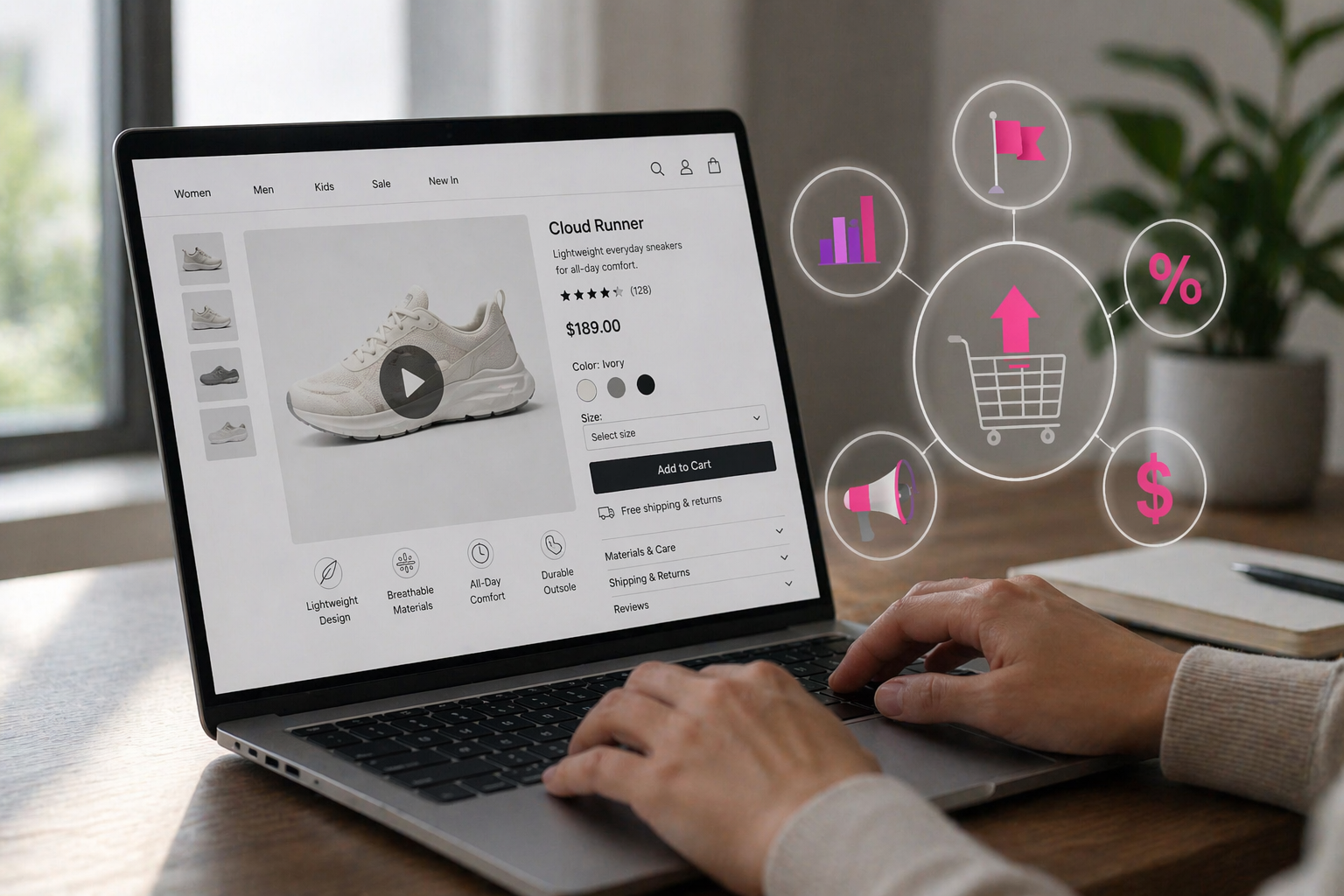
For enterprise retailers, the PDP is no longer a static information page. It’s the most important conversion surface in the entire funnel.
AI shopping assistants enhance PDPs by:
- Turning long specifications into digestible explanations
- Highlighting the most relevant reviews based on shopper intent
- Serving video demos and comparisons at key decision points
- Answering FAQs without forcing shoppers to scroll or leave the page
This keeps research and conversion in one place, reducing bounce and improving engagement.
The Impact on Conversion and AOV
Because AI shopping assistants operate within the shopping flow, they influence commercial metrics in ways chatbots typically cannot.
Retailers using AI-driven guided selling often see:
- Higher PDP engagement time
- Lower exit rates during evaluation
- Improved add-to-cart rates
- Increased average order value through better product matching
Chatbots, by contrast, tend to deflect support tickets but rarely move the needle on revenue.
Enterprise Scalability: Why This Matters More at Scale
For enterprise retailers managing:
- Thousands of SKUs
- Multiple categories and verticals
- Global audiences with different needs
Chatbots scale support while AI shopping assistants scale expertise. They allow retailers to deliver consistent, high-quality guidance across every product, market, and shopper segment, without adding operational complexity.
What Enterprise Retailers Should Consider Before Choosing
Before investing further in conversational tools, retail teams should ask:
- Does this tool understand product context, not just questions?
- Is it embedded into the PDP or isolated from the shopping journey?
- Can it adapt to shopper intent in real time?
- Does it help shoppers compare, evaluate, and decide?
- Will it scale across categories, regions, and seasons?
If the answer is no, it’s likely a chatbot, not an AI shopping assistant.
The Future of Conversational Commerce
As ecommerce becomes more competitive and acquisition costs rise, conversion optimization matters more than ever.
The future of conversational commerce isn’t about answering more questions. It’s about guiding better decisions.
Enterprise retailers that move beyond chatbots and invest in AI shopping assistants will be better positioned to:
- Reduce decision friction
- Differentiate their PDP experience
- Build shopper trust
- Convert high-intent traffic more efficiently
In the next phase of ecommerce, assistance alone isn’t enough. Guidance is what wins.
Talk to a Firework expert to see how AI shopping assistants can guide shoppers, answer product questions in real time, and turn PDPs into high-intent conversion experiences.
FAQ:
What is the difference between an AI shopping assistant and a chatbot?
Chatbots are primarily designed for customer support and scripted responses. AI shopping assistants are built to guide product discovery and purchasing decisions using real-time context, behavior, and product intelligence.
Why are AI shopping assistants better for PDPs?
Because they are embedded directly into the product page experience. They surface relevant content, answer questions in context, and help shoppers evaluate options without leaving the page.
Do shoppers actually use AI shopping assistants?
Yes. Shoppers increasingly expect guided, interactive experiences—especially in complex categories like beauty, electronics, and home improvement where confidence matters before checkout.
How do AI shopping assistants impact conversion rates?
By reducing decision friction. When shoppers get answers, comparisons, and validation in real time, they are more likely to add to cart and complete purchases.
Are AI shopping assistants scalable for enterprise retailers?
Yes. AI shopping assistants scale expertise across thousands of SKUs, regions, and shopper segments without increasing support or staffing costs.
Do AI shopping assistants require new content creation?
Not necessarily. Many assistants leverage existing product content, FAQs, videos, and reviews, organizing and surfacing it more effectively at the right moments.
Unlock Exclusive Insights
By submitting this form, you agree to Firework's privacy policy and consent to receive personalized marketing communications. You can unsubscribe at any time.